The short answer: one payment or two
Actual cash value (ACV) pays what the damaged roof was worth: the cost to replace it, minus depreciation for age and wear. Replacement cost value (RCV) pays to replace it with nothing taken off for age. On a Florida RCV claim, the insurer pays at least the ACV amount first, less the deductible, and the rest as the work is done and paid for.
For a roof claim in Tampa or anywhere else in Hillsborough County, Tampa Roofing Guys can put a licensed roofer on the job. That roofer’s itemized estimate and final invoice are the paperwork that shows what the work costs and that it got done.
Which method applies to your roof is set by the policy, not by state law. The declarations page and your agent can confirm which one you have; the sections below show how each one pays.
The math on a roof, with example numbers
These are round numbers picked to show the arithmetic. They aren’t a price for any real roof.
| Example claim | RCV policy | ACV policy |
|---|---|---|
| Replacement estimate the adjuster accepts | $20,000 | $20,000 |
| Depreciation taken for age and wear | $8,000 | $8,000 |
| Actual cash value | $12,000 | $12,000 |
| Deductible | $2,000 | $2,000 |
| First payment | $10,000 | $10,000 |
| Held-back depreciation, paid after the work | $8,000 | none |
| Total from the insurer | $18,000 | $10,000 |
| Left for you to cover | $2,000 | $10,000 |
The depreciation line is where the two policies split, and it’s set by the adjuster’s estimate, line by line. An older roof carries more of it. Ask for the adjuster’s detailed estimate so you can see how it was figured.
The deductible changes the picture too. A hurricane loss uses the separate hurricane deductible, which can be a percentage of the dwelling coverage. On an ACV payment, that can leave a small first check or none.
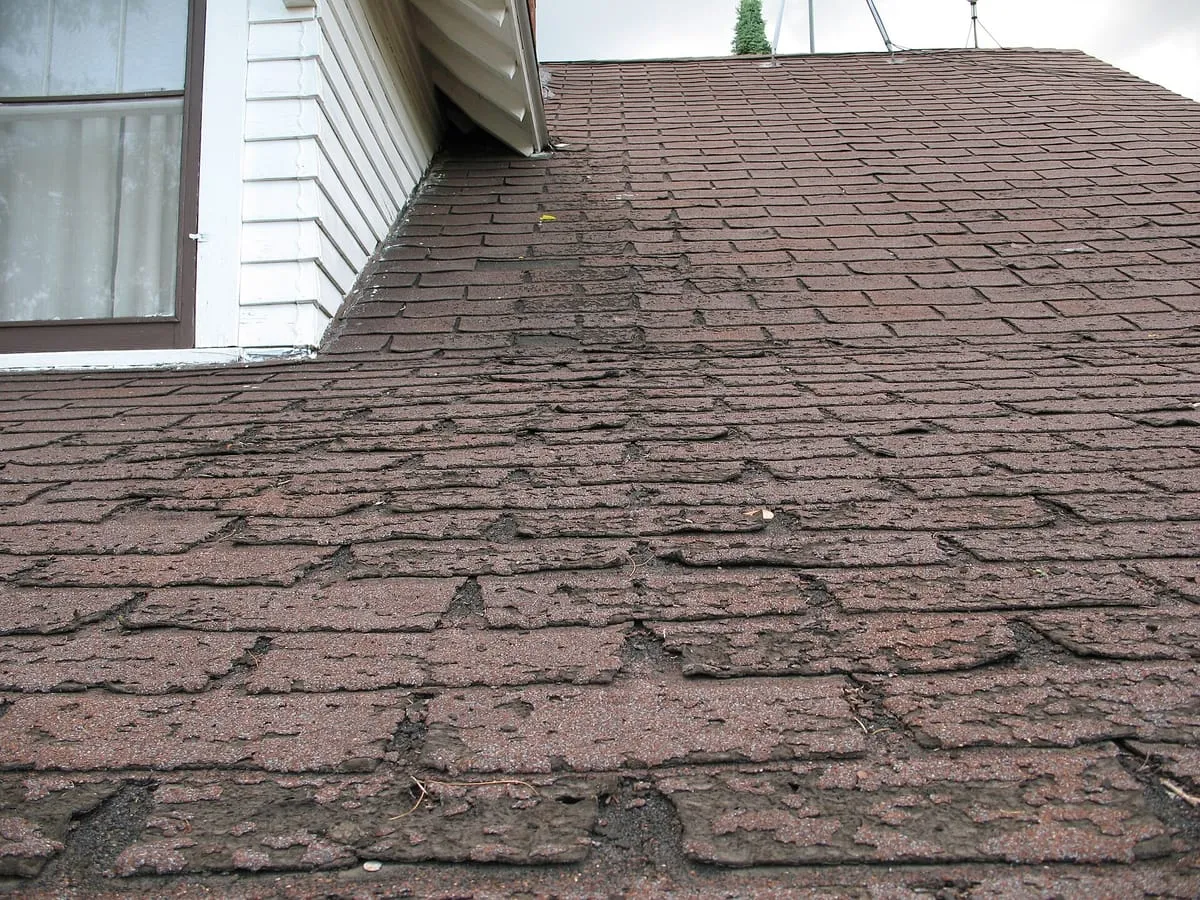 Wear like this on an older roof is what the depreciation line on an estimate reflects. Photo: Dale Mahalko, CC BY-SA 3.0.
When the held-back depreciation gets paid
Florida’s homeowners statute, 627.7011, says the insurer must first pay at least the actual cash value of the loss, less the deductible, and then pay the remaining amounts “as work is performed and expenses are incurred.” The second payment follows the job, not the claim. On a total loss, the statute calls for full replacement cost with no holdback.
So the paperwork that releases the money is the roofer’s. Keep the signed contract, the invoices, and proof that you paid them. If the job runs in stages, ask the insurer whether it will release the holdback in stages too.
The statute ties the rest of the money to work being done. If you’re thinking about not repairing, or doing a smaller repair than the estimate, ask your agent how your policy handles that before you decide.
Florida’s statutes don’t set a separate deadline for collecting the holdback. The general outer limit for a supplemental claim is 18 months after the date of loss (the full list is under roof claim deadlines), and a policy can add its own conditions. Don’t let a finished job sit for months before you send the invoice.
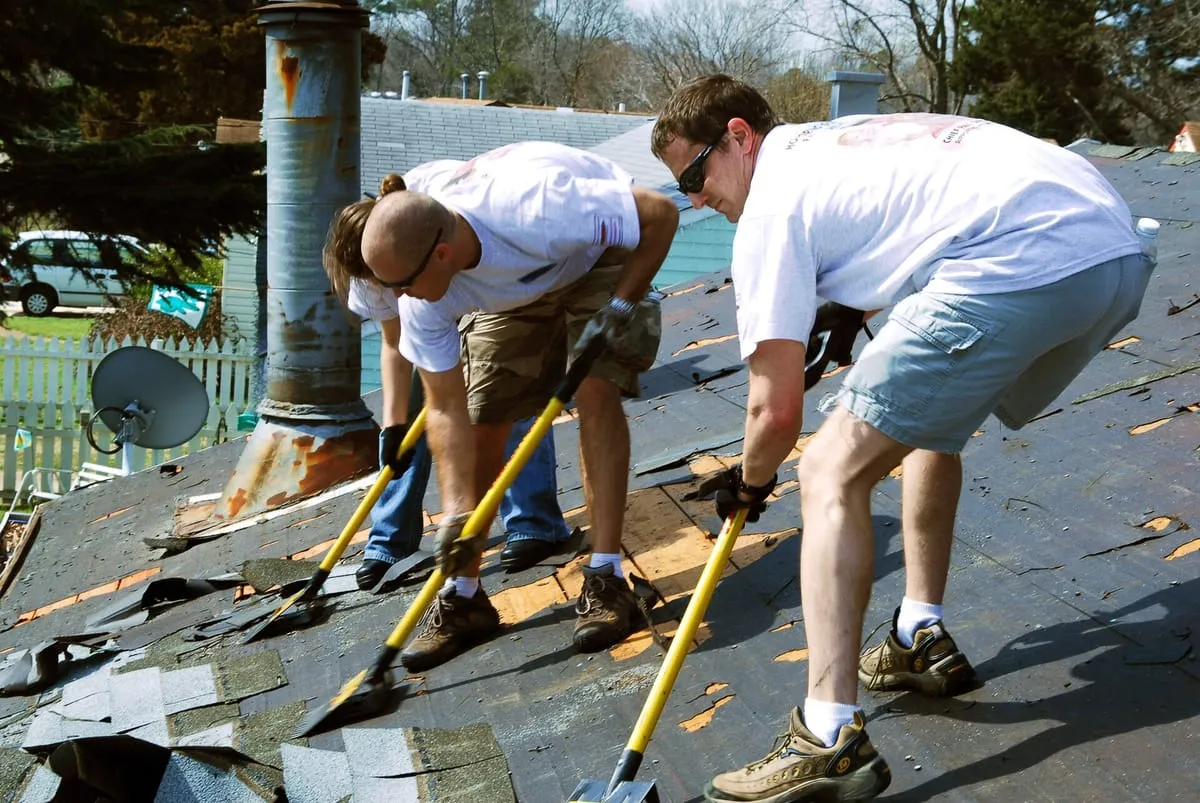 On an RCV claim, the held-back money follows the work, and the invoice for a tear-off like this is what releases it. Photo: Kelly E. Barnes, U.S. Navy, public domain.
Florida’s separate roof deductible
Some Florida policies carry a roof deductible apart from the regular one. Section 627.701 caps it at the lower of two numbers: 2% of your dwelling coverage (Coverage A), or 50% of what it costs to replace the roof.
A worked example, again with made-up numbers: dwelling coverage of $300,000 makes 2% equal $6,000. A roof that costs $20,000 to replace makes 50% equal $10,000. The roof deductible can’t be more than the lower figure, $6,000.
It doesn’t apply to every roof claim. Under the statute it applies only to claims adjusted on a replacement cost basis, and not to:
- a total loss of the house
- roof damage from a hurricane
- a tree falling and puncturing the roof deck
- damage that needs repair to less than 50% of the roof
An insurer that uses one has to give you a rate credit for it and a warning page in large type, and you can opt out on a state form. When the roof deductible applies, no other deductible can be taken on that loss, and the insurer may hold the roof payment to actual cash value until you show you paid the roof deductible. A canceled check, a money order receipt, a credit card statement or a signed financing contract all count. That’s why an ACV-sized check can show up on an RCV policy.
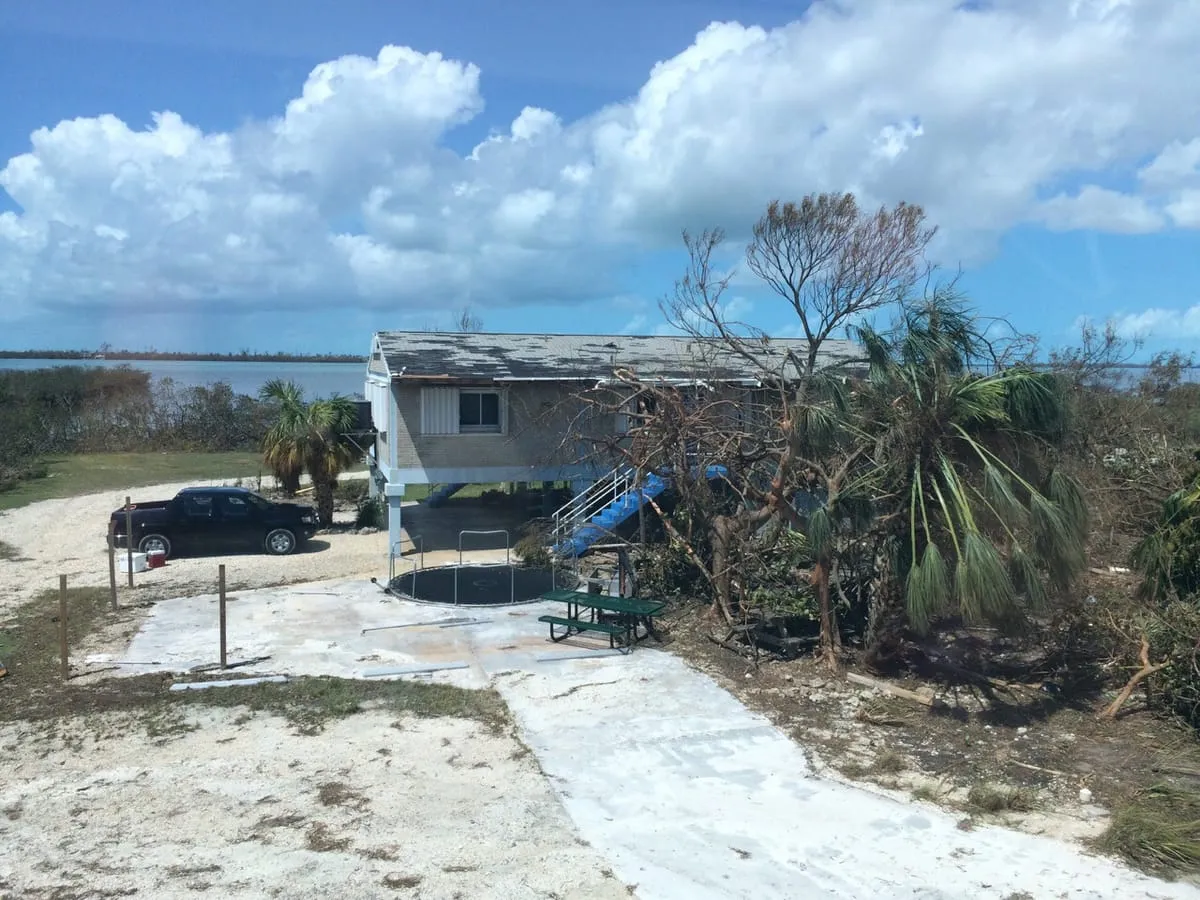 Hurricane damage like this, at a refuge office in the Florida Keys after Irma, falls outside the roof deductible. Photo: U.S. Fish and Wildlife Service, public domain.
Is there a Florida roof payment schedule?
Not in state law. A schedule that paid older roofs a set share of replacement cost by material showed up in a 2021 bill draft, but the 2026 text of 627.7011 has nothing like it. If your insurer pays older roofs on a schedule, that comes from the policy itself, so look for it among the endorsements and ask the agent to point to the wording.
Which one does your policy use?
Pull out the declarations page and the policy jacket, and check:
- Dwelling coverage and loss settlement. Look for “replacement cost” or “actual cash value” next to the dwelling, and read the loss settlement section of the policy.
- Every deductible listed. All other perils, hurricane, and a roof deductible if there is one, plus the roof deductible warning page.
- Endorsements. Anything with “roof”, “actual cash value” or “loss settlement” in its title can change how the roof is paid.
- Law and ordinance coverage. Florida insurers have to offer replacement cost coverage with and without it, and the default is 25% of the dwelling limit unless you rejected it in writing, with a 50% option. A re-roof on an older house can include code upgrades on a re-roof, so ask the agent how this coverage applies to them.
If anything is unclear, email your agent and ask which settlement method applies to the roof covering.
What to get from the roofer so the numbers line up
Ask the roofer to write the job in the same units the adjuster’s estimate uses, so the lines can be compared one to one:
- an itemized estimate in squares (one square is 100 square feet of roof), sheets of decking, and linear feet for drip edge and flashing
- separate lines for storm damage and for code items the building department requires
- the final invoice, plus proof of payment, which covers both the holdback and the roof deductible
- the permit and final inspection record if the job needed one
If the adjuster’s number and the roofer’s number are far apart, the line items show why. For what goes into those numbers in the first place, see what drives roof replacement cost.