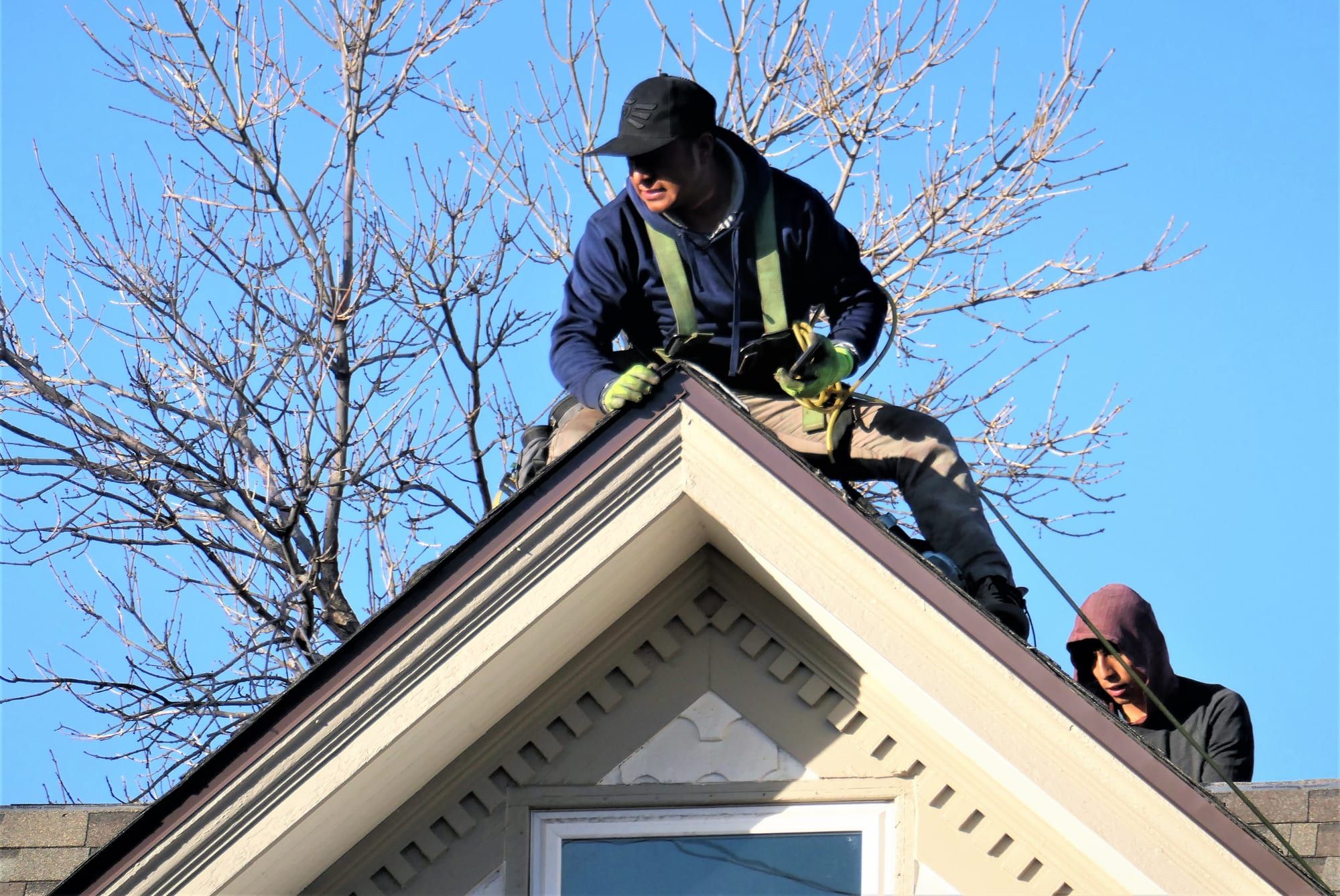
Six inspections, one name
A roof inspection in Tampa can mean a roofer’s look-over, a home inspector’s report, a 4-point, a wind mitigation inspection, a roof certification for the insurer, or the building department checking a re-roof. They aren’t interchangeable. A wind mit won’t satisfy a Citizens roof-age request, and a roofer’s free estimate won’t satisfy either. When you call Tampa Roofing Guys, the first question is who asked for the inspection, because that decides which one you need.
| Inspection | Who does it | Who usually asks | What it records | How long it’s good for |
|---|---|---|---|---|
| Roofer’s inspection | A licensed roofing contractor | You, after a storm, a leak or before a sale | Condition, damage, leaks, a repair or replacement quote | A snapshot; no set term |
| Home inspection | A licensed home inspector | The buyer, before closing | Roof covering, flashing, gutters and penetrations, often from the ground or eaves | For that sale |
| 4-point | A licensed inspector, such as a home inspector or general contractor | The insurer; Citizens for homes over 20 years old | Roof, electrical, plumbing and HVAC; for the roof: age, type, condition, remaining life, last permit, leaks | Set by the insurer |
| Wind mitigation (OIR-B1-1802) | A trained home inspector, building code inspector, general, building or residential contractor, engineer or architect | The insurer, to apply wind discounts | Roof covering, deck attachment, roof-to-wall connections, roof shape, secondary water barrier, opening protection | Up to 5 years if nothing material changes |
| Roof certification | A licensed contractor (roofers included), building code inspector or home inspector | The insurer, when the roof passes an age threshold | Age, condition and remaining useful life, with photos | See roof certification for insurance |
| Permit inspections | The city or county building department | The re-roof permit | Whether the work meets code, partway through and at final | That job only |
The City of Tampa does its residential roofing inspections virtually, and the county runs its own sequence; the roof permit guide covers which office handles your address.
What a roofer looks at
A roofer’s inspection is the one that tells you what’s wrong and what it costs to fix. Outside, the roofer checks the covering slope by slope. NRCA, in its own roofing magazine, names curling or splitting shingles as signs of deterioration and says dislodged or missing tabs should be repaired. The roofer also looks at the flashing around walls, chimneys and skylights, at pipe boots and vents (penetrations are weak spots in any roof), and at the valleys and the ridge. On tile, it’s slipped and cracked pieces and the condition of the underlayment where it can be seen.
Inside, the roofer looks for stained or soft decking, daylight around penetrations, and water marks that line up with something on the roof above. In many Tampa attics, the air handler and ducts sit up there too, and a sweating duct or a backed-up drain pan can stain a ceiling with no help from the roof. If that’s what the attic shows, a ceiling stain with no roof leak explains what to check next.
Ask for the findings in writing with photos. A list of what was seen, slope by slope, is worth more than a verbal “you need a new roof.”
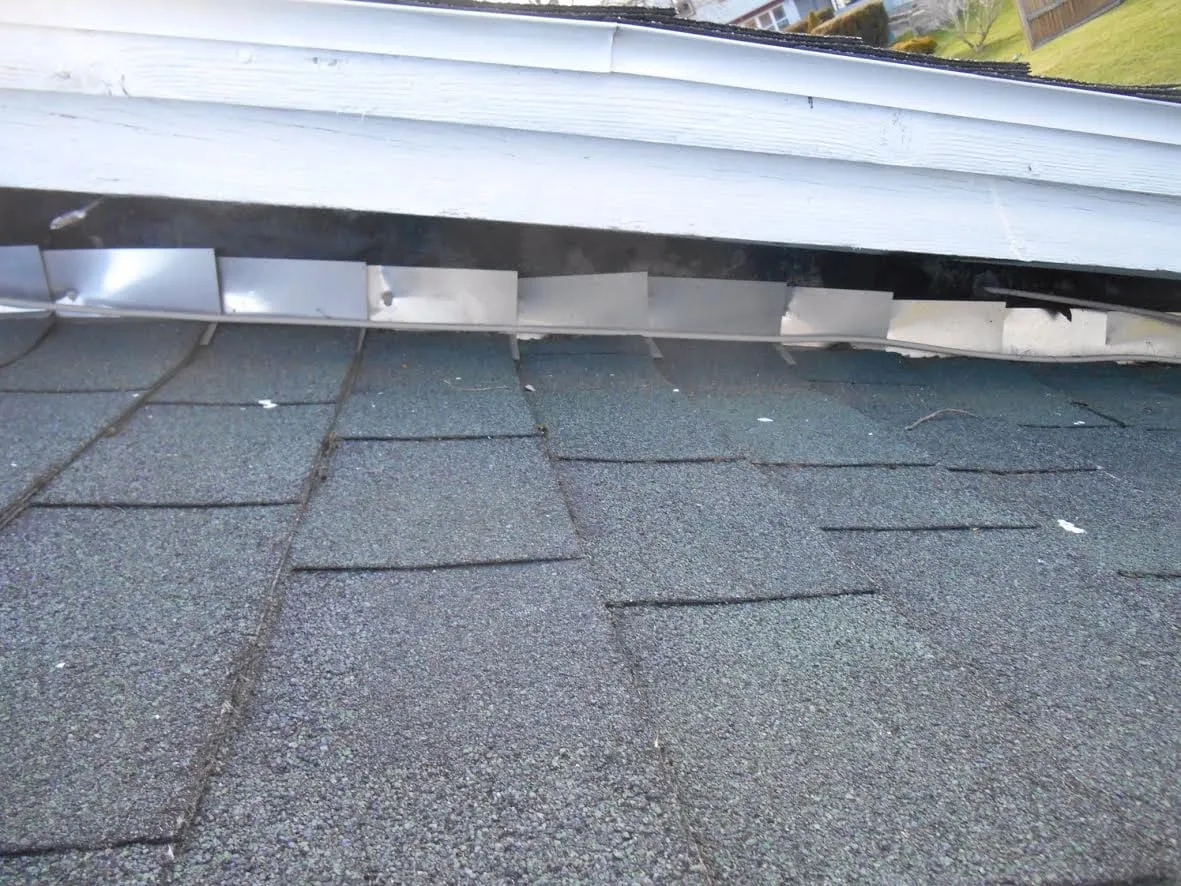 Flashing where a roof meets a wall is one of the spots a roofer checks closely. Photo: Sandul1234, CC BY-SA 4.0.
The wind mitigation form changed in April 2026
Florida’s wind mitigation inspection uses one form, OIR-B1-1802, and a new revision (Rev. 04/26) took effect April 1, 2026. It records the building code era, a wind-speed region, the roof slope, the roof covering with its permit date or product approval number, how the deck is fastened, how the roof is tied to the walls, the roof’s shape, whether there’s a secondary water barrier, and opening protection. The inspector needs at least one photo or document for each item.
Standard underlayment or hot-mopped felt doesn’t count as a secondary water barrier on the form. A hip roof only counts as hip if other roof shapes make up no more than 10% of the perimeter. A FORTIFIED Roof, Silver or Gold certificate can now back up several answers. And Citizens says it will still accept an old-form inspection done in the five years before April 1, 2026, as long as nothing structural has changed.
The My Safe Florida Home program has offered free wind mitigation inspections for eligible homesteaded, site-built single-family homes; check the program site for current status before counting on one.
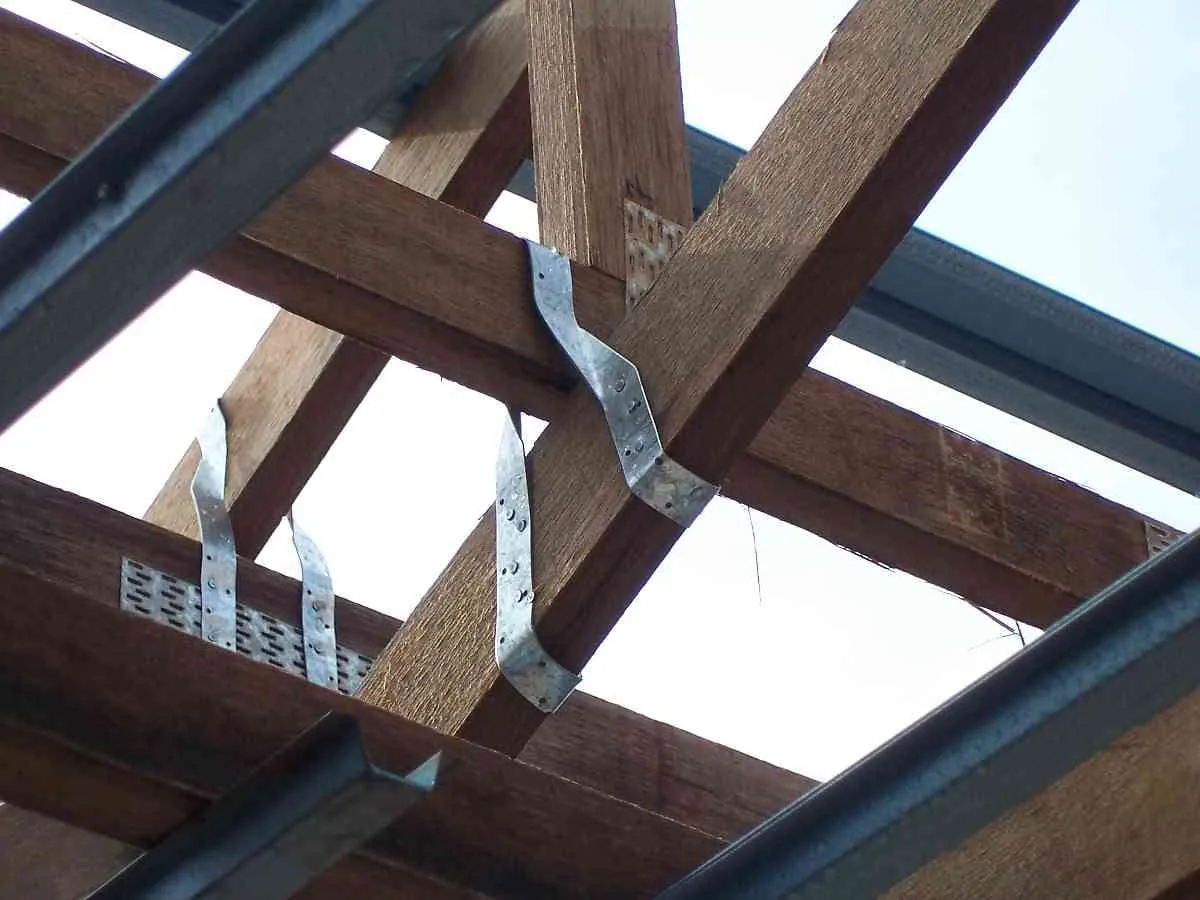 How the roof is tied to the walls, with straps like these, is one of the items the wind mitigation form records. Photo: Bill Bradley, CC BY 2.5.
The 4-point is about age and condition
A 4-point is an insurance inspection of four systems: the roof, electrical, plumbing, and heating and cooling. Citizens requires one on every application for a home more than 20 years old. The roof section records the roof’s age, type, condition, remaining useful life, the date of the last roof permit, and any leaks.
Citizens’ 4-point form adds two rules. With photos of each roof slope, the roof section of the 4-point can stand in for the separate roof inspection form. And a licensed trade contractor can sign only the section for that trade, while a general contractor, building code inspector or home inspector can sign the whole form. If the 4-point shows an old roof, the next question is usually the roof certification in the table above.
How often to have the roof checked
NRCA recommends inspecting a roof at least twice a year, preferably in spring and fall, and again after any severe weather such as a hurricane, tornado or hailstorm. In Tampa that lines up well with the calendar: a spring check finds problems before the summer storms, and a fall check finds what they did. After a named storm, start with the storm damage steps before calling anyone up a ladder.
Your own part is from the ground: binoculars or a phone zoom on each slope, a look at the gutters and downspouts, and a walk through the rooms checking ceilings. Leave the climbing to whoever does the inspection.
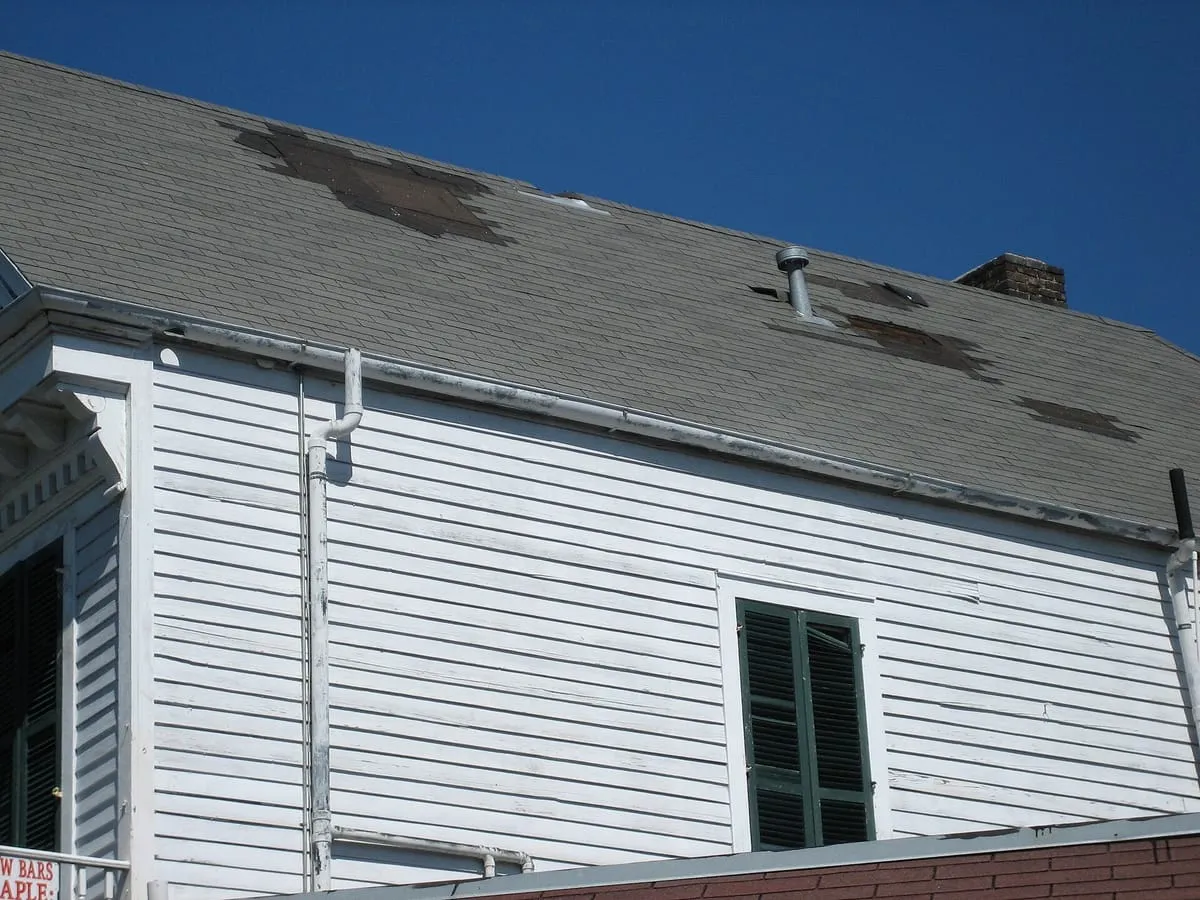 Missing shingles after a hurricane, the kind of damage a phone zoom from the yard can pick up. Photo: Infrogmation, CC BY-SA 2.5.
Buying or selling a house
A buyer’s home inspection gives a general read on the roof, and a lender or insurer may then ask for something more specific. If the buyer is using a VA loan, the VA appraisal roof guide covers what the appraisal can hold up. For the new policy, the insurer may want a 4-point and a wind mitigation report before it writes coverage, and the wind mit can bring down what the policy costs. Order both early, because a roof that fails either one changes the negotiation.