What to do first when a roof claim is denied
Find the reason in the denial letter and the policy section it cites. Ask the insurer for the adjuster’s detailed estimate. Then get a licensed roofer’s written damage report. If you still disagree, ask for the state’s free mediation before you go to appraisal or court.
Tampa Roofing Guys gets homeowners in Tampa and the rest of Hillsborough County a licensed roofer to document storm damage after a claim comes back denied or underpaid. That second look, written up with photos and measurements, is evidence you can set right next to the adjuster’s.
The Florida rules below are general and aren’t a reading of your policy. Questions about your own coverage go to your declarations page, your agent, or the state’s consumer helpline at the Department of Financial Services.
Match the denial reason to your next move
The reason in the letter tells you what kind of evidence could change the answer.
| The letter says | What the insurer decided | What can change it |
|---|---|---|
| Wear and tear, age, deterioration | The damage came from the roof aging, not from a storm or other sudden event | A roofer’s report that separates storm damage from old wear, slope by slope, with photos tied to the date of loss |
| Late notice | The claim came in after the policy or the statute allowed | Check the date of loss the insurer used against the rules in the deadlines section below. If their date is wrong, say so in writing |
| Pre-existing or prior damage | The damage was there before this date of loss, or belongs to an older claim | Anything showing the roof before the storm: a 4-point or wind mit report with photos, your purchase inspection, repair invoices, dated phone pictures |
| Below the deductible | Covered damage is worth less than your deductible | Confirm which deductible was applied (a hurricane loss uses the separate hurricane deductible), then compare their estimate with the roofer’s line by line |
| Partial denial or a low payment | Some damage was accepted, some wasn’t, or the price came in low | The insurer’s written explanation of the difference, set against an itemized roofer’s estimate |
If the reason is something else, like a maintenance or installation exclusion, the approach is the same. Read the exact policy section the letter quotes, then gather evidence on that one point. A letter that gives no reason, or no policy section, isn’t finished. Ask for both in writing.
What the insurer has to put in writing
Florida’s claims-handling statute, 627.70131, puts a lot on paper. Under it, the insurer must:
- give a reasonable written explanation of the basis in the policy for a denial or partial denial, tied to the facts or the law
- explain in writing why a payment came in lower than its own detailed estimate, when that happens
- send you a copy of any detailed estimate within 7 days after its adjuster writes one
- have any adjuster who inspects in person hand you their name and state adjuster license number, and put both on later claim messages
- keep dated records of inspections, estimates and information requests, plus a list of every adjuster who contacted you, which it provides on request
Ask for what’s missing by email so the request carries a date. The adjuster’s estimate matters most. Your roofer’s report gets compared against it line by line, and that comparison shows where the dispute is, whether it’s the square count, the decking, or a slope left off the estimate.
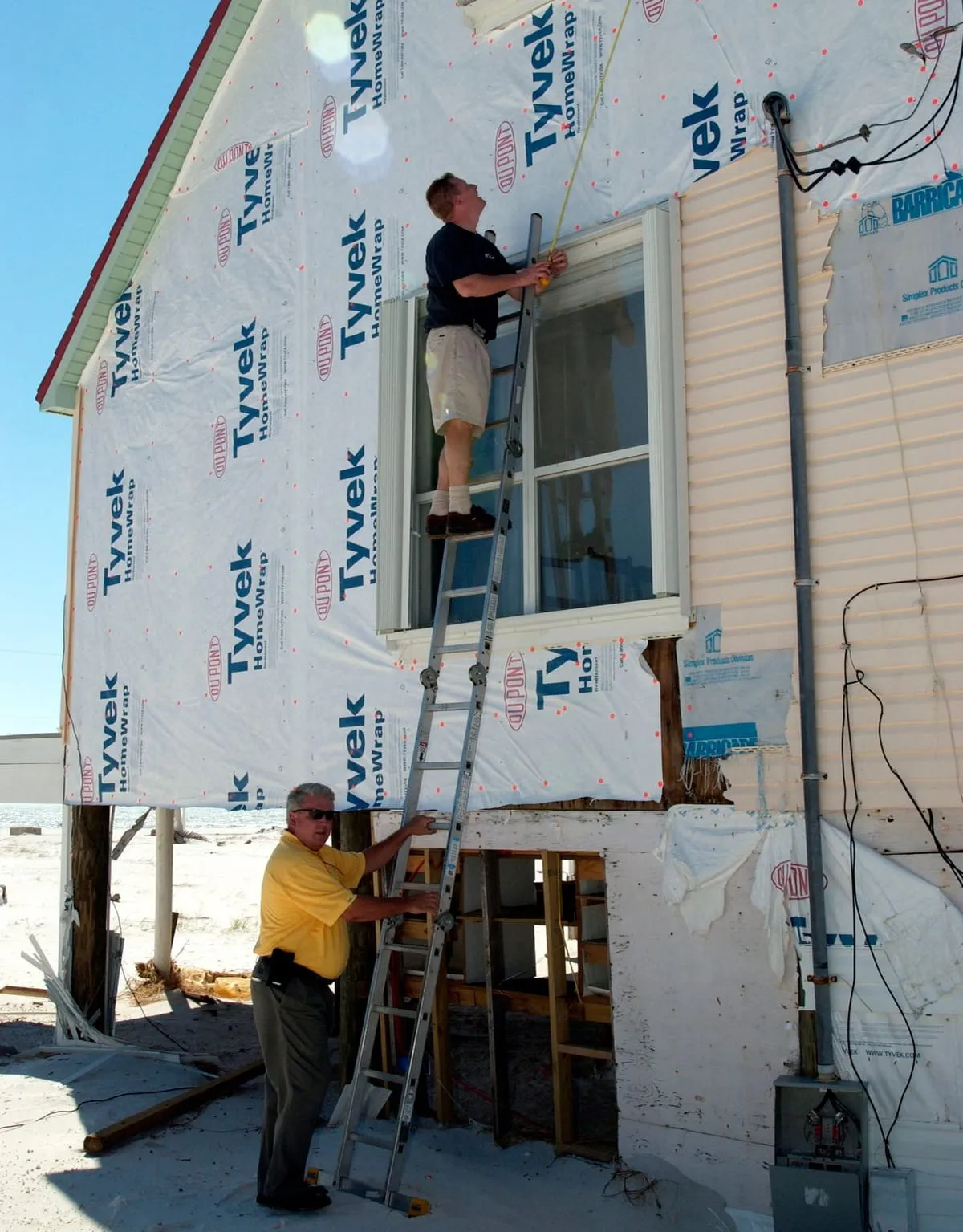 Citizens Insurance adjusters evaluate a damaged home in Pensacola Beach, Florida, after Hurricane Ivan. Photo: Bill Koplitz, FEMA, public domain.
Florida’s roof claim deadlines
A denial doesn’t pause anything. These clocks come from the 2026 statutes:
| Clock | How long | Statute |
|---|---|---|
| Give notice of a new or reopened claim | 1 year after the date of loss | 627.70132 |
| Give notice of a supplemental claim (more costs on a claim already made) | 18 months after the date of loss | 627.70132 |
| Insurer acknowledges your claim | 7 calendar days | 627.70131 |
| Insurer inspects in person, if it inspects | 30 days after your proof-of-loss statements | 627.70131 |
| Insurer pays or denies | 60 days after notice (up to 30 more days in a declared emergency, by state order) | 627.70131 |
| Notice of intent before a lawsuit | Filed through DFS at least 10 business days before suing | 627.70152 |
The date of loss is set by the statute, not by when you found the leak. For a hurricane it’s the date the storm made landfall. For other windstorms, tornadoes and severe rain, it’s the date NOAA verifies the weather event.
If you plan to get a second report or file a supplemental claim, do it well inside these limits. Roof evidence also fades: tarps go on, shingles get swept up, stains get painted.
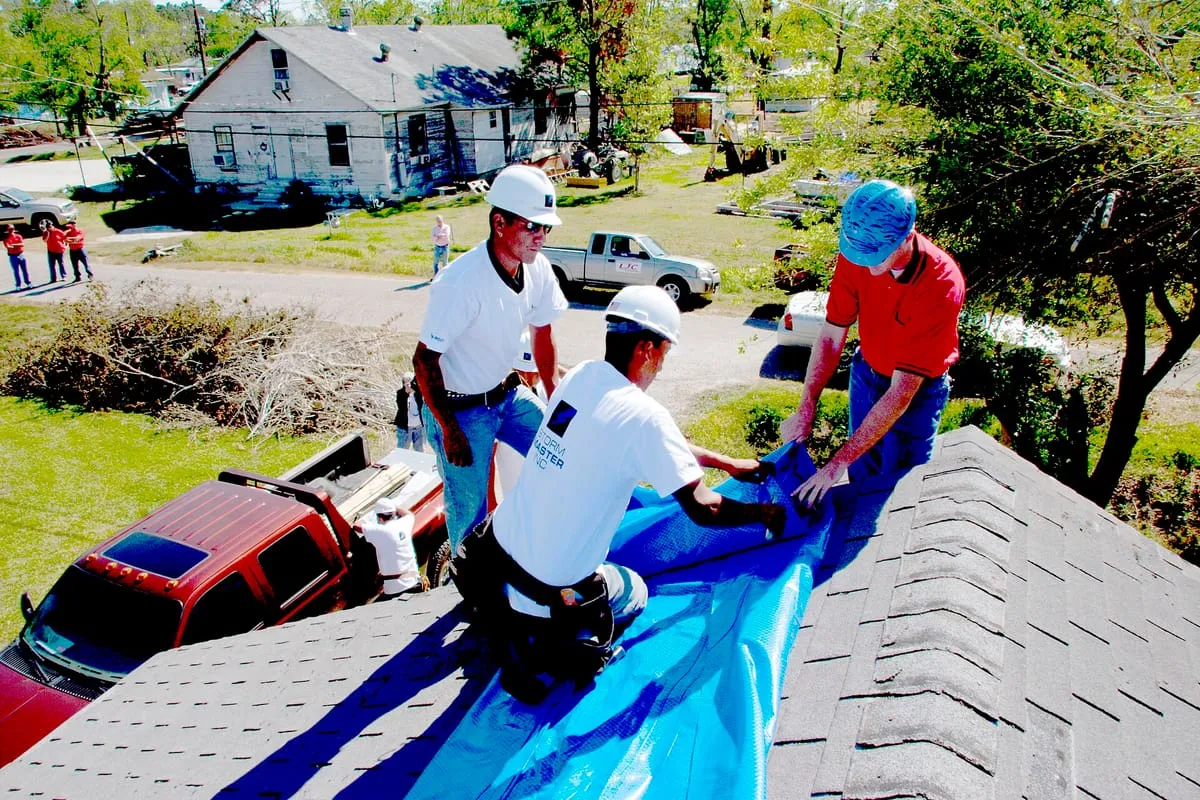 A crew tarps a damaged roof after Hurricane Rita in Port Arthur, Texas, which is why dated photos taken beforehand matter. Photo: Ed Edahl, FEMA, public domain.
A roofer’s damage report that holds up
A useful report is built to sit beside the adjuster’s estimate. Ask the roofer for:
- photos of every slope plus close-ups of each damaged area, dated, and the attic side where water came through
- the roof’s size in squares (one square is 100 square feet) and how much of it is damaged
- what the damage is and where, kept separate from normal wear
- the date of loss the report is based on, and the day the roofer was on the roof
- an itemized repair or replacement estimate, in units the adjuster’s estimate also uses
- the roofer’s name and license number, which you can check on the state license site
What the report can’t do is settle coverage. Under section 489.147, a roofing contractor in Florida can’t interpret your policy, advise you on coverage or adjust the claim without a public adjuster license. The roofer documents the roof. You, your agent or a licensed representative argue the claim.
Send the report with a short written request to reconsider, or as a supplemental claim if it shows damage or costs the first estimate missed. If water is still getting in while all this plays out, don’t wait on the dispute: read up on emergency repairs after a loss and keep every receipt.
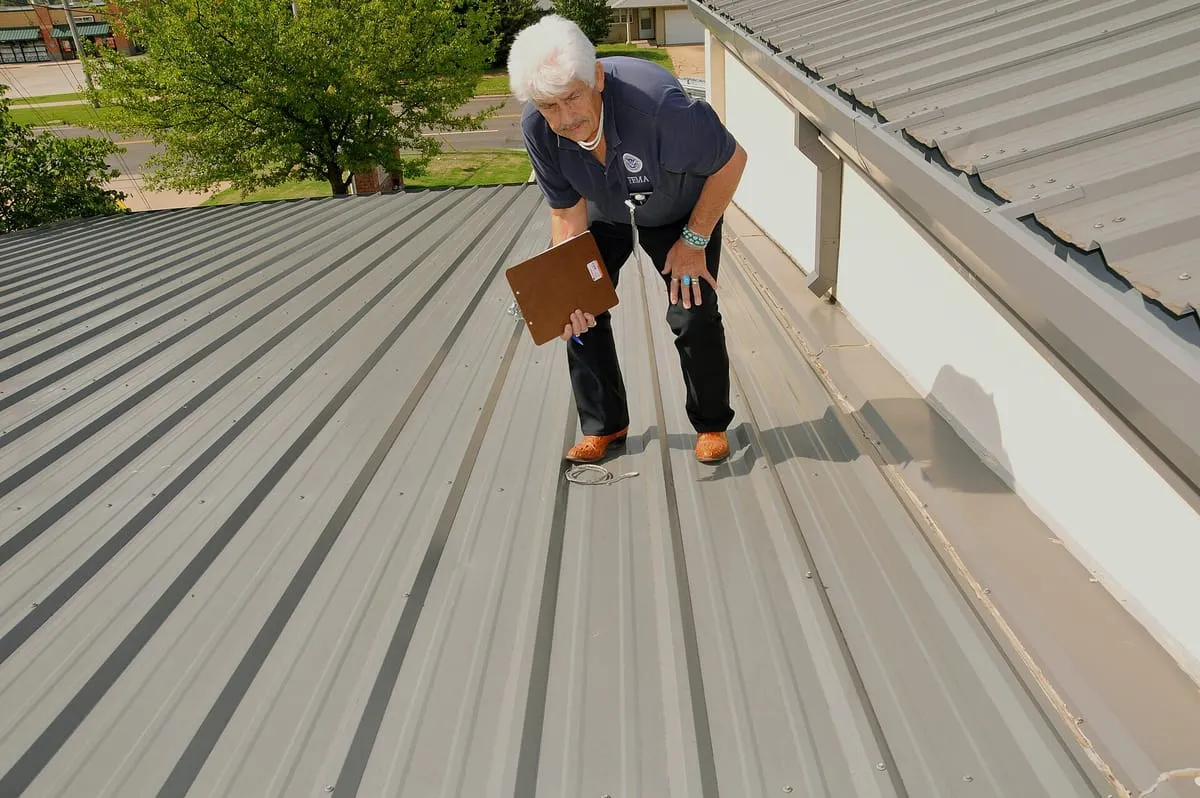 A FEMA officer documents hail damage on a metal roof in Moore, Oklahoma, the kind of close look a damage report needs. Photo: Win Henderson, FEMA, public domain.
Free state mediation before appraisal or court
The Florida Department of Financial Services runs a mediation program for residential property claim disputes. It’s free to you, because the insurer pays the $350 mediator fee. The dispute has to be worth $500 or more after the deductible. The conference is scheduled within 21 days after a mediator is assigned, and nothing is binding unless both sides agree. If you do settle, you have 3 business days to change your mind, as long as you haven’t cashed the check.
A claim becomes eligible once the insurer has paid or denied it, and the insurer has to tell you about the program when you file. Request it on the DFS mediation page or through the consumer helpline, 1-877-693-5236 (1-877-MY-FL-CFO). DFS can’t value your claim or act as your adjuster. What it does is put you and the insurer in front of a neutral mediator, with your roofer’s numbers on the table.
Mediation also comes before appraisal. Most homeowner policies carry an appraisal clause, and Florida’s own mediation statute describes that process as adversarial and potentially expensive and slow. Read the appraisal section of your policy before agreeing to it, so you know how each side picks an appraiser and who pays them. In Florida’s pre-suit process, when a dispute is about something other than a flat coverage denial, the insurer can answer with a settlement offer or by requiring appraisal.
When it needs a public adjuster or an attorney
If the gap is large, or the insurer says the loss isn’t covered at all, you’re past what a roof report can fix. Coverage disputes belong with a licensed public adjuster or a Florida attorney, not with a roofer.
Two Florida details matter at that stage. Before suing over a property claim, you have to file a notice of intent through DFS at least 10 business days ahead, which a lawyer usually handles. And since the 2022 reforms, the old one-way attorney fee rule no longer applies to property insurance suits, so ask any lawyer up front how they get paid.