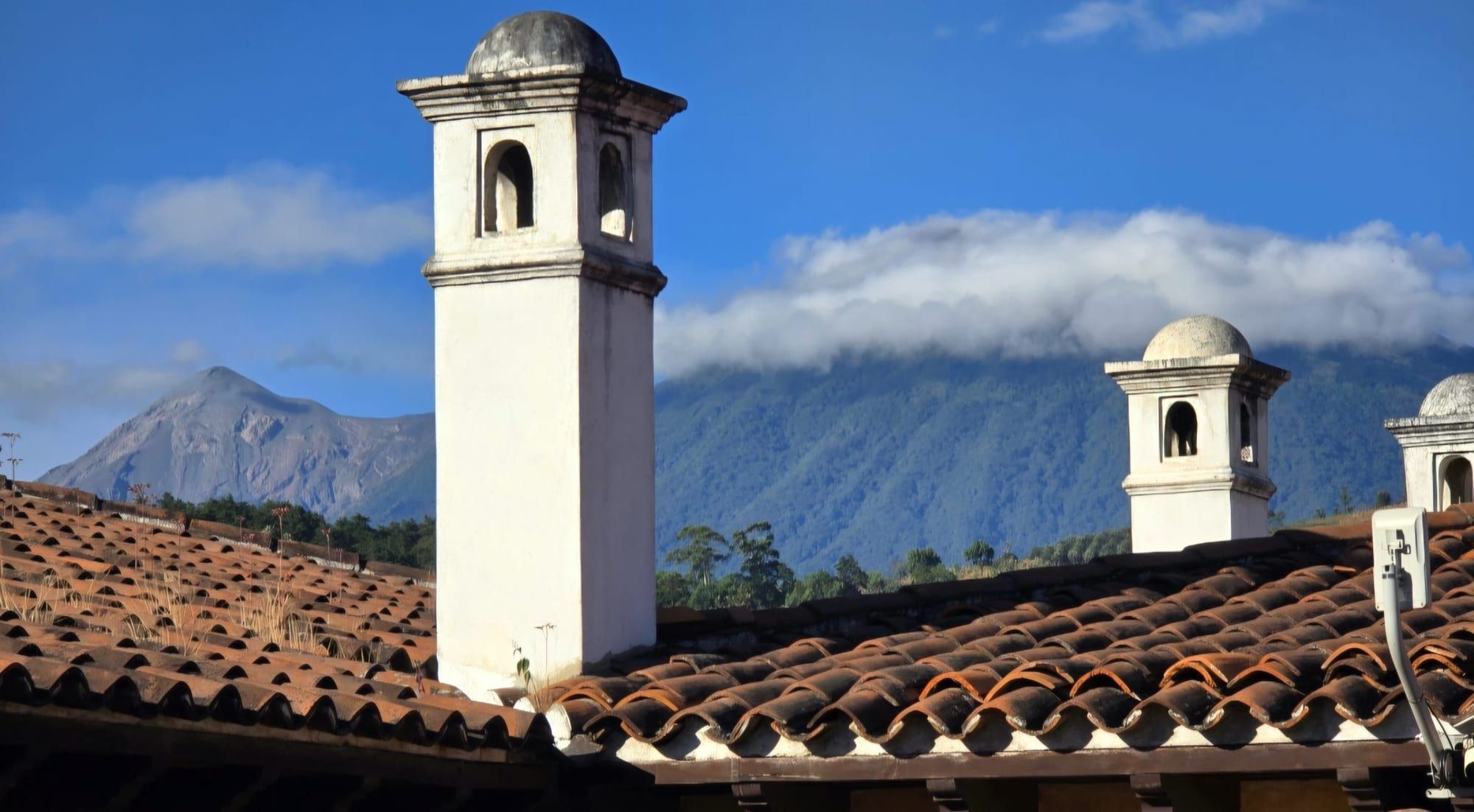
Black streaks on a Tampa roof are algae
The dark streaks running down so many Tampa roofs are algae. ARMA, the asphalt roofing manufacturers’ association, names Gloeocapsa magma as probably the most common of several species behind it, and says the staining is most widespread in the Gulf States and in warm, humid weather. It isn’t mold, and on its own it doesn’t mean the roof is failing. When you call Tampa Roofing Guys about roof algae and moss removal in Tampa or nearby Hillsborough County, say what kind of roof you have, because the cleaning method depends on it.
GAF’s technical bulletin on algae staining explains the pattern you see from the street. The algae grow mostly on north-facing slopes, which get less sun, and dew is their main water source. The stain usually covers more of the lower roof and thins out toward the ridge. The black color is a coating the algae build to shield themselves from UV. ARMA adds that the spores are airborne, so a neighbor’s streaked roof can seed yours, and that the stains stand out most on light-colored shingles.
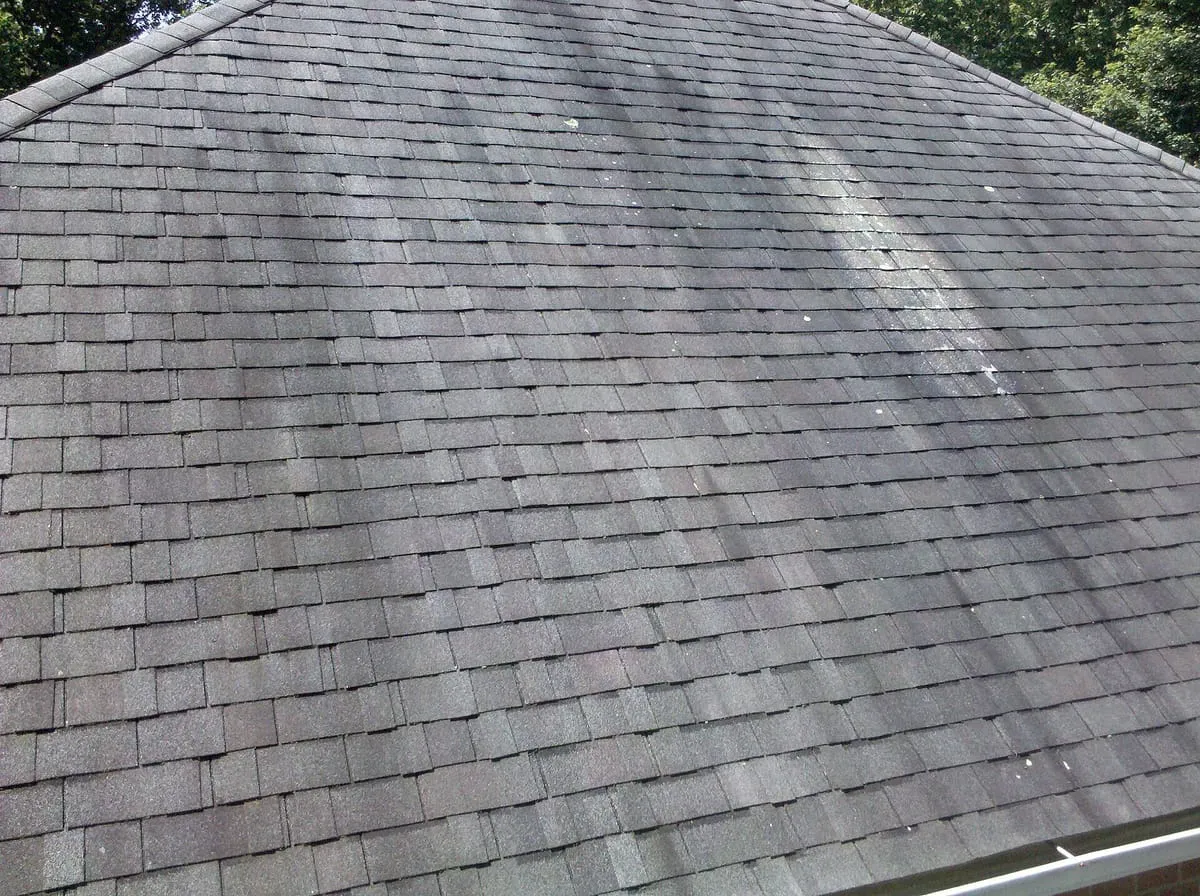 Streaks like these come from Gloeocapsa magma algae growing on the shingles. Photo: Mcbooz, CC BY-SA 3.0.
Algae, moss, lichen or something else?
ARMA notes that algae get mistaken for soot, dirt, moss and tree droppings. From the ground, the differences look like this:
| What you see | What it is | Is it hurting the roof? | What usually happens next |
|---|---|---|---|
| Dark gray or black streaks, heaviest on north and shaded slopes | Algae | Mostly a looks problem | Low-pressure cleaning, or leave it |
| Green, fuzzy clumps, usually in deep shade under trees | Moss | Holds moisture, so the roof dries more slowly | Gentle moss removal, plus trimming the shade |
| Flat, crusty pale or gray-green spots stuck tight to the shingle | Lichen | Bonds hard; pulling it off can take granules with it | Ask the shingle maker first; never scrape it |
| Dark patches only under overhanging branches | Leaves, sap and droppings from the tree | Debris holds water against the roof | Clear the debris and trim the limbs |
| Gray strands lying on the roof below an oak | Spanish moss that fell from the tree | Not growing on the roof, but it traps debris | Clear it and trim back the branches |
InterNACHI, the home inspectors’ association, describes algae and lichen as much less destructive than moss. Moss needs shade and damp, so on a Tampa roof it turns up where big trees keep a slope shaded most of the day. ARMA’s own advice on moss is to ask your shingle maker how to deal with it.
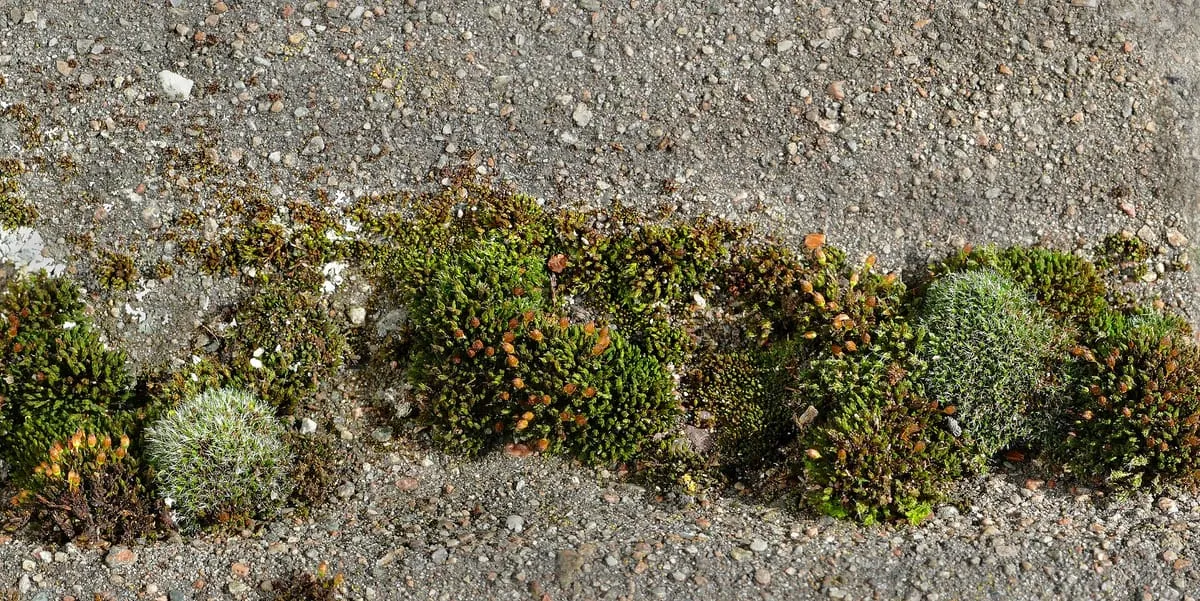 Moss grows in raised green clumps, unlike the flat streaks algae leave. Photo: W.carter, public domain.
How a shingle roof gets cleaned without stripping it
Not with a pressure washer. ARMA’s bulletin says high-pressure washing is likely to damage asphalt roofing and shouldn’t be used on it for algae or anything else, and its web page adds no brush or broom either. GAF warns that power washing can knock granules loose and lead to early shingle failure. Even scrubbing by hand loosens granules, per ARMA.
The roof cleaning that works is a mild mix sprayed on, left to work, and rinsed off at low pressure. The cleaning trade calls it a soft wash. ARMA and GAF publish slightly different mixes:
| ARMA bulletin | GAF bulletin | |
|---|---|---|
| Mix | One part chlorine bleach to one part water | 4 gallons water, 1 gallon bleach, 1 cup trisodium phosphate (or a phosphate-free substitute) |
| Applied with | Not specified | A garden sprayer |
| Time on the roof | At least 15 minutes, no more than 20 | Up to 20 minutes |
| Rinse | Gently, with water | Low-pressure water |
| Also says | Don’t scrub; protect the landscaping | Protect shrubs; the roof is slippery when wet |
ARMA also says mixing directions vary among shingle manufacturers, and that other chemicals or methods shouldn’t be used without the shingle maker’s approval. So before anyone sprays your roof, ask two things: what’s in the mix, and whether it matches your shingle maker’s cleaning instructions. If you don’t know the brand, the installer’s invoice or the permit paperwork may name it.
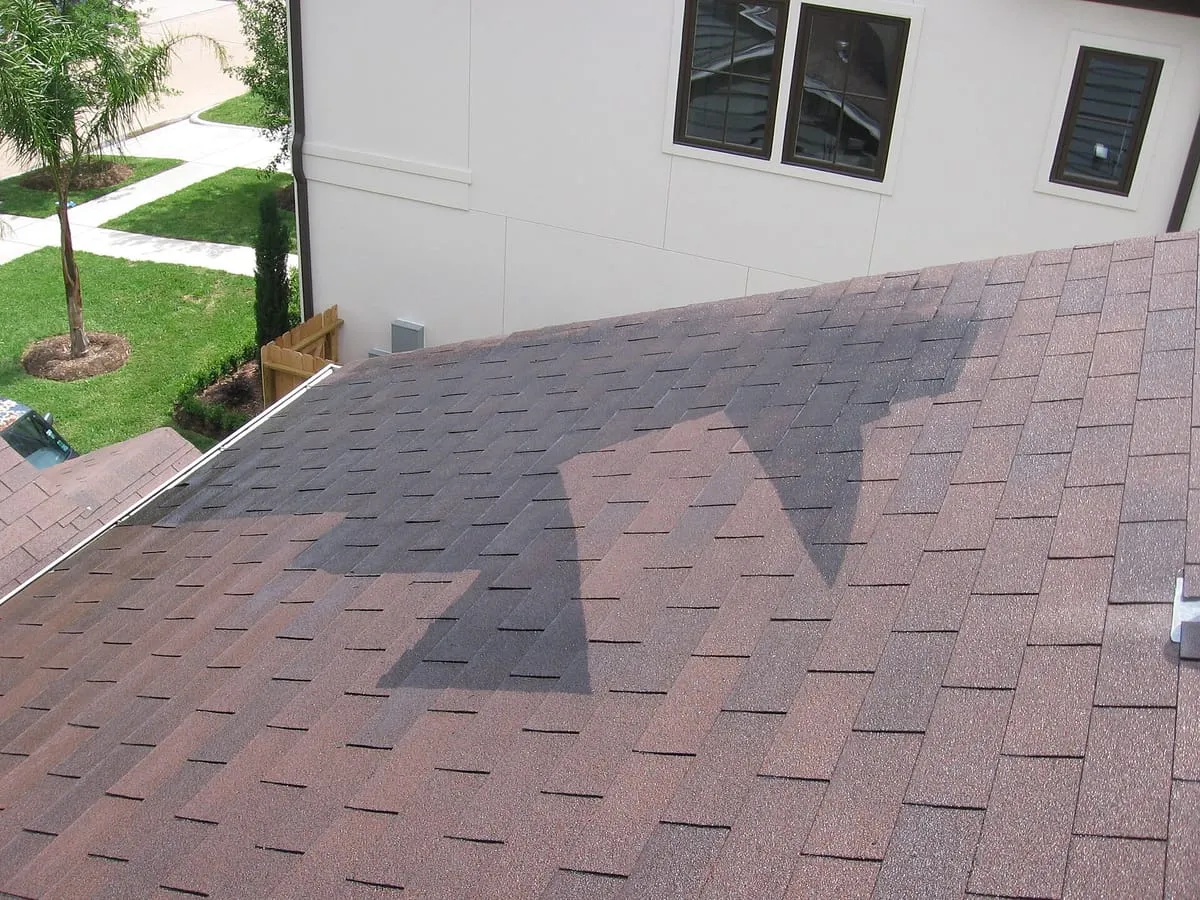 A shingle roof partway through a low-pressure cleaning, the gentler approach the shingle makers call for. Photo: S.Buckalew, CC BY-SA 3.0.
Tile and metal roofs follow their own rules
Concrete tile can take more water pressure than shingles, but not unlimited. Eagle Roofing Products, a concrete tile maker, says to keep pressure at or below 1,200 psi and to use a cleaner that’s compatible with concrete, diluted as far as it will still work. Eagle also says algae, mold and mildew don’t harm a concrete tile roof’s structure, though an HOA may still require the cleaning. Walking on tile can crack or break it, which is why Eagle recommends a licensed contractor do the job rather than the homeowner.
For clay tile and metal, get the manufacturer’s care instructions before any chemical goes on. Painted metal finishes can carry their own warranty terms, and a cleaner that’s fine on concrete may not be fine on a coated panel.
Protecting the yard, the pool cage and the gutters
Both ARMA and GAF tell you to protect plants from the bleach mix. Whatever runs off the roof goes through the gutters and out the downspouts, usually into a flower bed. Ask whoever is doing the work how they’ll handle that: wetting plants before and rinsing them after, covering the ones closest to the downspouts, and rinsing the pool screen enclosure and anything parked under the eaves. A good quote spells this out instead of leaving it to the day.
How long a clean roof stays clean
ARMA says the cleaning is only temporary and the streaks will likely come back. Since the algae depend on shade and dew, trimming branches that keep a slope in shade helps it dry faster after a wet night.
The longer-term fix comes at the next re-roof. GAF and CertainTeed both describe their algae-resistant shingles as releasing copper over time to hold the growth back. Manufacturers list these algae warranties:
| Shingle maker | Algae warranty listed |
|---|---|
| GAF | 25-year StainGuard Plus on many shingles; 30-year StainGuard Plus PRO on Timberline UHDZ; only on shingles in StainGuard Plus-labeled packages |
| Owens Corning | 25 years on most laminate shingles (Oakridge, Duration and others) when Owens Corning hip and ridge shingles go on too; less without them |
| CertainTeed | StreakFighter coverage for the first 10 or 15 years, depending on the shingle |
| IKO | 10-year limited algae resistance warranty (Cambridge, Dynasty) |
| Malarkey | Highlander AR 15 years; Vista AR 25 years; limited lifetime on Legacy and Windsor with 3M Scotchgard Protector |
Terms change and differ by product line, so get the warranty for the exact shingle on your quote. Zinc and copper strips near the ridge are sold for the same purpose; the copper-granule shingles are the version with a written warranty behind them. When you’re planning a re-roof, ask for algae-resistant shingles and the hip and ridge caps made for them, by name.
When cleaning isn’t worth the money
Look at the roof’s condition before paying to wash it. If granules are piling up in the gutters every rain, bare spots are showing, or tabs are curling, the shingles are near the end, and cleaning them now means paying twice. Granules in your gutters explains how to read that. Moss that has lifted shingle edges is a repair job first and a cleaning job second.
If an HOA letter about the stains is what started this, and the roof has years left, book the cleaning, send the HOA the scheduled date and keep the invoice. If it’s due for replacement anyway, a roof inspection gives you a written condition report to show the HOA while you get quotes. And if you’re switching materials at that point, metal vs shingles covers how each holds up here.