One Dover property, several kinds of roof
A Dover property can carry more than one roof: the house, sometimes a manufactured home beside it, and a barn or greenhouse out back. Anywhere in 33527, Tampa Roofing Guys can line up a roofing contractor, and on a rural lot the first thing to pin down is which building needs work, because Florida law treats them differently.
The ZIP is mostly open country. It holds about 17,400 people and 6,047 homes, and only around 15% of its land falls inside any census-designated place, Dover included. Nearly a quarter of the homes (24.7%) are manufactured. None of it is incorporated, so Hillsborough County is the permit office for the whole ZIP.
| Building | Permit for roof work? | What applies |
|---|---|---|
| Site-built house | Yes, from Hillsborough County | Florida Building Code and the County’s re-roof inspections |
| Manufactured home you live in | Ask the County before work starts | It’s a residence, so the farm exemption doesn’t reach it |
| Barn, greenhouse, poultry house or farm storage on agricultural land | No building permit | Exempt from the building code under Florida Statute 604.50, but floodplain rules still apply |
How the farm building exemption works, and where it stops
Florida Statute 604.50 exempts nonresidential farm buildings on bona fide agricultural land from the Florida Building Code and from county codes and fees. Barns, greenhouses, storage buildings and poultry houses all count. For a barn roof, that means no building permit and no inspection.
The exemption has edges, though:
- Floodplain rules still apply. A barn in a flood zone has to meet floodplain management rules even though the building code doesn’t reach it.
- Homes aren’t farm buildings. The house on the same land is residential, so its roof needs a permit and has to meet code like any house in the county. The same goes for a manufactured home someone lives in.
- Nobody checks the barn’s fastening. With no inspection, how the panels are held down is between you and the roofer. Ask what fasteners and spacing they plan to use, and get it on the quote.
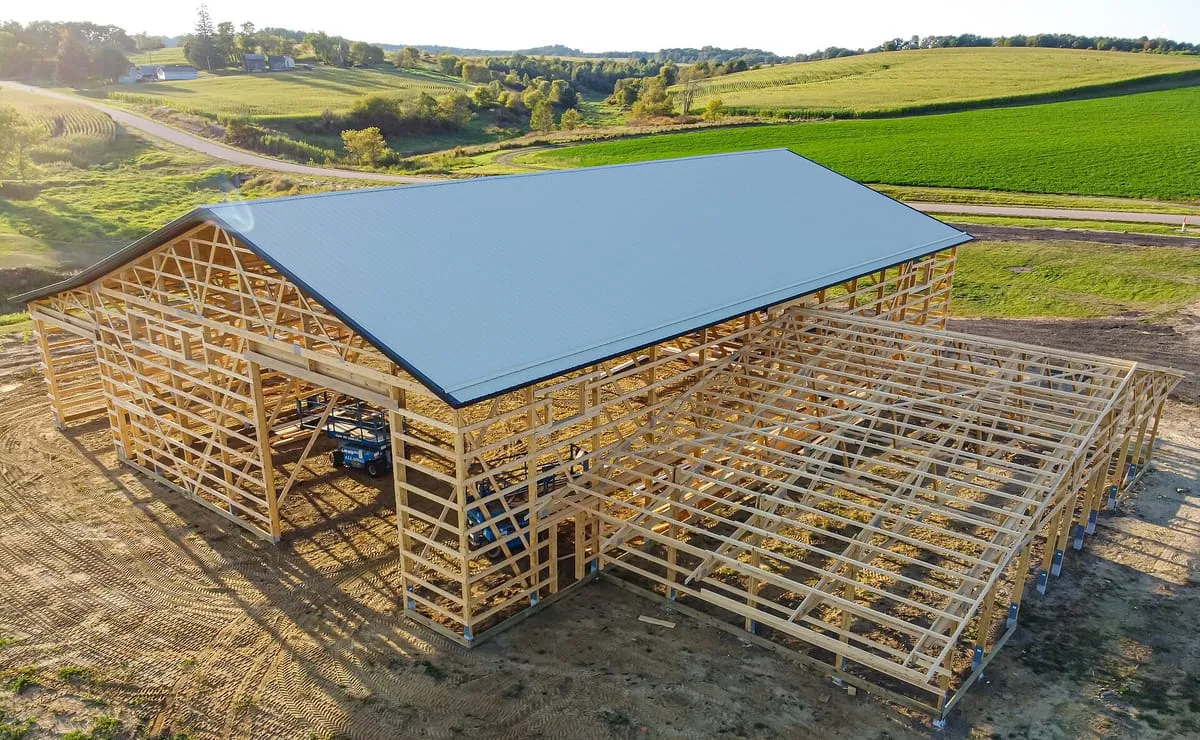 On an exempt farm building no inspector checks how the metal panels are fastened, so put it on the quote. Photo: Wikideas1, CC0.
Milton left 14.73 inches at the Dover gauge
The National Hurricane Center’s Milton report lists 14.73 inches at the Dover rain gauge for the October 2024 storm. After that much water, check each building on its own, and do it from the ground; NRCA’s advice to homeowners after Milton was to stay off the roof.
In the house, look at ceilings and along exterior walls, and in the attic if you can get up there safely. On a metal barn, look for loose or missing fasteners and panel edges that have lifted. Photograph each building separately with the date, so the damage on one never gets mixed up with another.
Metal on the barn, and on the house?
If the barn already has metal panels and you’re thinking about metal for the house, treat them as two different purchases. On an exempt barn, panel type, gauge and fastening are your call. On the house, the same kind of panel needs a permit, approved products and the County’s inspections, starting with a progress check that the roof is properly attached and ending with a final. New roof installation covers product approval numbers, and metal vs shingles compares the two for a house.
Manufactured homes and renters after a storm
Manufactured homes are common across 33527, and federal storm help treats them differently. After a federally declared disaster, the Corps of Engineers’ Operation Blue Roof can put free temporary sheeting on damaged roofs, but it reviews mobile homes and metal roofs case by case, and flat roofs don’t qualify. Emergency roof repair and tarping covers what to do while you wait.
In the Dover census area, about 45% of occupied homes are rented. If you rent, the roof belongs to the owner: send them photos and the date the leak started, since they’re the one who books the roofer.