Which is better on a Tampa house?
Neither wins on every house. Metal held up better in Hurricane Ian surveys, and white metal cut cooling energy the most in Florida testing, but it costs more up front and coastal warranties have distance limits. Shingles with the right wind rating cost less and are what many HOAs expect. Concrete tile, which plenty of Tampa streets already have, is the third option.
On a Hillsborough County house the choice turns on storms, heat, salt air, weight, price and neighborhood rules. When you call Tampa Roofing Guys, ask the roofer to price more than one option. The right answer for a canal-front house in Apollo Beach is often different from the right answer on a shingle street in Brandon.
Metal, shingles and tile side by side
| Metal panels | Architectural shingles | Concrete tile | |
|---|---|---|---|
| Hurricane Ian, IBHS survey | About 12% had damage, mostly caused by nearby structures failing | About half had problems; roofs 10 or more years old fared worse | About 40% had some damage; severe damage was rare except on roofs over 20 years old |
| Cooling energy vs a dark shingle roof (FSEC test homes) | White metal: 23% less | White shingles: 4% less | White S-tile 20% less, white flat tile 17%, terra cotta 3% |
| How wind resistance is shown | Florida Product Approval for the panel system | ASTM D7158 class (D, G or H) on the bundle | Installed to the FRSA-TRI tile manual, with product approval |
| Weight on the framing | Light | Light | Heavy enough that framing guides treat it separately |
How each roof did in Hurricane Ian
Two large surveys after Ian looked at roofs in southwest Florida. FEMA’s building performance report found roof covering failure was the most common damage to the outside of single-family homes. It recorded visible damage on about 90% of asphalt shingle roofs more than seven years old, against about 21% of metal panel roofs. Florida Realtors’ summary of the same report put shingle roofs installed after 2015 at about 28%, which says as much about roof age as about the material.
IBHS surveyed more than 3,600 homes and found a similar pattern, shown in the table above. IBHS traced most of the metal damage to failures of nearby structures.
The weak point on shingles is the seal. FEMA’s advisory after Hurricane Michael named unsealed and partly unsealed shingles as a source of failures in high wind. A shingle roof is only as good as the sealant strips bonding each course to the one below, and that comes down to installation.
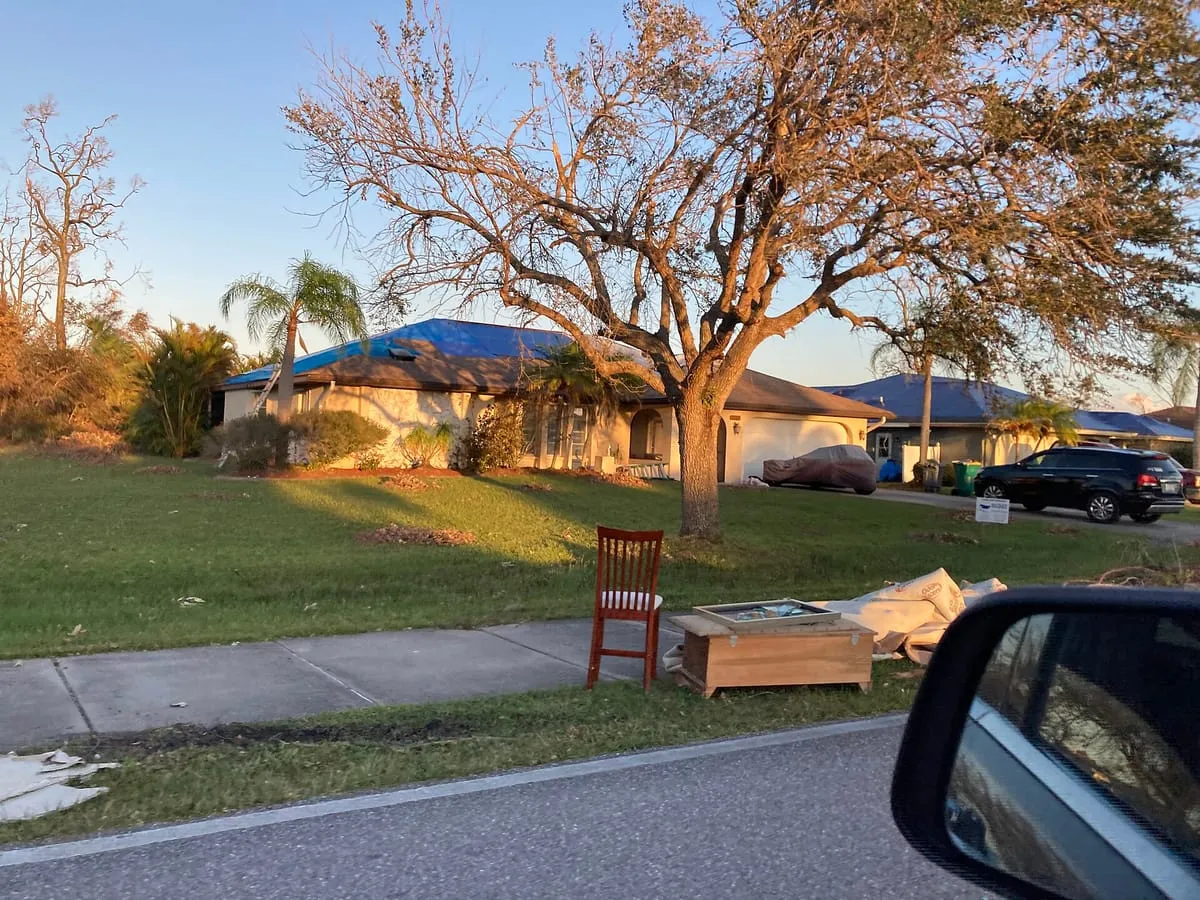 A tarped roof in Deep Creek, Florida, after Hurricane Ian. Photo: PCHS-NJROTC, CC BY-SA 4.0.
Wind ratings in plain words
Shingles are tested and labeled by class. Mark Graham, writing in NRCA’s Professional Roofing magazine, lists ASTM D7158 Class D as good for an ultimate design wind speed up to 116 mph, Class G up to 155 mph, and Class H up to 194 mph. He also questions codes that let the older ASTM D3161 Class F label, which comes from a 110 mph fan test, stand in at much higher design speeds.
Hillsborough County’s wind maps draw their lines at 130, 140 and 150 mph, so Class D falls short anywhere on them. Class G covers every line on those maps and Class H leaves room to spare. Ask the roofer what design wind speed applies at your address. Metal panels and tile don’t use these classes. They go through Florida’s product approval system, and the approval number belongs on the quote; new roof installation explains how to look one up.
Heat and the cooling bill
The Florida Solar Energy Center built seven homes on identical plans in Fort Myers and measured cooling energy with different roofs. Against a dark shingle roof, white metal cut cooling energy by 23%, white S-tile by 20% and white flat tile by 17%. White shingles saved only 4%, and terra cotta tile 3%. The study is from 2000, but the reason hasn’t changed.
The attic numbers explain it. Under the dark shingles, the attic ran about 40°F hotter than the outdoor air at peak. Under the most reflective roofs, it stayed at or below outdoor air temperature. That matters most in houses with the ductwork up there.
Color and finish do most of the work. The study tested white metal, so don’t expect a dark metal roof to match it, and white shingles barely moved the number. If heat is your main reason for switching, ask for the reflectance rating of the exact color you’re choosing.
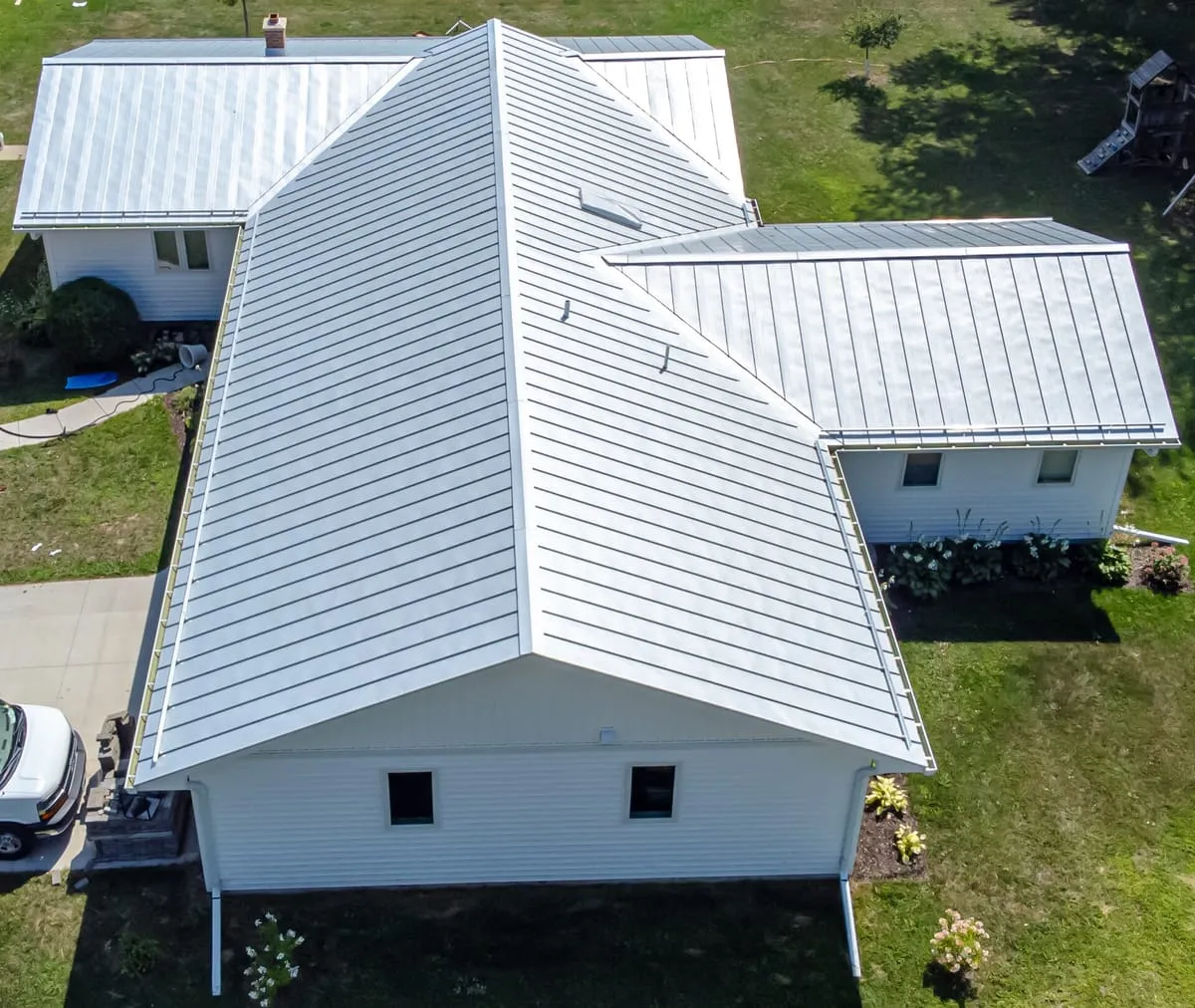 White metal was the coolest roof in the Florida Solar Energy Center tests. Photo: Wikideas1, CC0.
Salt air near the bay and canals
Steel roofing near salt water is where warranties get strict. Drexel Metals’ 25-year Galvalume warranty, as one example, excludes salt water marine atmospheres. To be covered, the building has to be at least 2,800 feet from a coastline with surf, 1,200 feet from a large bay, and 600 feet from marshes and canals, and the owner is expected to keep up a fresh-water rinse near salt.
Other brands set different distances, so read the actual warranty before you sign. If you’re on the water in a place like Apollo Beach, ask whether the panels are Galvalume steel or aluminum, and get the coastal terms in writing with the quote.
What your HOA can and can’t require
Florida’s HOA law, section 720.3035, requires an association’s board or architectural committee to adopt hurricane protection specifications, and it can’t deny an application for hurricane protection that meets them. The statute counts roof systems recognized by the Florida Building Code that meet ASCE 7-22 standards as hurricane protection. The specifications can still set the color and style of what goes on the house.
So get the association’s written specifications before you choose a roof. Submit the application with the product approval number and a color sample, and don’t sign a roofing contract until it’s approved.
Tile: the option many houses already have
Tile’s Ian record, in the table above, hinged on the roof’s age. Tile sheds water; the FRSA-TRI installation manual that Florida’s code references describes it as a highly effective water-shedding assembly, which means the underlayment beneath is the real waterproofing. The same manual warns that mixing systems can shorten a tile roof’s life, so a tile repair should use the system already on the roof.
Weight is the other tile question. APA’s roof construction guide flags dead loads over 10 pounds per square foot, naming tile, as a reason to reduce allowable loads on the sheathing. Going from shingles to tile means checking the framing first, because overloaded framing is one cause of a sagging roof.
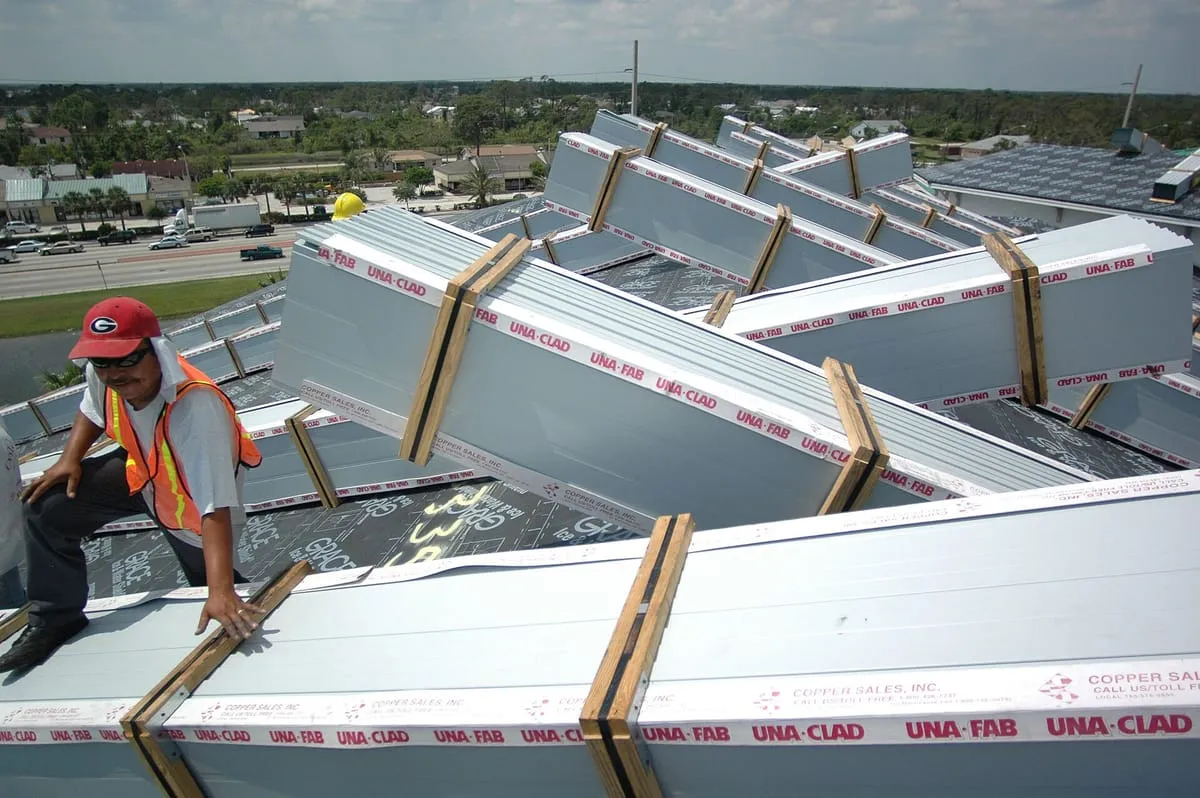 Port St. Lucie, Florida, re-roofed its city hall with metal panels after flying debris wrecked the old tile roof. Photo: Leif Skoogfors, FEMA, public domain.
Price, and how to decide
Metal costs well more than shingles up front; roof replacement cost has the published 2025 regional figures and what drives a Tampa quote.
Then match the roof to the house. On a canal or near the bay, the coastal warranty terms may decide it before price does. In an HOA where every house has shingles, the approval process and the specifications set your choices. If you’ll sell within a few years, a well-installed Class H shingle roof is the lower-cost choice against metal. If the upstairs bakes every afternoon, a light, reflective roof of any material helps. And if the house already has tile in decent shape, compare re-doing the underlayment and tile against a switch to metal.