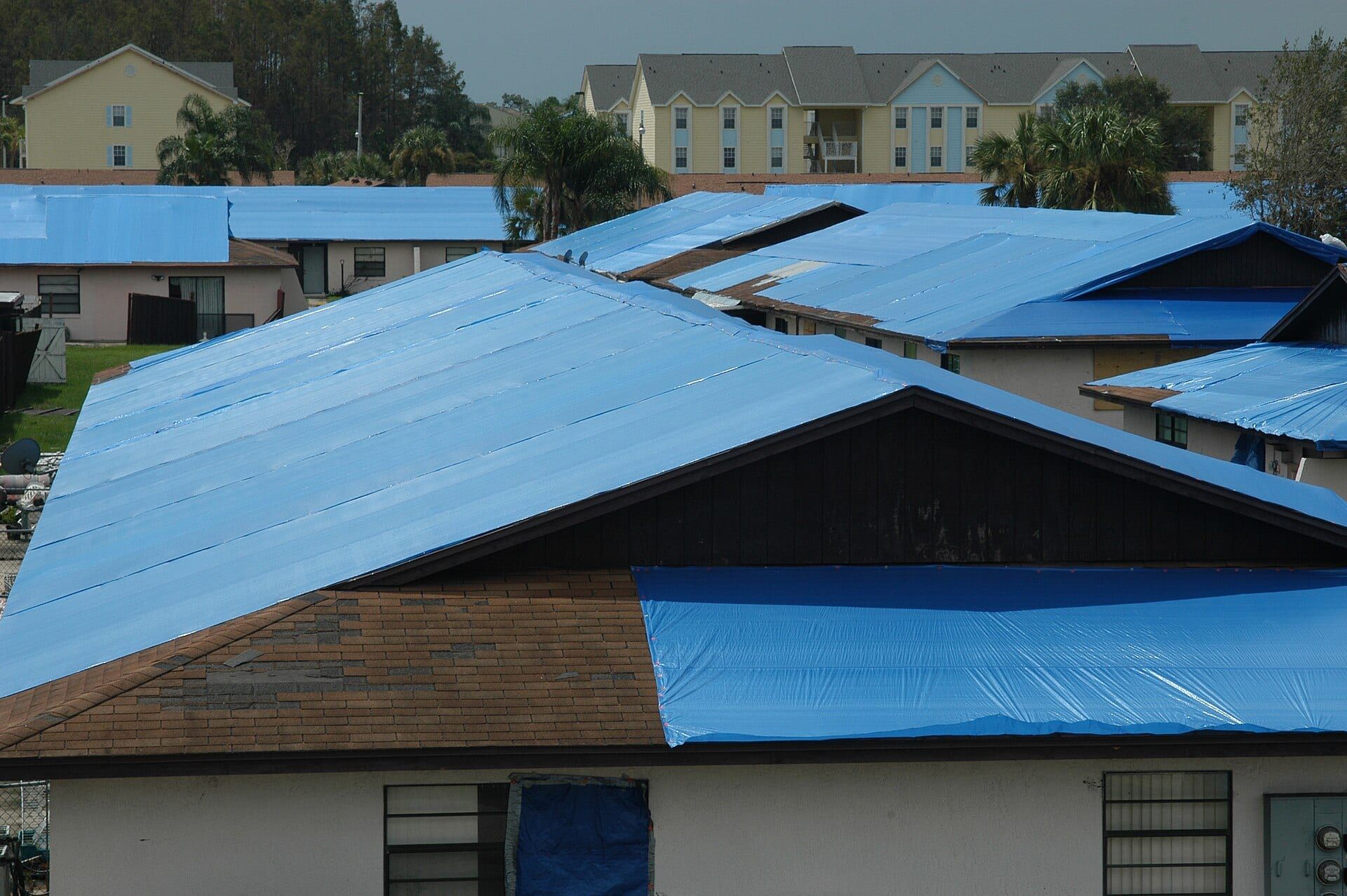
After a storm, the order you do things in matters
Storm damage roof repair in Tampa Bay goes smoother when it happens in a set order: look from the ground, photograph, work out which deductible applies, report the claim in time, and get the damage written up before the adjuster visits. When you call Tampa Roofing Guys after a storm, the roofer wants the same evidence your insurer will ask for, so one set of photos serves both.
Milton’s gusts ran roughly 80 to 100 mph across Hillsborough County in October 2024 (the county’s storm record). After wind like that, shingles can come unsealed and still look fine from the street.
What to check from the yard
NRCA recommends inspecting every roof that went through severe weather, whatever it looks like, and says owners should do their own looking from ground level. Walk all the way around the house with your phone and zoom in on:
- shingles or tile pieces on the ground, and the lighter or bare patch on the roof where they came from
- tabs that are lifted, flipped back or hanging at an angle
- limbs on the roof or leaning against it (leave them for the roofer)
- dents in gutters, downspouts, roof vents and the AC unit
- piles of granules where the downspouts empty (what granules in the gutters mean)
Then go inside. Check every ceiling, especially in closets and along exterior walls, and look in the attic if you can stand on the framing safely. Take the outside photos from the same spots each time, and keep the dates. If the roof was already patched or stained before the storm, tell the roofer, so the write-up separates old damage from new.
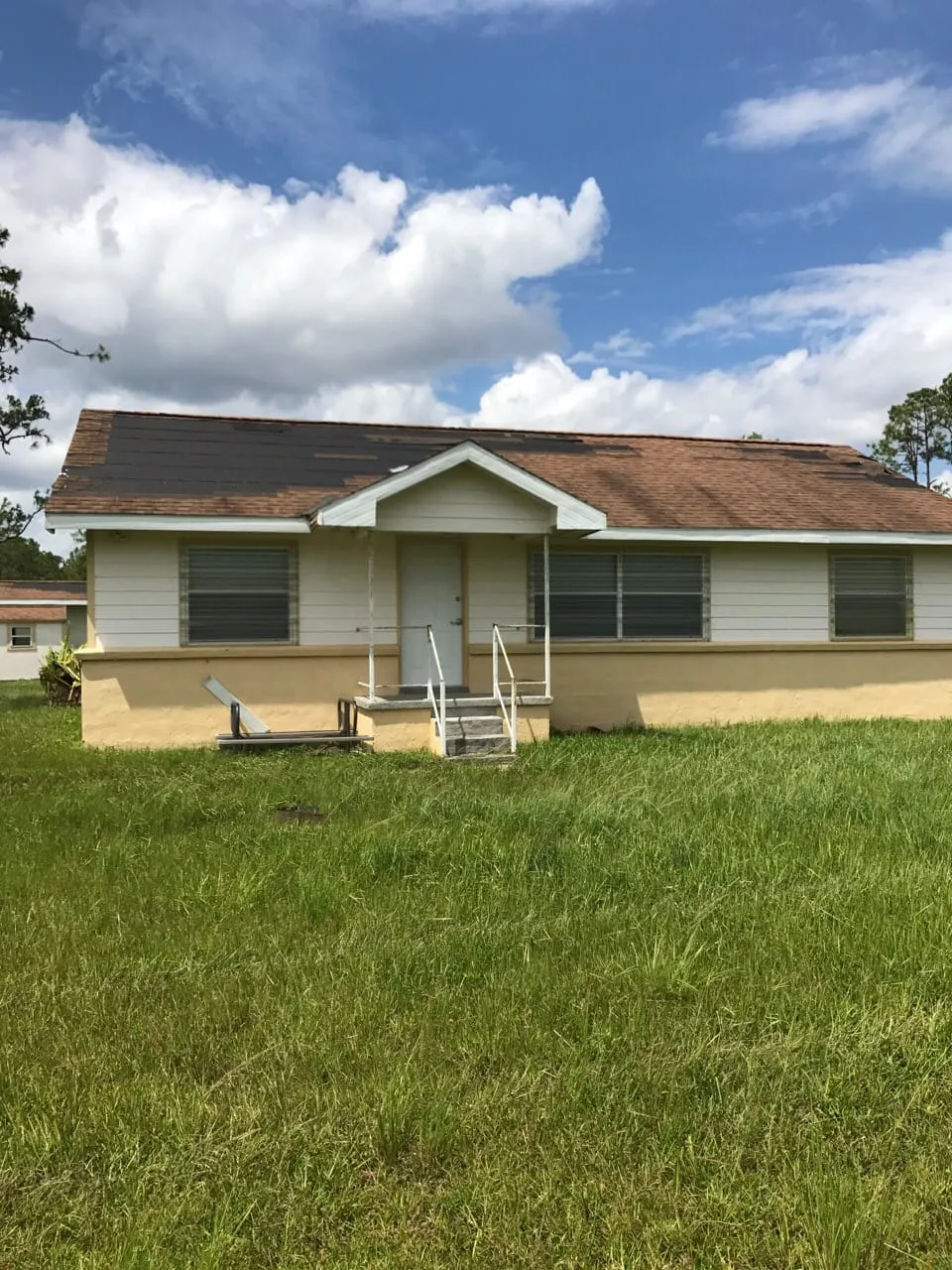 Patches like these are easy to spot from the yard; this Florida house lost shingles in Hurricane Irma. Photo: U.S. Fish and Wildlife Service, public domain.
Wind damage or hail damage?
Around Tampa Bay, damaging wind gets reported more often than hail. NOAA’s Storm Prediction Center climatology for the Tampa Bay radar area counted 2,870 damaging-wind reports against 1,801 hail reports from 1980 to 2006. The two leave different marks, and the difference matters to the adjuster.
| What you find | Usually points to | What to do about it |
|---|---|---|
| Shingles or tile in the yard, bare spots on the slope | Wind | Photograph where pieces landed and where they came off |
| Tabs lifted but still attached | Wind; the sealant strip let go | Ask the roofer to check whether nearby shingles are still bonded |
| Dents in gutters, vents, AC fins; clean spatter marks | Hail | Photograph each one next to a tape measure |
| Granules piled at downspouts after the storm | Hail, or ordinary aging | Compare with how much came off before the storm |
| A limb through or on the roof | Tree fall | Get it tarped; don’t pull the limb off yourself |
| A new ceiling stain after wind-driven rain | Water getting past a damaged or weak spot | Date the photo and note which room |
What hail does to shingles
Research by Haag, published in NRCA’s Professional Roofing magazine, puts the threshold for functional damage to asphalt shingles at hailstones about 1 inch across or larger. Functional damage means a fractured mat, a puncture or a tear: damage that lets water in or shortens the shingle’s life. Granule loss by itself, on shingles in good condition, doesn’t count. Hail also falls in random patterns, so real hail marks are scattered across a slope rather than lined up.
How big hail gets in central Florida
An NWS Tampa Bay study of 1,257 hail reports in 17 central Florida counties from 1980 to 2009 found 41.4% were 1 inch or larger, and 1.7% reached 2 inches. Inch-plus hail was most common May through July and showed up in every month except November and December. A spring thunderstorm, not just a hurricane, can be the date of loss.
What wind does
Wind lifts shingle edges, and once the sealant strip lets go, the shingle can crease, tear or blow off. FEMA’s advisory after Hurricane Michael named unsealed and partly unsealed shingles as a source of failures, and it reported widespread poor shingle performance on homes built after the first Florida Building Code took effect in 2002. Ask the roofer to check whether the tabs are still sealed down, including on slopes that look intact.
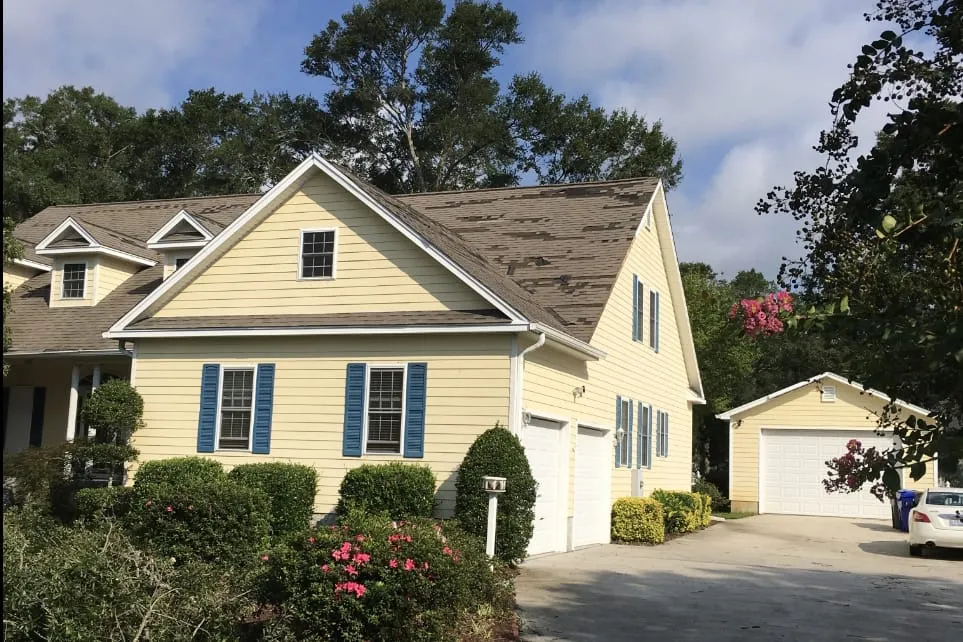 Wind tore shingles off this North Carolina roof during a weak tornado in 2019. Photo: National Weather Service, public domain.
Which deductible applies to the roof?
A Florida homeowners policy can carry two deductibles: one for hurricane losses and one for all other perils, often called AOP. Florida insurers have to offer hurricane deductibles of $500, 2%, 5% and 10% of the dwelling coverage, with some exceptions for higher-value homes. The percentage is of Coverage A, the dwelling limit, not of the damage.
With round numbers for illustration: say the dwelling coverage is $350,000 and the hurricane deductible is 2%. That’s $7,000 you carry before the policy pays anything on hurricane damage. If the roofer’s written estimate for the storm repair comes in under $7,000, a hurricane claim for the roof alone pays nothing toward it.
The hurricane deductible works once per calendar year with the same insurer. If a second hurricane hits in the same calendar year, you pay whichever is greater: what’s left of the $7,000, or your AOP deductible. And if your policy also has a separate roof deductible, Florida law doesn’t let it apply to hurricane roof losses (how roof deductibles and depreciation work).
Report the damage promptly either way. For a hurricane, the date of loss is landfall day, and Florida’s claim notice deadline runs from that date.
Get the damage written up before the adjuster comes
Ask the roofer for photos of every slope, close-ups of the damage with a scale in the frame, the roof’s measurements, and an itemized estimate, all dated. The estimate should say whether it covers a repair, a section or the whole roof, and why.
On an older roof, the share that’s damaged can change the job. If the damage covers a big share of a roof installed before the 2007 Florida Building Code took effect, the 25% rule can turn a repair into a full replacement. The repair or replace guide walks through how that rule reads now.
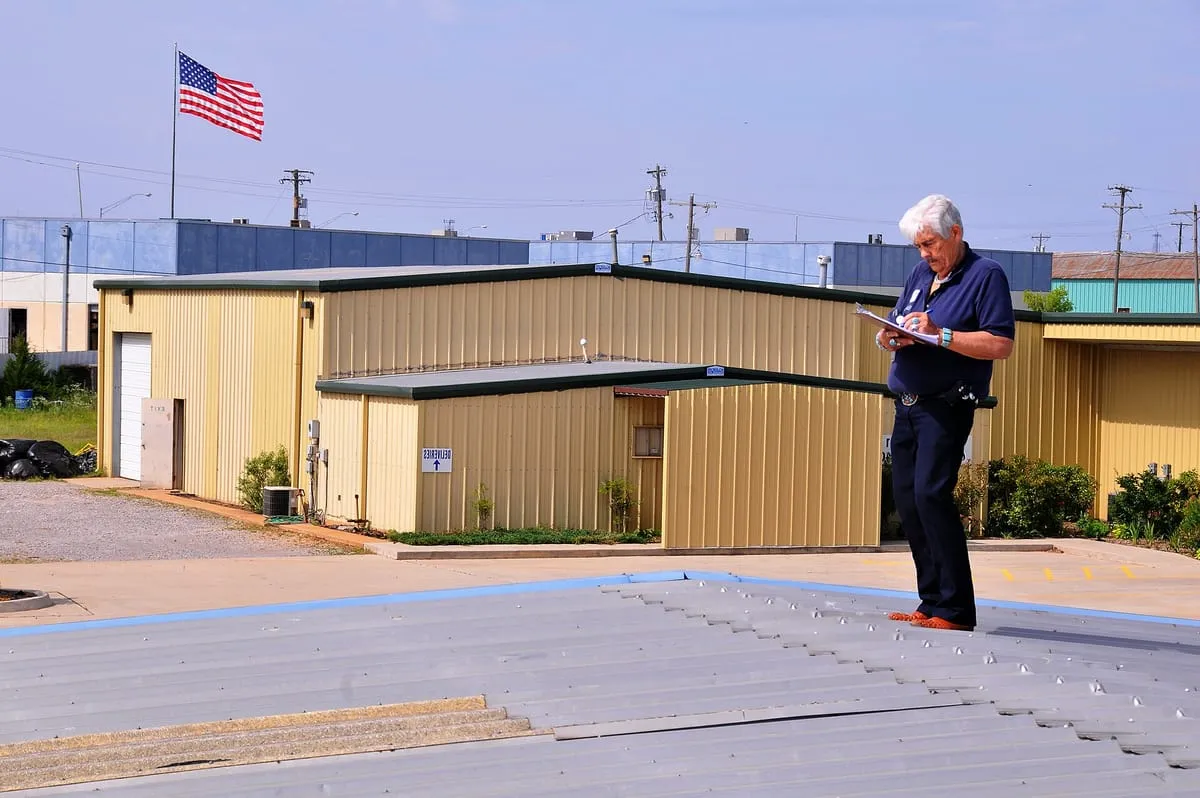 A FEMA inspector writes up roof damage on an Oklahoma municipal building after a 2010 tornado. Photo: Win Henderson, FEMA, public domain.
What Florida law bars roofers from doing after a storm
Florida Statute 489.147 puts limits on contractors around roof claims. Under it, a contractor may not:
- offer you cash, a gift card, a rebate, a coupon or anything else of value for a roof inspection or for filing a roof claim
- offer to waive your deductible
- send advertising that urges you to file a roof claim without notices that you’re responsible for the deductible and that a deductible waiver or false claim is insurance fraud, a third-degree felony
- interpret your policy, advise you on coverage or adjust the claim, unless they’re licensed as a public adjuster
- hand you a repair authorization without a good-faith itemized estimate
Fines run up to $10,000 per violation. Contracting without a license is already a crime in Florida, and during a declared state of emergency it’s a third-degree felony, so check the roofer’s state license before you sign anything. NRCA’s advice after Helene and Milton was blunt about bids that undercut everyone else: if it sounds too good to be true, it probably is.
For questions about what your policy covers, go to the policy itself, your agent, a licensed public adjuster, or the Department of Financial Services helpline at 1-877-693-5236.