Why one number doesn’t fit every Tampa roof
Ask what a new roof costs in Tampa and the honest answer is a method, not a figure. Two houses with the same square footage can need very different roofs: a one-story ranch with a low hip roof, or a two-story with steep gables, tile and 1980s decking that has to be re-nailed. Call Tampa Roofing Guys about roof replacement cost and the roofer prices the job from the roof itself, using the pieces laid out below.
What published 2025 figures say
Remodeling magazine’s 2025 Cost vs Value report lists a job cost of $32,253 for an asphalt shingle roof replacement in the South Atlantic region, which takes in Florida, and $50,181 for a metal roof replacement. The report doesn’t publish a Tampa figure. Its numbers describe the report’s own model project, not your house, so use them as a sanity check: a shingle quote far above or below that mark should come with a reason you can see on the roof, such as two layers coming off, a steep pitch or a lot of rotten decking.
Wages are one piece of the price. The Bureau of Labor Statistics put the median wage for roofers in the Tampa-St. Petersburg-Clearwater metro at $22.68 an hour in May 2025, below the national median of $26.65. A roofing company’s price also carries materials, disposal, permits, insurance and overhead, so the wage alone won’t tell you whether a quote is fair.
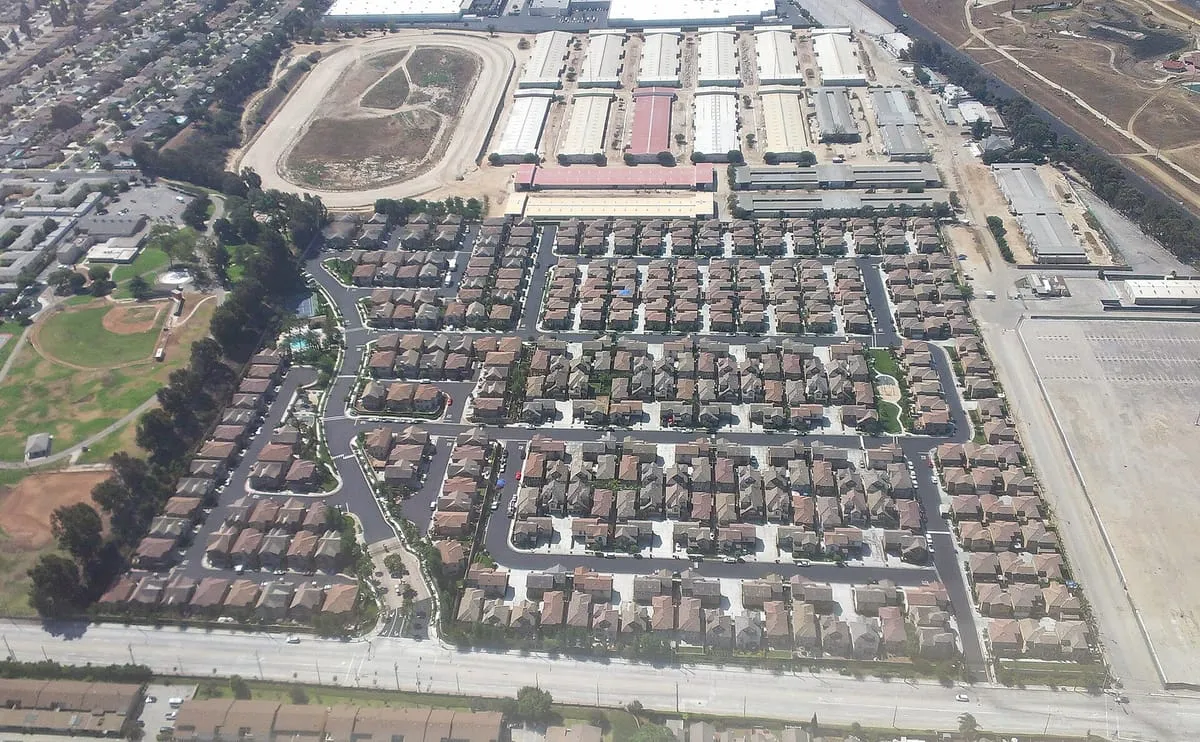 Houses that look alike from above can still need different roofs once pitch, layers and decking are counted. Photo: Alfred Twu, CC0.
Measure your roof in squares
Roofers price and order material by the square, which is 100 square feet of roof surface. A quote for 32 squares covers about 3,200 square feet of roof. A sloped roof is always bigger than the ground it covers, and the steeper the pitch, the wider that gap gets.
To estimate yours, take the footprint of everything under the roof, including the garage, covered porches and the overhangs past the walls. Multiply it by the factor for the roof’s pitch (the rise in inches for every 12 inches across), then divide by 100.
| Pitch | Multiplier | Roof area per 1,000 sq ft of footprint | Squares |
|---|---|---|---|
| 4/12 | 1.054 | 1,054 sq ft | 10.5 |
| 5/12 | 1.083 | 1,083 sq ft | 10.8 |
| 6/12 | 1.118 | 1,118 sq ft | 11.2 |
| 7/12 | 1.158 | 1,158 sq ft | 11.6 |
| 8/12 | 1.202 | 1,202 sq ft | 12.0 |
This is plain geometry, an estimate method for checking a quote. The roofer measures the real roof, and the material order runs a bit over the measured area to cover cuts at hips, valleys and edges.
A 2,700 square foot house, two ways
Living area isn’t footprint, and that trips up a lot of quick estimates.
Say the house is one story, with a two-car garage under the same roof, and the garage and overhangs bring the footprint to about 3,300 square feet. At a 5/12 pitch, 3,300 x 1.083 comes to about 3,574 square feet, or roughly 36 squares. At 7/12 it’s about 38 squares.
Now make it two stories, 1,350 square feet a floor, with no attached garage. The roof covers only the top floor, so with overhangs the footprint might be around 1,650 square feet. At 5/12 that’s about 18 squares: half the roof of the one-story house, with the same living space. Both footprints here are assumptions for the example, not measurements.
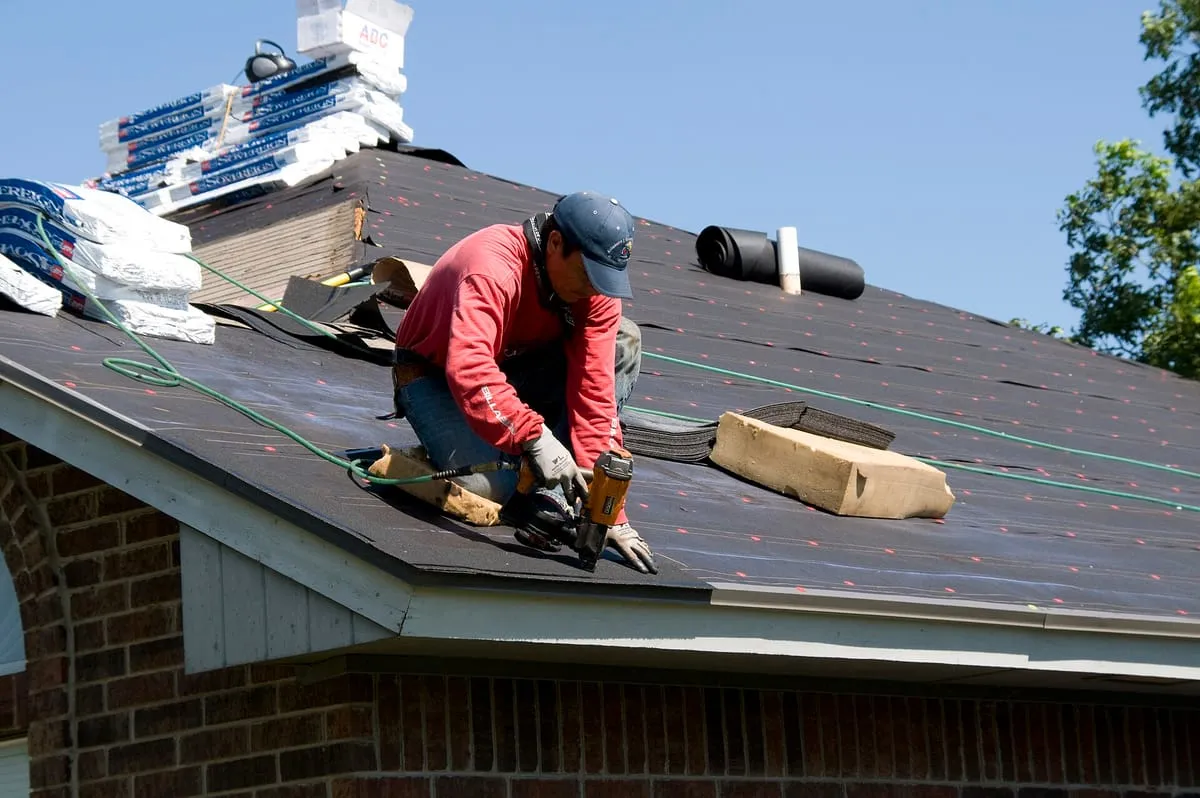 Shingles are ordered by the square and stacked on the roof in bundles before they go down. Photo: Patsy Lynch, FEMA, public domain.
Line items that move a Tampa quote
| Item | What pushes it up | What the quote should show |
|---|---|---|
| Tear-off | A second layer, tile (heavier to strip and haul), a steep pitch | How many layers come off, and disposal |
| Decking | Rot that only shows once the old roof is off | A per-sheet charge and the number of sheets included |
| Code upgrades on older houses | Deck re-nailing and a secondary water barrier on homes that predate the Florida Building Code; on some, roof-to-wall work, with the required retrofit limited to a 15% increase in the re-roofing price | Each upgrade as its own line |
| Underlayment | Which sealed-deck method is used, from a full self-adhered membrane to taped seams under standard underlayment | The method and the product named |
| Pitch and shape | Steep slopes need more safety setup; hips, valleys and dormers mean more cutting and flashing | The squares and the pitch written down |
| Material | Metal costs more than shingles in the 2025 figures above; tile adds weight the framing has to carry | Brand, product line and product approval number |
| Permit and inspections | The fee is based on the job | Whether the permit is included, and who pulls it |
Decking can change after signing, because nobody knows how many sheets are bad until the tear-off. A quote with a fair per-sheet price and a few sheets built in is easier to trust than one with no decking line at all.
The code upgrades aren’t optional extras on an older house. What happens on a Tampa re-roof shows which ones apply by the year the house was permitted. Near the bay, the metal alloy matters for the warranty, which metal vs shingles covers. Inside the City of Tampa, the city’s online fee estimator shows what the permit will run before anyone quotes it.
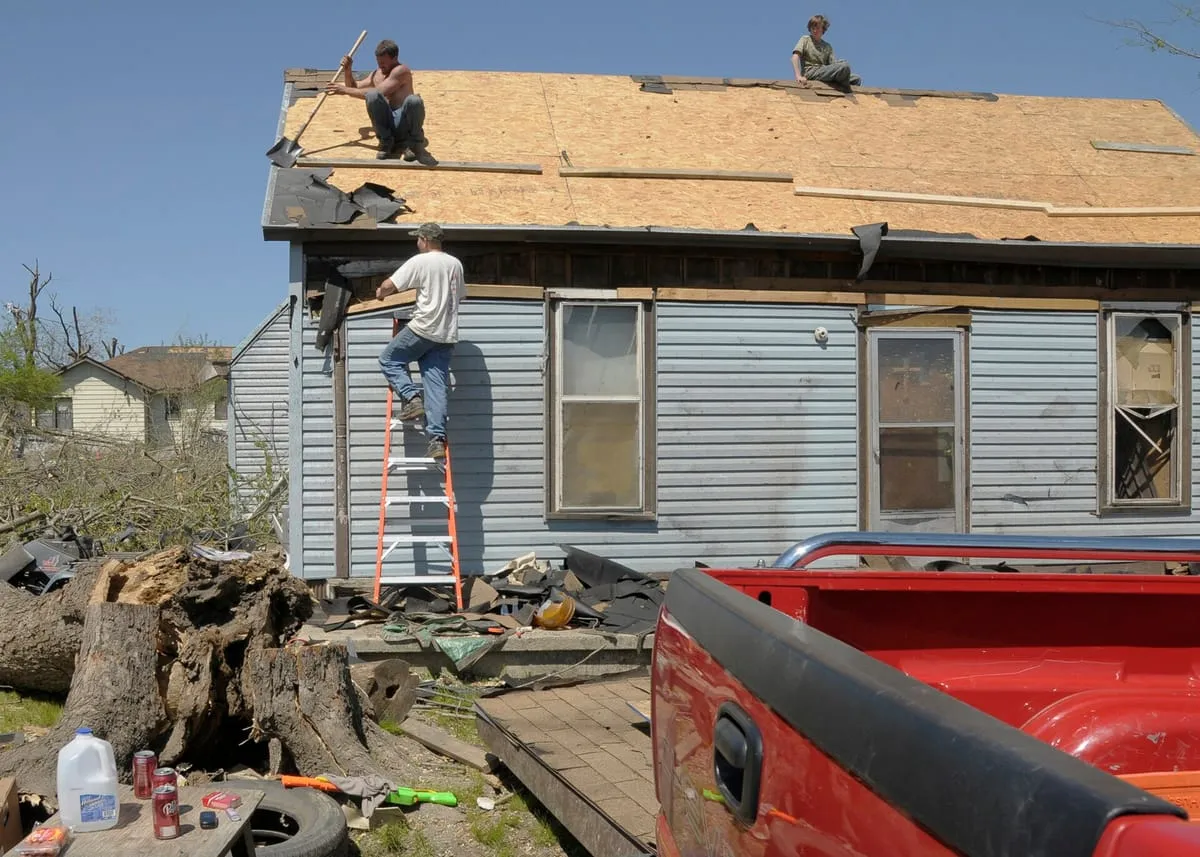 With the old shingles off, the decking is exposed, and that’s when the number of bad sheets gets settled. Photo: Win Henderson, FEMA, public domain.
Comparing two quotes side by side
Before you look at the totals, put the quotes on the same terms:
- Squares. If one roofer measured several squares fewer, ask how.
- Tear-off. One layer or two, and is the dumpster included?
- Decking. Per-sheet price and the number of sheets included.
- Code items. On a house from the 1980s or 1990s, a quote with no re-nailing or secondary water barrier is missing work the code requires.
- Underlayment and shingle line. Same method, same product tier?
- Metal parts. New drip edge, flashing, pipe boots and vents, or reused ones?
- Payment schedule. Florida law sets conditions on deposits over 10% of the contract; see the questions to ask a roofer before signing.
Help paying for a new roof
My Safe Florida Home
The state’s My Safe Florida Home program pays toward hurricane upgrades, and under the 2026 law replacing the roof covering is one of them when the program’s own inspection recommends it. The grant now goes only to low- and moderate-income homeowners, on a homesteaded house built before 2008 and insured for $700,000 or less, after a program inspection within the past 24 months. The state puts in $2 for every $1 you spend, up to $10,000, and low-income owners don’t pay a match.
The grant must be approved before work starts, and it pays back after the job is done, so you front the cost. The work has to be permitted and done by licensed contractors. The program’s site says applications open in phases with dates to be announced, so check it for the current status before you build a budget around it.
Wind mitigation credits
After the re-roof, a new wind mitigation inspection records the upgrades, and Citizens says that inspection may qualify you for wind discounts. Ask your agent what the upgrades would be worth on your insurance bill before choosing between underlayment options. Roof inspection types explains who can do the form.
Will insurance pay for the new roof?
Only for covered damage, such as a storm tearing shingles off, and only after the deductible. Homeowners policies generally exclude wear and tear, so a roof that’s simply old usually isn’t a covered loss; your policy’s exclusions say for sure. On a replacement cost policy, Florida law has the insurer pay at least the depreciated amount first and the rest as the work is done; ACV vs RCV explains that holdback. Named hurricanes carry their own deductible, explained under how the hurricane deductible works. For what your own policy covers, go to the policy and your agent.