Signs a Tampa roof is due for replacement
Most roof replacements in Tampa start one of two ways: the roof is showing its age, or the insurance company is asking about it. Either way, Tampa Roofing Guys gets Hillsborough County homeowners a roofer for the whole job: the tear-off, then a re-roof built to the Florida Building Code now in force.
Shingles don’t last as long here as the national charts suggest. Home inspectors’ Florida estimates put three-tab shingles at 10 to 12 years and architectural shingles at 15 to 20, and their chart notes that hot climates cut asphalt shingle life sharply. Tile lasts far longer, though the underlayment beneath it is what keeps the water out.
From the yard, or with binoculars, look for:
- Curling or splitting across whole slopes. NRCA treats both as deterioration, not a one-off repair.
- Bare black patches where the granules are gone. IKO, a shingle maker, says granule loss becomes a problem once the asphalt underneath is exposed. A handful in the gutters is a different story; see granules in the gutters.
- Leaks in a new spot every few months. That can point to worn-out underlayment rather than one bad flashing.
The roofer adds what you can’t see from the ground: soft, spongy decking underfoot. Citizens’ roof inspection form lists soft decking alongside cracking, curling and granule loss as conditions the inspector records. If a letter from the insurer started all this, the roof certification letter page explains when an inspection can buy time instead of a new roof.
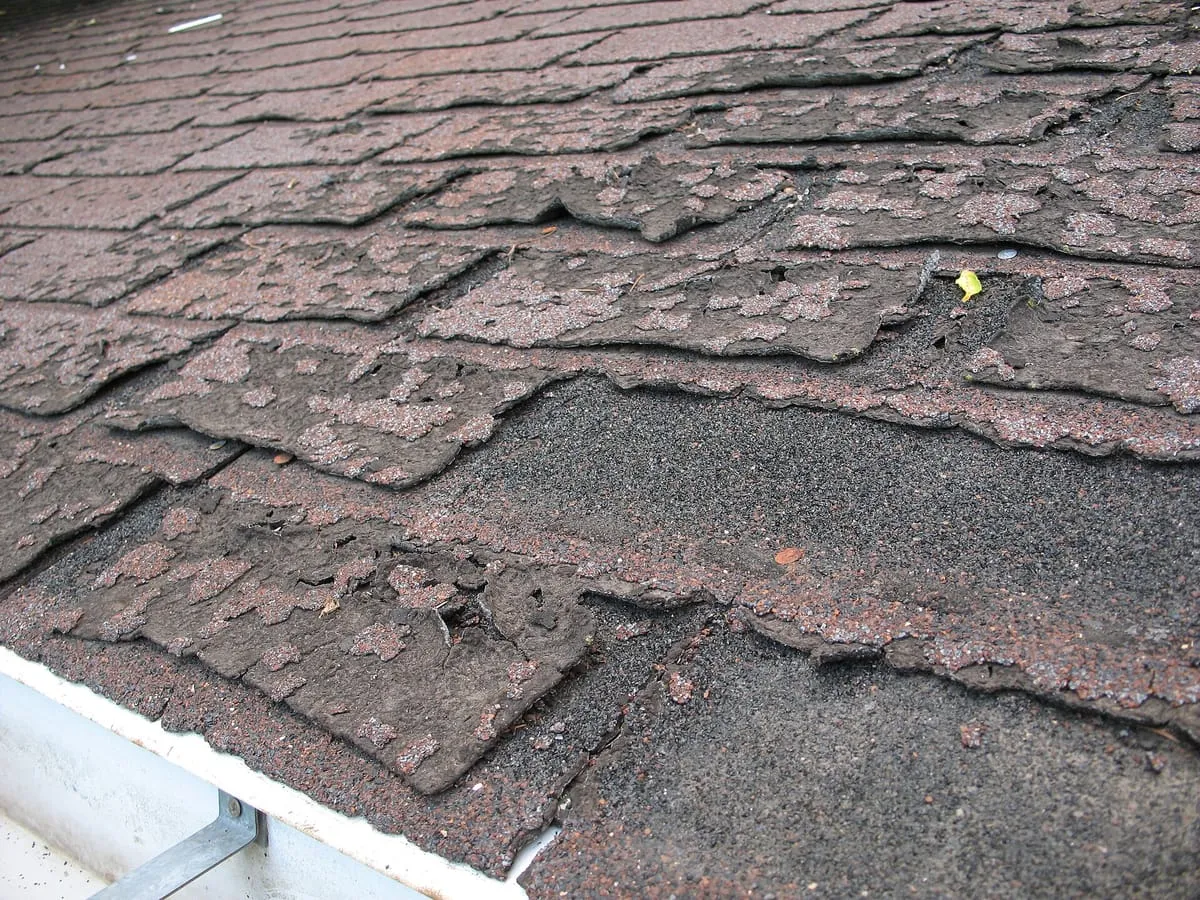 Curled, torn tabs like these, spread across a slope, point to a roof near the end of its life. Photo: Dale Mahalko, CC BY-SA 3.0.
A re-roof, stage by stage
| Stage | What the roofer does | What you’ll notice at the house |
|---|---|---|
| Permit | Applies for the re-roof permit; in unincorporated Hillsborough, attests that the decking, underlayment and covering will meet code | Paperwork, then the permit card posted before work starts |
| Tear-off | Strips the old roofing and underlayment down to the decking | A dumpster or trailer in the driveway, steady pounding, debris coming down past the windows |
| Deck check | Walks the bare deck, cuts out soft or rotted sheets, adds nails where the code calls for them | Fresh plywood patches; this is where extra decking gets added to the bill |
| Dry-in | Lays the sealed-deck underlayment so the house is watertight before the finish roofing goes on | The roof wrapped in underlayment; the dry-in or progress inspection happens about now |
| Roof covering | Installs drip edge, flashing, vents and the shingles, tile or metal | The finished roof, with its edges, vents and flashing |
| Final | Final inspection, cleanup and a magnet sweep of the yard for nails | One last inspection, done virtually inside the City of Tampa |
Between tear-off and dry-in, the house has the least protection it will have all job. Ask how much roof the crew plans to open each day and how they’ll cover it if an afternoon storm builds.
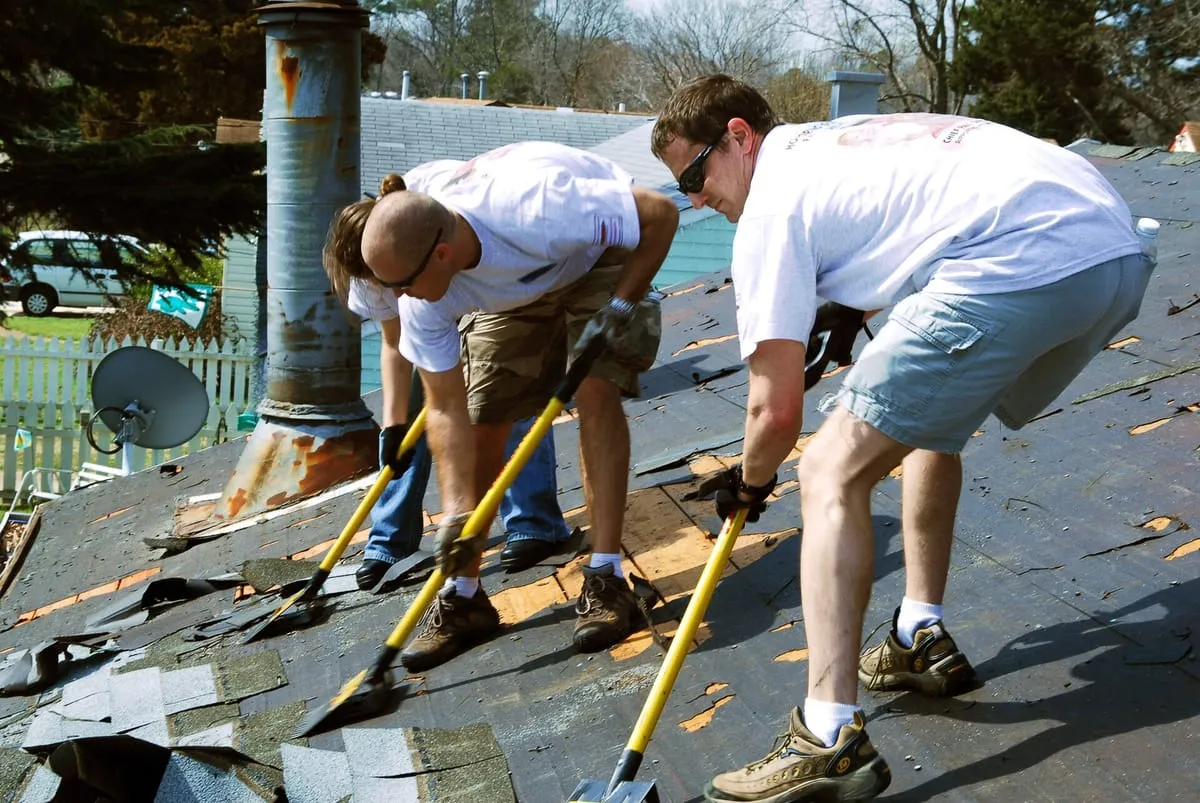 Tear-off takes the roof down to the decking, which is when soft or rotted sheets show up. Photo: Kelly E. Barnes, U.S. Navy, public domain.
Code upgrades a roof replacement brings to older houses
Every re-roof gets the current code for underlayment. Older houses get more, and those extra lines on the quote aren’t upsells.
| Applies to | What the code adds | What it protects against |
|---|---|---|
| Every shingle re-roof | A sealed roof deck: a full self-adhered membrane, self-adhered tape over the deck seams under the underlayment, or two layers lapped and fastened to a set pattern | Water pouring in through deck seams if wind strips the shingles off |
| Tile re-roofs | Underlayment and fastening done to the FRSA-TRI high-wind tile manual | Leaks once wind-driven rain gets under the tile |
| Houses permitted before the Florida Building Code | Extra 8d ring-shank nails 6 inches apart wherever the deck was stapled, nailed with 6d nails, or nailed with 8d nails spaced wider than 6 inches, plus a secondary water barrier | Decking peeling off in high wind |
| Pre-FBC houses in the wind-borne debris region insured for $300,000 or more | Stronger roof-to-wall connections where the rafters or trusses meet the walls, with the required retrofit capped at 15% of the re-roof cost | The whole roof lifting off the walls |
The year built on the property appraiser’s site gets you close, but the original permit decides whether a house was permitted under the Florida Building Code. If the house went up in the 1980s or 1990s, expect the deck re-nailing and the secondary water barrier on the quote. The address’s design wind speed decides if the house is in the wind-borne debris region, and Hillsborough County publishes the wind maps that show it.
Since 2025, Florida law lets the roofing contractor do the roof-to-wall work as part of the re-roof, so it doesn’t take a second contractor.
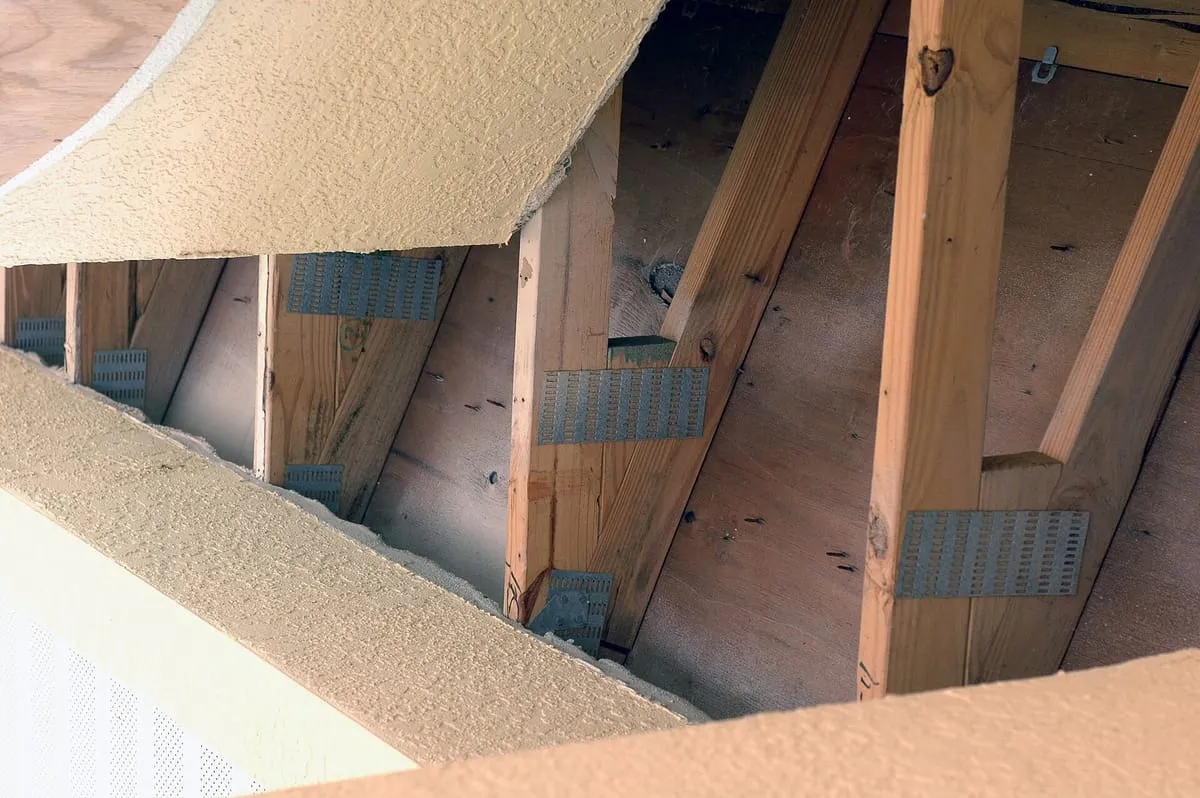 Straps like these tie the trusses to the walls; this Florida house was photographed after Hurricane Frances in 2004. Photo: Jocelyn Augustino, FEMA, public domain.
Two checkpoints before the roof is final
The building department wants to see the roof’s attachment before it disappears under shingles or tile, then the finished roof.
In unincorporated Hillsborough County, that first look is a progress check, in person or virtual with photos or video, confirming the roof attachment was strengthened to code. The roofer can upload a Roof Mitigation Verification Statement instead. A final roof inspection closes the permit.
Inside the City of Tampa, tile roofs and homeowner permits get a dry-in inspection, while on other roofs a contractor may upload a mitigation statement or attestation in its place. Then comes the final, and the city does residential roofing inspections virtually. Temple Terrace, Plant City and the Polk County side run their own offices, and roof permits covers who issues what for each address.
Hold the last payment until the final inspection passes and shows on the permit record. That’s also the moment to collect lien releases, one of the questions to ask before you sign.
After the final, get a new wind mitigation inspection
A new roof changes several things the wind mitigation form records: the roof covering and its permit date, how the deck is fastened, the roof-to-wall connections and the secondary water barrier. Insurers use that form to set wind discounts, and an old one describes the old roof. The roofer can’t sign it, since roofing contractors aren’t on Florida’s list of who may complete the form. Book an inspector once the final passes, and see roof inspection types for who does it.
Same roof again, or something different?
A like-for-like re-roof, shingles for shingles or tile for tile, is the simplest version of this job. Switching changes the details. Tile is far heavier than shingles and the framing has to carry it, and metal near the bay comes with warranty limits. Those conversions are covered under roof installation, and metal vs shingles compares the two for a Tampa house.