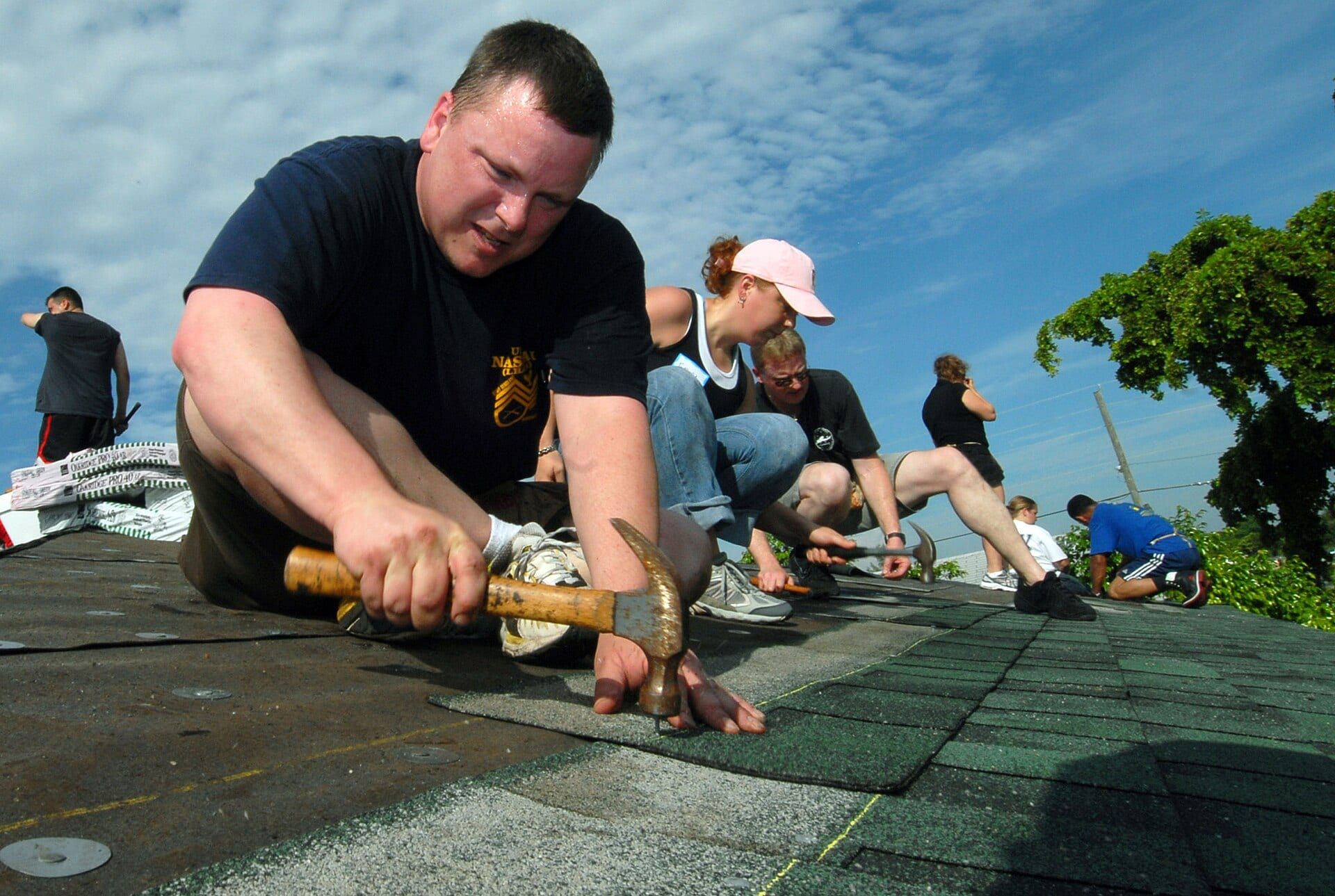
Most leaks start at a joint or an opening
A brown ring on the ceiling after an afternoon storm rarely means the whole roof has failed. On most houses the water is getting in at one spot: a flashing, a pipe boot, a valley, a few shingles the wind lifted, or a cracked tile with worn underlayment beneath it. Call Tampa Roofing Guys about roof repair in Tampa or elsewhere in Hillsborough County, and the roofer’s first job is finding that spot. On a roof with years left in it, a repair there is the work to ask for first.
Rule out the air conditioner before you pay for roof work. Many Tampa homes have the air handler and ducts in the attic, and a sweating duct or a clogged condensate line can stain a ceiling with no roof leak at all. Ceiling stains with no leak shows how to tell the difference. A stain that grows when it rains, and stays dry for weeks when it doesn’t, points back at the roof.
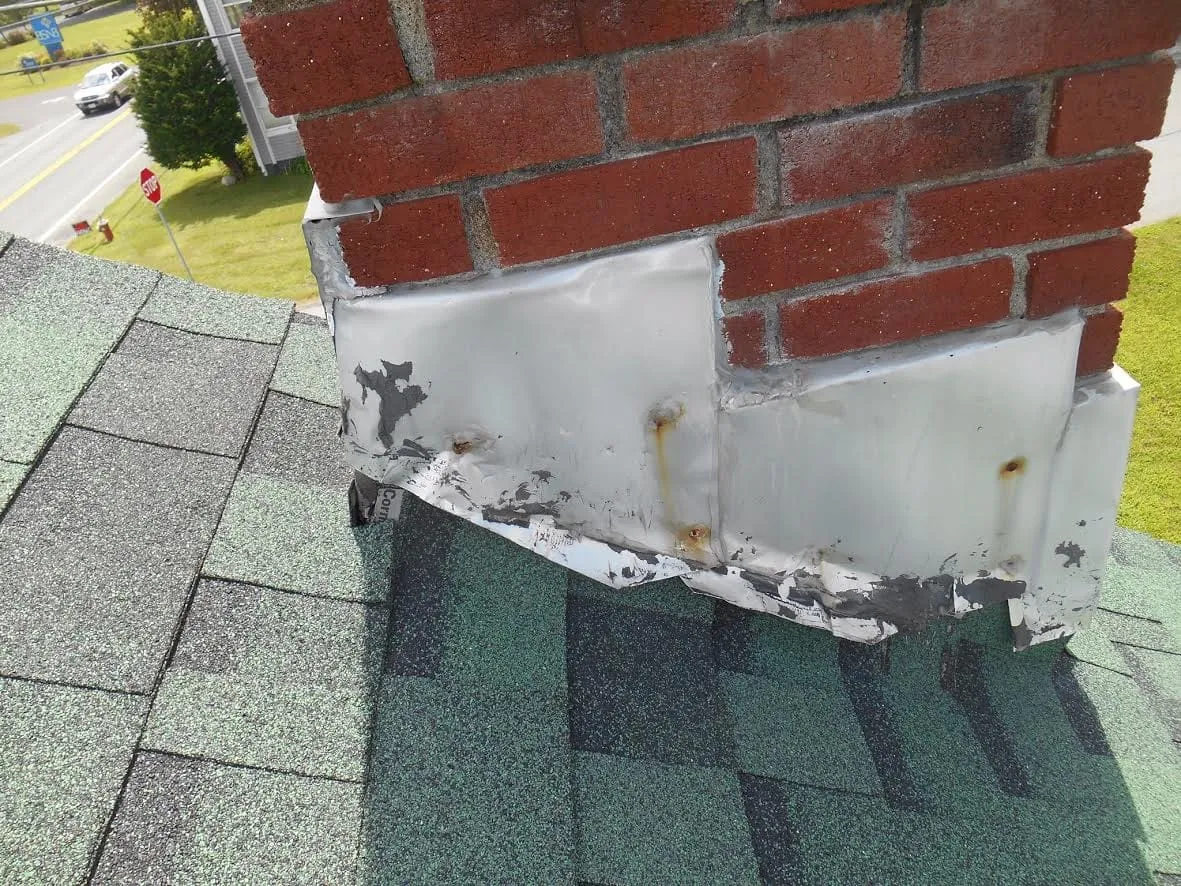 Old flashing reused around a chimney, like this, is a common place for a leak to start. Photo: Sandul1234, CC BY-SA 4.0.
Where water gets in, by roof type
| Roof | Where the water usually gets in | What the repair usually involves |
|---|---|---|
| Asphalt shingle | Pipe boots, wall and chimney flashing, valleys, shingles lifted or torn off by wind | New boot or flashing, replacement shingles sealed down, a valley rebuilt |
| Concrete or clay tile | A cracked or slipped tile over worn underlayment, valleys, headwalls | Tiles lifted, underlayment patched underneath, tiles reset or replaced |
| Metal | Flashing at walls, vents and skylights, trim and ridge closures | Reflashing, new closures or sealant at the trim, a damaged panel swapped |
| Flat or low-slope (porch, carport, Florida room) | Seams, edge metal, low spots where water sits, the joint with the house wall | A membrane patch or new section, edge metal rebuilt, the wall joint reflashed |
Shingle roofs
Plumbing vents come through the roof inside a boot with a rubber collar. Once that collar cracks, rain runs down the outside of the pipe and into the attic, and swapping the boot is one of the smaller jobs a roofer does.
Missing shingles after a blow are a simple repair, but check the ones around them too. FEMA’s advisory after Hurricane Michael pointed to unsealed and partly unsealed shingles as a source of failures in high wind, so a tab that looks fine today can lift in the next storm. Ask whether the roofer will hand-seal the shingles next to the ones being replaced.
Tile roofs
Tile sheds most of the rain, and the underlayment under it keeps out the rest. The FRSA-TRI manual that Florida’s building code references for tile treats the tile itself as a water-shedding layer, so a leak under a tile roof means water found a torn or worn spot in the underlayment. The repair happens in that layer, not only in the tile you can see.
Tile also cracks underfoot; Eagle Roofing, a concrete tile maker, warns that walking on it can break it, so keep everyone but the roofer off. The FRSA-TRI manual cautions that mixing installation systems can shorten a tile roof’s life, so ask the roofer to fasten the replacement tiles the same way the originals were set.
Flat and low-slope sections
Porch roofs, carports and the flat roof over a Florida room hold water longer than a sloped roof does, which gives a small gap more time to let water through. The weak points are the metal edge and the joint where the low roof meets the house wall, and how low-slope roofs should be built explains why. Ask the roofer to check both, even if the stain is somewhere else.
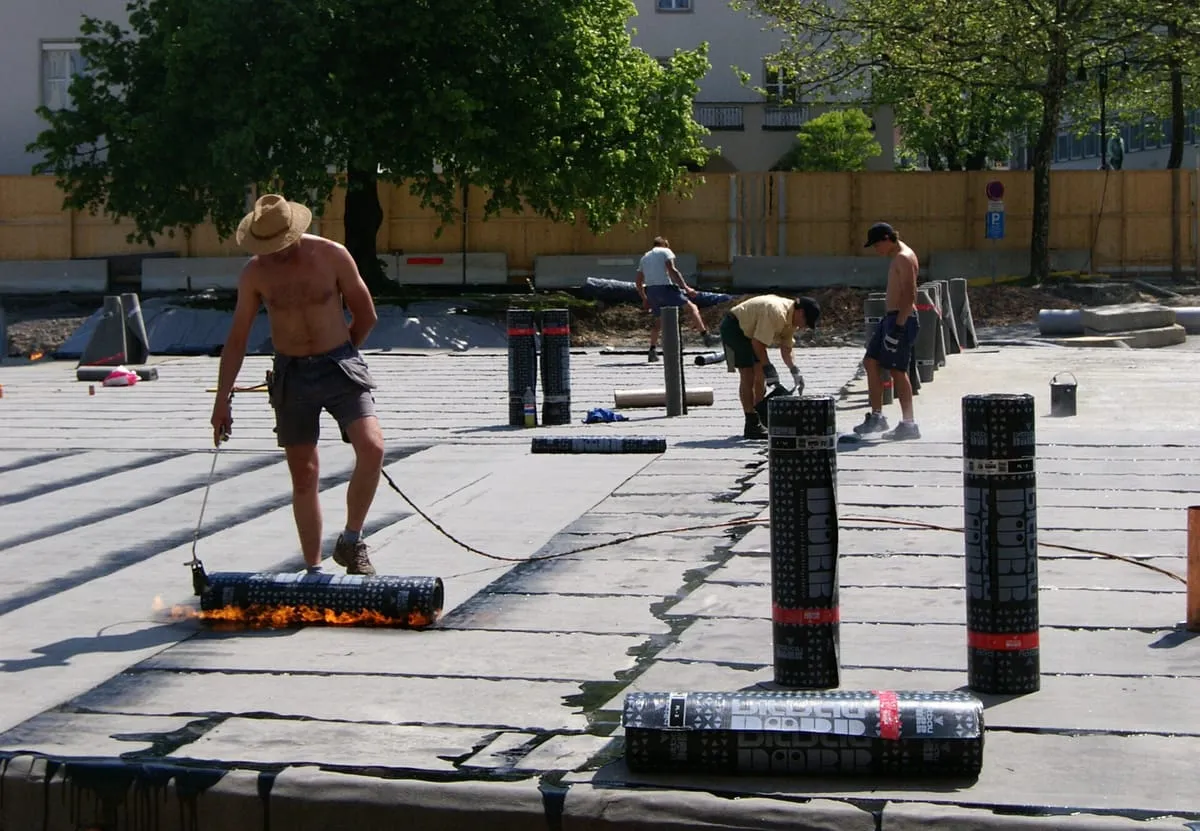 Flat roofs are covered in rolled membrane, and the seams and edges are where water usually finds a way in. Photo: böhringer friedrich, CC BY-SA 2.5.
What the roofer should check before giving a price
Expect the roofer to go into the attic as well as onto the roof. Stains on the underside of the decking (the plywood sheets the roofing is fastened to) show where water has been running, and that isn’t always right above the ceiling stain, because water follows rafters before it drips.
If the decking under the leak has been wet for a while, a sheet or two may need replacing, and you want to hear that before work starts. Ask for photos of the leak point before and after the fix, and leave the climbing to the roofer: look from the yard, not from a ladder.
What a roof repair quote should list
- Where the leak is and what’s causing it, in plain words: “cracked pipe boot over the hall bathroom”, not “roof repair”
- The materials, down to the shingle brand and color or the tile profile, and how close the match will be
- Whether the underlayment and flashing at that spot get replaced or reused
- A per-sheet price for any rotten decking found once the roofing is off
- Whether the job needs a permit, and who pulls it
- The roofer’s license number, which Florida law requires on every bid and contract
- How long the roofer stands behind the repair, in writing
Look that license number up before you sign. Checking a Florida roofer’s license shows how to do it on the state’s site.
Repair it, claim it, or pay for it yourself
Start with your deductible. If the repair costs less than the deductible, a claim pays nothing toward it. The number is on the policy’s declarations page, and damage from a named hurricane falls under a separate deductible figured as a percentage of your dwelling coverage; storm damage and the hurricane deductible shows how that one works. Coverage questions go to your agent or the insurer. Florida law bars roofers from interpreting your policy unless they’re also licensed as public adjusters.
Two Florida rules shape the choice between a repair and something bigger:
- A repair doesn’t make the roof younger. Insurers date a roof from its last full replacement, when the entire surface was redone to code. A repair keeps it working but doesn’t move that date, which starts to matter once the roof passes 15 years. The roof certification letter page covers what insurers can ask for then.
- Big repairs on older roofs can trigger the whole roof. On a roof installed before the 2007 Florida Building Code took effect (March 1, 2009), repairing more than a quarter of it within 12 months means the entire roof has to meet current code. Roofs built, repaired or replaced to the 2007 code or later only need the repaired part brought up to code, and the permit record shows which code applied. The 25% rule explains how to tell which you have.
When patching stops paying off
A repair makes sense when the rest of the roof has life left. When the same roof needs one fix after another in different places, or shingles are curling and splitting across whole slopes (NRCA counts curling and splitting as deterioration), the repair money is better spent toward a roof replacement. Ask the roofer to price both in writing so you’re comparing real numbers.
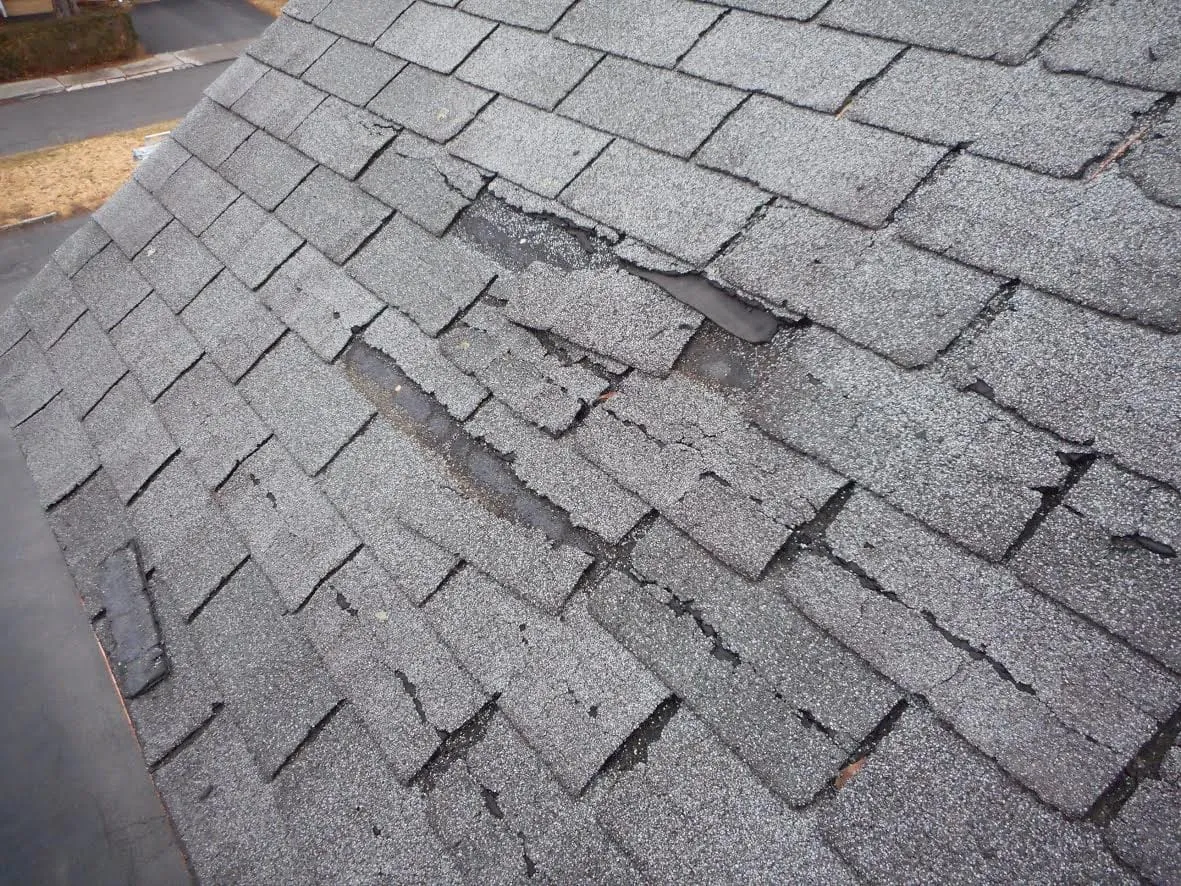 Once shingles look like this across whole slopes, repair money is better spent toward a new roof. Photo: Sandul1234, CC BY-SA 4.0.
What moves the price of a roof repair
Repairs usually aren’t priced by the square the way a new roof is. The cost comes from what it takes to reach the problem and what’s waiting underneath:
- Height and pitch. A two-story or steep roof needs more safety gear and setup before work begins.
- Material. Tile and metal repairs need parts that fit the old ones, and tile can crack as the roofer works around the leak.
- What’s under the leak. Wet decking adds sheets, and rotted fascia adds carpentry.
- Permits. A job big enough to need one adds the fee and an inspection.
For what a whole new roof runs, see roof replacement cost in Tampa.