Check the license on DBPR before you sign
To check if a roofer is licensed in Florida, go to MyFloridaLicense.com, choose Verify a License, and search the roofer by name or by license number. A roofing license in Florida is either certified, which is good anywhere in the state, or registered, which is good only where the roofer met local requirements. Match the name, number and status to the quote before you sign or pay a deposit.
The check is the same for every roofer who quotes a house in Hillsborough County or the two Polk ZIPs that Tampa Roofing Guys covers, and it’s worth doing even when the roofer came recommended.
The lookup, field by field
The state’s search page, run by the Department of Business and Professional Regulation (DBPR), lets you search by license number, by a person’s name or by a business name. Use the number if you have it. A name search can return several companies with similar spellings, and you want the exact one on your quote.
Once you’ve found the record, read it against the paperwork in front of you:
| What the record shows | What to check |
|---|---|
| Name | It matches the company name on the quote and the contract. A different name isn’t automatically a problem, but ask whose license the job is under. |
| License type | DBPR files roofing under two codes: CC for certified roofing contractors and RC for registered ones. |
| Status | It reads current and active. Anything else is a reason to stop and ask before signing. |
| Address | It’s close to what’s printed on the quote. A mismatch is worth one question. |
| Qualifier | The licensed person the business works under. Ask who it is, then search that name as well. |
If nothing comes up, try the business name a couple of different ways, then ask the roofer for the number in writing. If it still doesn’t show, don’t sign.
Certified or registered: where the license is good
It matters around here because a short drive crosses a lot of permit lines: the City of Tampa, unincorporated Hillsborough County, Plant City, Temple Terrace, Lakeland, Mulberry and unincorporated Polk County.
A certified roofing contractor holds a state certificate of competency and can contract in any jurisdiction in Florida without meeting that jurisdiction’s own competency rules. A registered roofing contractor met a local government’s competency requirements and registered that with the state, and may contract only in those jurisdictions. Florida law treats work outside the scope of a registration as unlicensed activity.
So when the record shows RC, ask the roofer where the registration is good. A roofer registered only in another county isn’t licensed to do your roof, even though the DBPR record looks clean. To find out which office covers your address, see the jurisdiction table on the roof permit page.
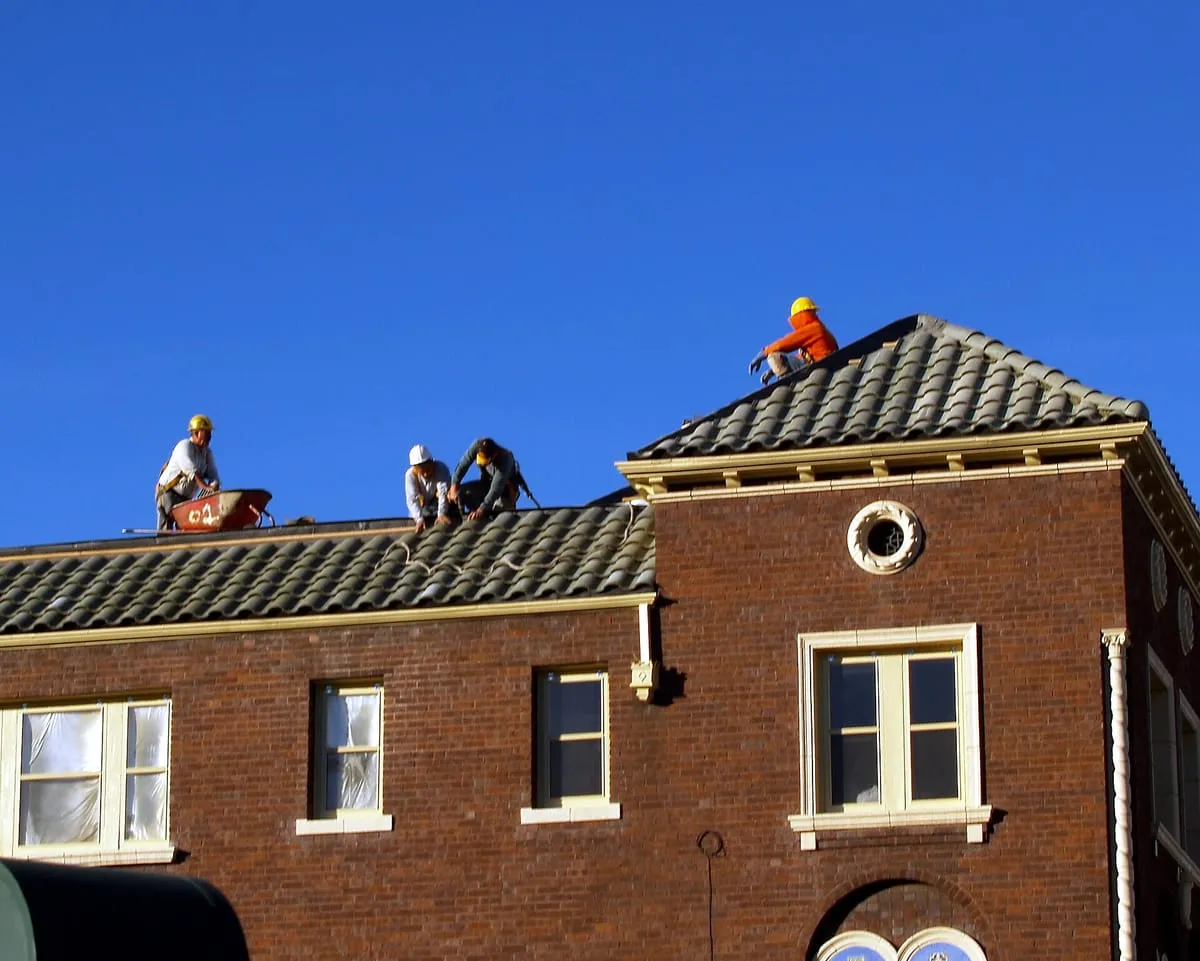 A registered roofer’s license covers only the places it’s registered, so ask where before the crew goes up. Photo: David Shankbone, CC BY 3.0.
Insurance is a separate check
The license search tells you whether someone can legally contract for roofing. It doesn’t show you their insurance policies, so check those on their own.
Ask for proof of general liability and workers’ compensation coverage, and have the roofer’s insurance agent send the certificate to you directly rather than accepting a copy handed over at the kitchen table. Then call that agent’s office and confirm the policy is in force for the dates of your job. Make sure your name and address are on the certificate if the agent will add them.
Be wary of anyone who claims to be licensed and insured but gets vague when you ask for the paperwork. Florida lets local governments fine unlicensed people who advertise themselves as licensed or insured.
What Florida does about unlicensed roofing
Contracting without a license is a first-degree misdemeanor on a first offense and a third-degree felony on a repeat. During a state of emergency declared by the Governor, it’s a third-degree felony from the start, which is why it matters most in the weeks after a hurricane. DBPR can also fine an unlicensed contractor up to $10,000 plus investigative and legal costs, and it can issue stop-work orders.
None of that fixes your roof. An unlicensed roofer has no license for the state to suspend if the work leaks. And since a contractor’s license number has to go on the permit application, a roofer without one can’t put the permit in their own name. If it isn’t in theirs, it ends up in yours.
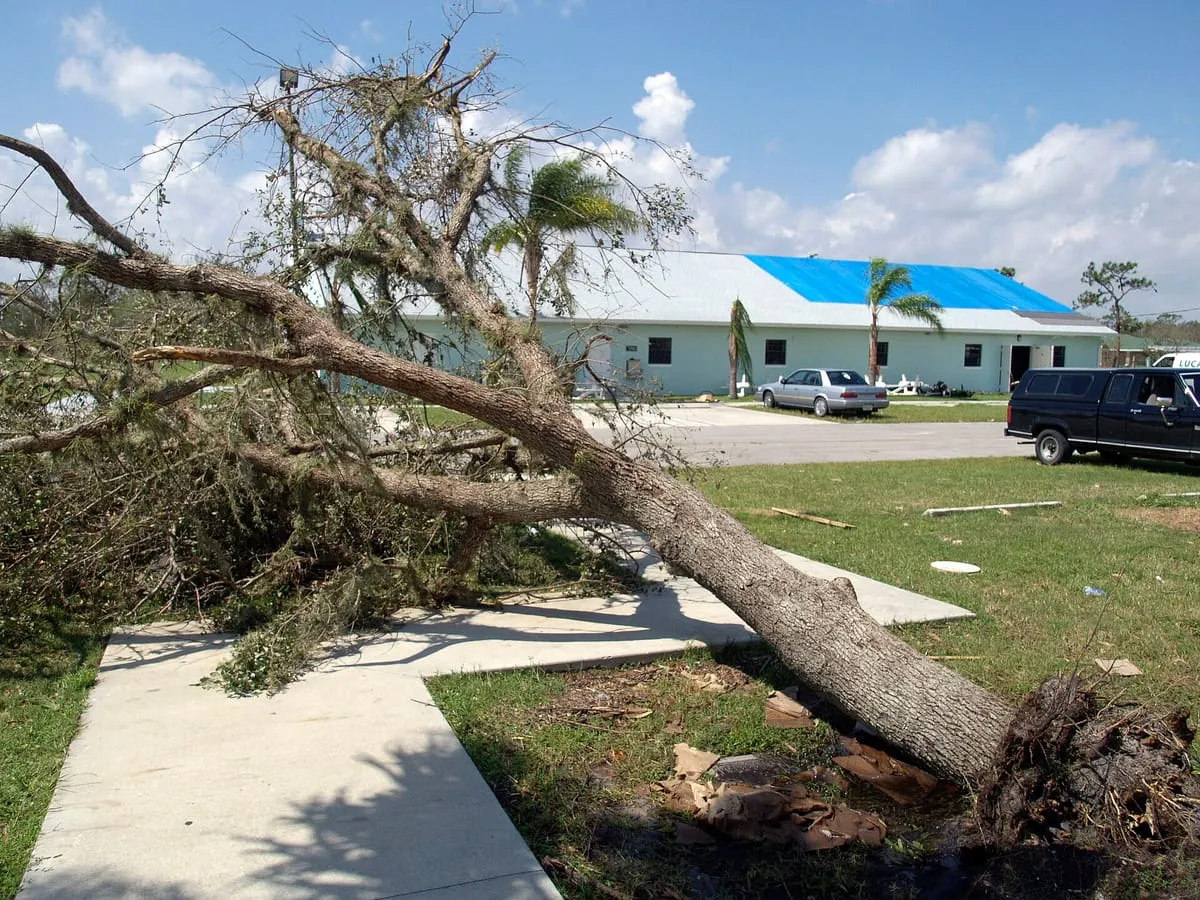 After a hurricane like Jeanne, seen here in Fellsmere, Florida, unlicensed contracting in a declared emergency is a felony from the start. Photo: Michael Rieger, FEMA, public domain.
Pulling the permit yourself as owner-builder
Florida lets an owner act as their own contractor on a one- or two-family house they live in, as long as they supervise the work on site and the house isn’t built or improved for sale or lease. Selling or leasing within a year raises a presumption that it was. There’s also a narrower rule: after damage from a Governor-declared emergency, an owner may repair or replace asphalt, fiberglass or wood shake shingles on a one-, two- or three-family home that isn’t sold within a year.
The owner has to sign the permit application personally and can’t hire an unlicensed person to act as the contractor. Before issuing an owner-builder permit, the building department gives you a disclosure statement. Among its points: you become the responsible party of record, you may be liable for injuries to unlicensed workers, your homeowner’s insurance may not cover them, and you have to withhold taxes and carry workers’ comp for anyone you employ. Inspections can differ too: the City of Tampa requires a dry-in inspection on every homeowner roof permit.
If a roofer suggests you pull the permit “to save time,” that’s the roofer handing you their liability. Ask why their own license can’t go on the application.
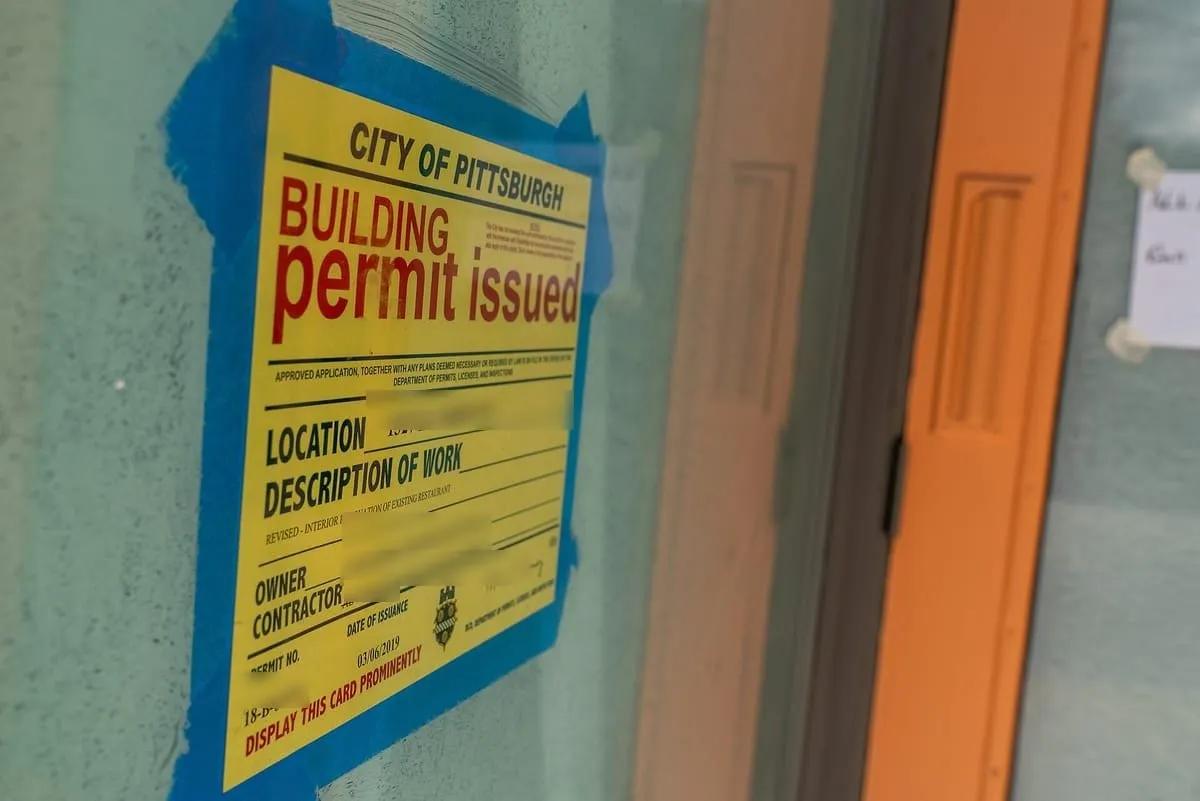 A permit card has a line for the contractor, and on a roofing job that should be the roofer, not you. Photo: Tony Webster, CC BY-SA 2.0.
A quick check when someone knocks after a storm
You don’t need to send a door-knocker away to check them. Stand on the porch and do this:
- Ask for the license number and search it on your phone while they wait.
- Read the status and the license type, and compare the business name to the shirt, the truck and the flyer.
- For an RC license, ask where it’s registered and whether that covers your address.
- Ask for the insurance agent’s name and number, not a printed certificate.
- Take the flyer and a business card, and don’t sign anything on the porch.
Florida also limits what roofers can offer or say about your insurance claim when they solicit work; those rules are on the page about storm damage roof repair and storm-chaser rules. Once the license checks out, what to ask a roofer about the contract is the next stop.