Brandon’s houses are on their second or third roof
Brandon’s big building years started in the 1970s. Over a third of its homes, 37.5%, went up in the 1970s and 1980s, and half the homes in 33510 date to 1986 or earlier (1991 in 33511). Repair and replacement calls on those houses, and on the newer ones around them, come through Tampa Roofing Guys. Brandon is unincorporated, so Hillsborough County issues the permits and does the inspections.
Home inspectors’ Florida estimates put architectural shingles at 15 to 20 years and three-tab shingles at 10 to 12. By that measure, a house from 1985 is on its second roof at least, and possibly its third. So when you talk to a roofer, the house’s age matters less than one date: when the current roof went on, and under which edition of the building code.
When a big repair turns into a full re-roof
This is where Brandon’s roof ages bite. Under Florida’s 25% rule, replacing more than a quarter of a roof put on before the 2007 code means bringing the whole roof or section up to current code, while roofs installed under the 2007 code or later only need the repaired part done to code. A Brandon house re-roofed in the 1990s or early 2000s sits on the wrong side of that line.
Picture a 1987 house re-roofed in 2004. A storm tears up about a third of it. That repair quote has to carry the code work for the whole roof or section, deck nailing and water barrier included, not only the shingles. Two smaller repairs inside the same 12 months count together, too. So before anyone quotes, ask the roofer to pull the last roof permit on the address and say which code it went on under.
What a code re-roof adds on a 1970s or 1980s house
Every house built in Brandon’s boom years was permitted before the Florida Building Code existed, and that triggers extra work when the old roof comes off. Expect to see these on the quote:
- Deck re-nailing. Older decks were often fastened lighter than today’s code allows, so the roofer adds nails with the deck bare, right after the tear-off.
- A secondary water barrier. A layer meant to keep rain out of the attic if the roof covering blows off in a storm.
- Sealed-roof-deck underlayment. Since the 2020 code, new shingle roofs and re-roofs here use one of three approved methods, such as a full self-adhered membrane or taped deck seams under the underlayment.
- Decking replacement. Rotten or delaminated sheets get swapped out once the deck is exposed. Ask for the price per sheet in writing.
What a full roof replacement includes walks through the whole job in order. These upgrades are also what a wind mitigation inspection records once the job is done.
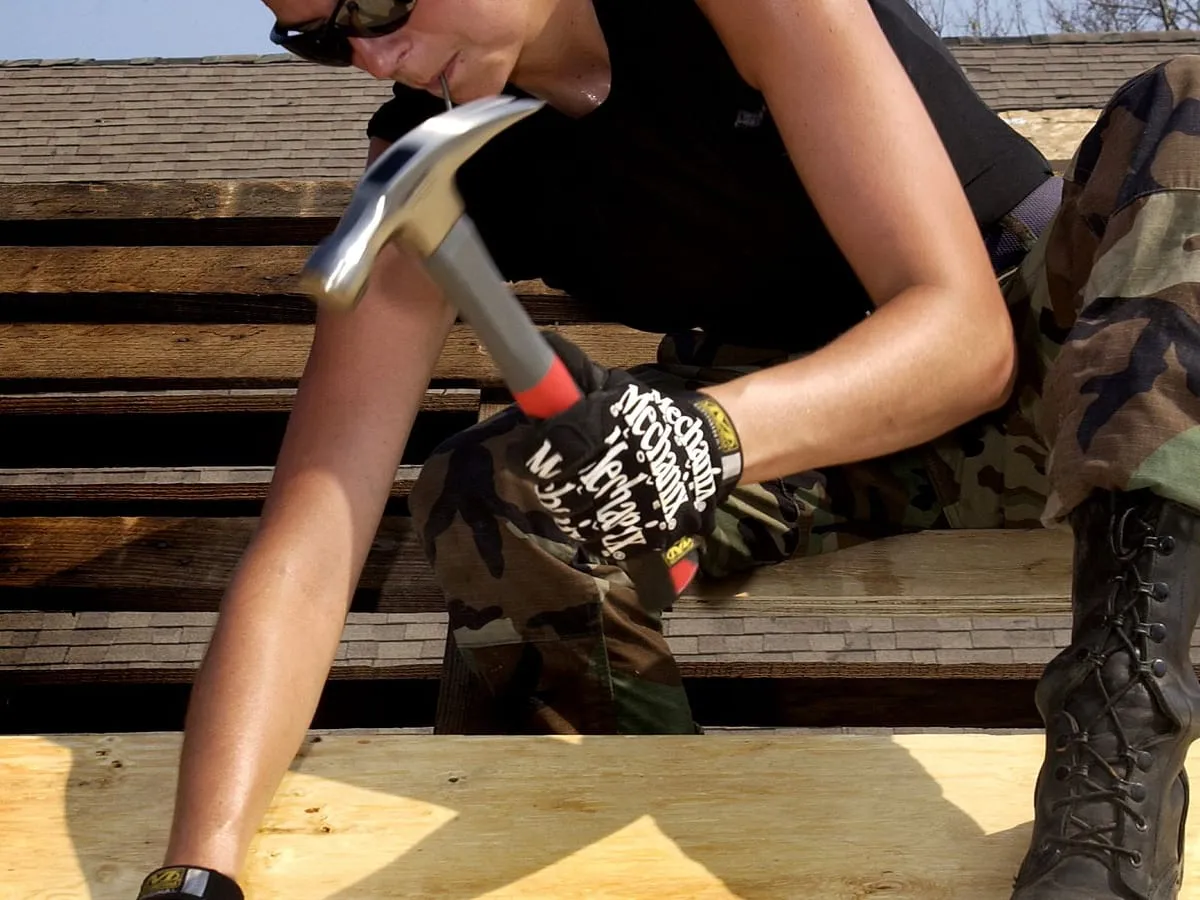 With the old roof off, the deck gets re-nailed and any bad boards or sheets replaced before the new underlayment goes down. Photo: Senior Master Sgt. Thomas Meneguin, U.S. Air Force, public domain.
Townhome or condo: check who owns the roof
Barely half of Brandon’s homes, 54.1%, are single-family detached houses, and 43.8% of occupied homes are rented. In a townhome or condo, the first roof question has nothing to do with shingles: whose roof is it?
If you own a townhome or condo, read the declaration before you call anyone. It says whether the roof is the association’s to maintain and insure, the owner’s, or split between them. The questions worth asking the association:
- Is the roof over your unit a common element, or yours?
- When a roof covers several units, does the association replace it all at once?
- After storm damage, who reports it to the insurer, the association or each owner?
- Does a roof color or material change need architectural approval?
If you rent, the roof is normally the landlord’s to fix. Report the leak in writing with photos and the date it started.