The questions that matter most in Florida
Ask who holds the license and pulls the permit, how the quote prices rotten decking, what underlayment and product approval numbers go on the roof, how much the deposit is, and how lien releases get handled at the end. Those answers matter more than the shingle brand, because Florida law sets rules on most of them.
Tampa Roofing Guys put this checklist together for homeowners in Hillsborough County and the Polk ZIPs next to it who are holding a roof quote and trying to decide whether to sign it.
Before the roofer comes out
- Is your license certified or registered, and is it good at my address? Look it up yourself; checking a Florida roofer’s license takes about two minutes.
- Who will actually be on my roof? If it’s a subcontractor’s crew, ask whose insurance covers them.
- Will you go into the attic? Stains and soft spots on the underside of the decking show up there, not from the yard. A quote written from the driveway is a guess about the deck.
- Did you come to me, or did I call you? It matters later, because a sale you didn’t ask for has an extra cancellation right (below). If the knock came after a storm, the rules on roofers who solicit after storms apply too.
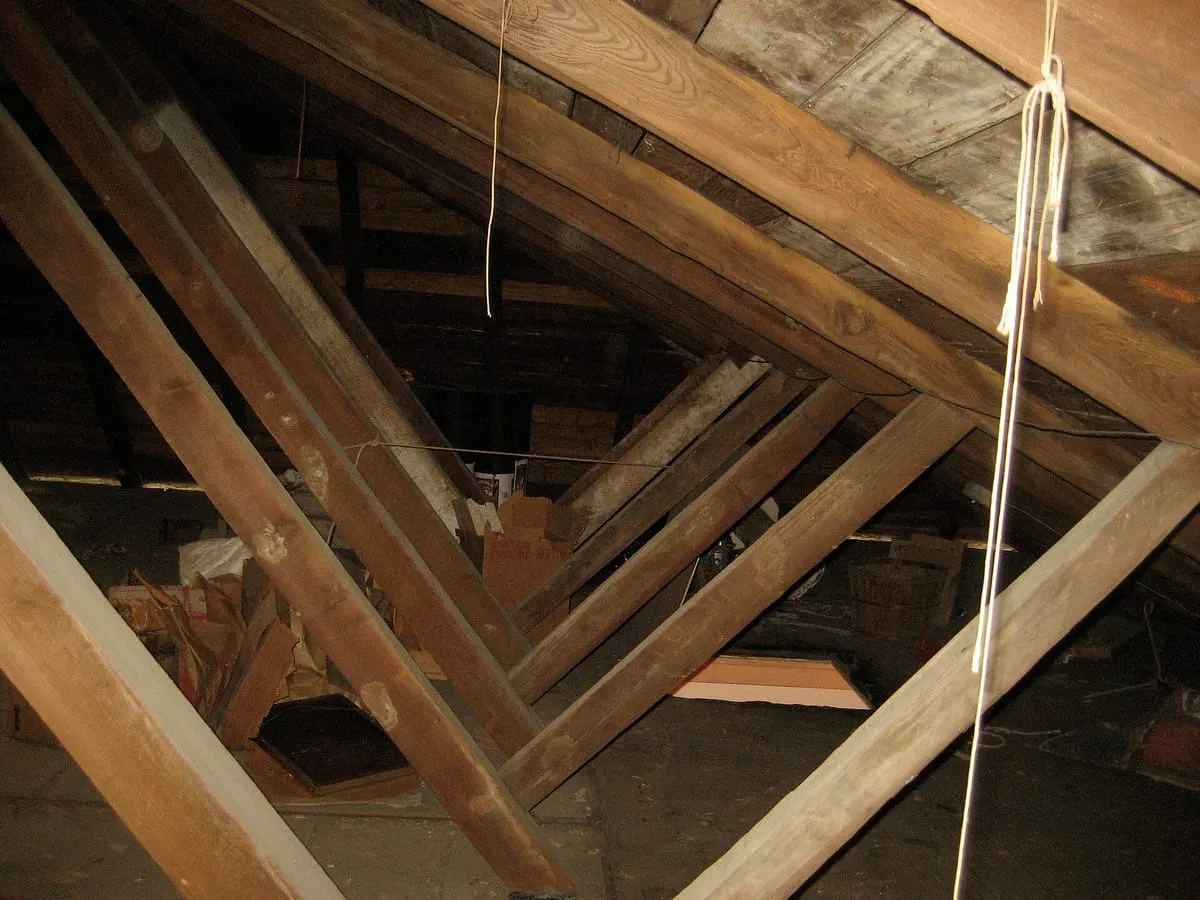 Soft spots and stains on the underside of the decking only show from the attic. Photo: Infrogmation of New Orleans, CC BY 2.0.
Reading the quote, line by line
A line missing from the quote is a line that gets priced later, after you’ve signed. Read it against this table before you compare totals:
| Line | What a clear answer looks like | Why it matters here |
|---|---|---|
| Tear-off | Every existing layer removed and hauled away, with disposal included | You’re paying for a clean deck the inspector can see |
| Decking | A price per sheet of plywood or OSB, plus how many sheets are included | Nobody knows how much is rotten until the old roof is off, so the unit price is what protects you |
| Deck nailing and secondary water barrier | Named on the quote for a house built before the Florida Building Code | Older houses get these upgrades on a re-roof; what a full re-roof involves explains which ones |
| Underlayment | The product named, not “underlayment per code” | Two quotes that both say “per code” can mean very different products |
| Product approval numbers | Florida Product Approval or Miami-Dade NOA numbers for the roof covering and the underlayment | You can check them on the state’s search; the wind mitigation form records the covering’s approval number too |
| Permit | Who pulls it, and whether the fee is in the price | The roofer’s license goes on the application |
| Warranty | Workmanship and manufacturer, each with its length | Two warranties, backed by two different companies |
| Start date | A target date and how long the job runs | Ties into the deposit rule below |
On a job paid through an insurance claim, don’t sign a repair authorization until an itemized estimate is in your hands. Florida’s roofing law requires the roofer to provide one, in good faith, first. How approved products get chosen in the first place is covered under new roof installation.
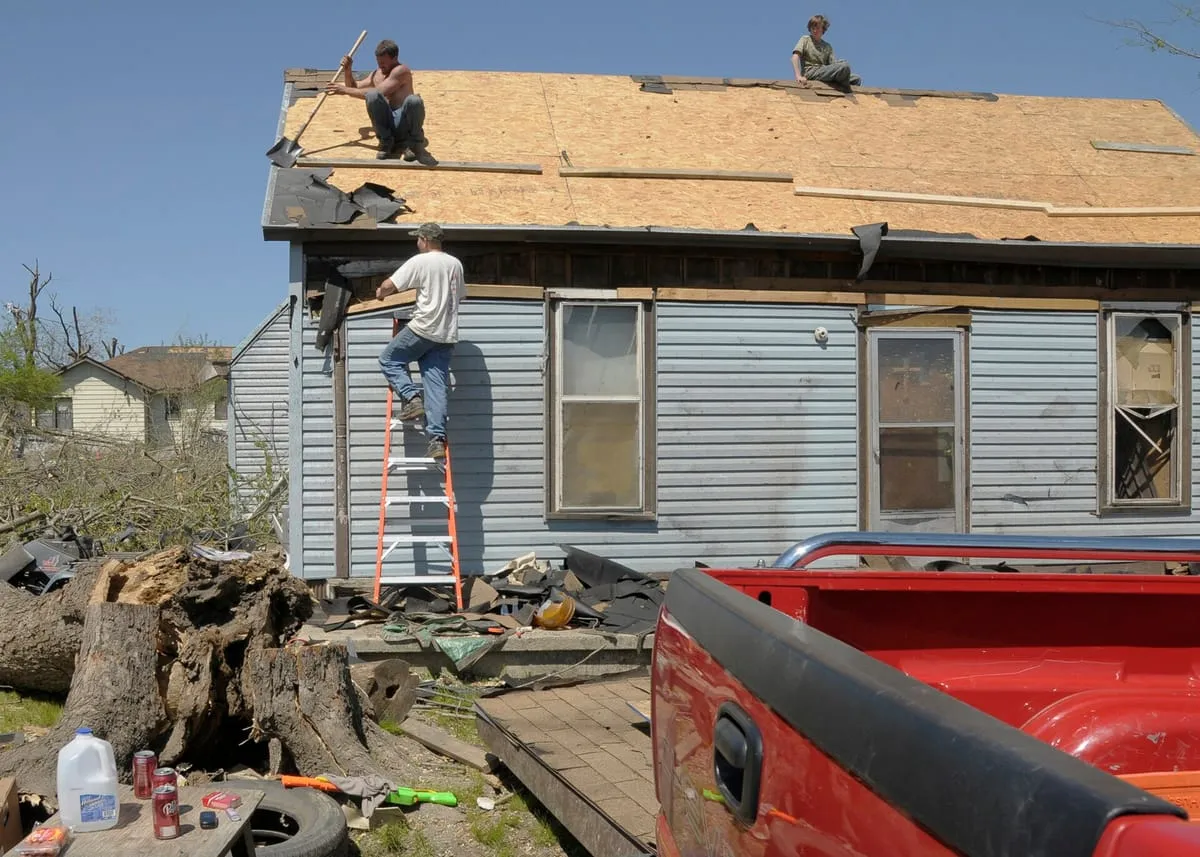 A roof stripped to the deck is where the per-sheet price in your contract gets used. Photo: Win Henderson, FEMA, public domain.
Signing the contract
How much do you want up front, and when will you apply for the permit? Florida attaches deadlines to a big deposit. A contractor who takes more than 10% of the price as the first payment on a home must apply for the permits within 30 days and start work within 90 days after they’re issued, unless there’s just cause or you agreed in writing to a longer wait.
Where’s the lien law notice? Any contract over $2,500 to improve a one- to four-unit home has to include Florida’s construction lien law notice in capitalized bold type of at least 12 points, on the first page or a separate page, and you sign and date it. Read it instead of initialing past it. It tells you to get a written release of lien from anyone who sends you a Notice to Owner before you pay. Contracts of $2,500 or less fall outside most of the lien law.
Is the no-incentives notice in here? Every residential roof contract has to say the roofer can’t offer rebates, gifts, cash, deductible waivers or anything of value for an inspection or a claim. If the contract leaves that notice out, you can void it within 10 days. Since 2025, the signature page also has to tell you, in 14-point bold, to check coverage with your insurance company before signing if the work is tied to a claim. The roofer can’t interpret your policy for you; your agent or the insurer can.
Does anything here sign over my insurance benefits? If your policy was issued January 1, 2023 or later, Florida law voids any assignment of post-loss benefits under it. Older policies follow older rules, so read any assignment line with your agent.
Can I cancel? Two rules may apply:
- After a declared emergency. If you sign within 180 days of events covered by a Governor’s state of emergency, and your home is in the declared area, you can cancel without penalty within 10 days of signing or by the official start date, whichever comes first. The start date is when final materials go on, when a permit is issued, or when a code-compliant temporary repair is made. The contract has to explain this in 14-point bold before the signature, and you cancel by certified mail or another method with proof of mailing.
- A sale made at your door. When a seller solicits you at home and you sign there, for anything over $25, you can cancel in writing until midnight of the third business day. It doesn’t cover a visit you asked for to get specific work done.
While the job is underway
Has the NOC been recorded? On jobs over $5,000 the building department wants a copy of that lien-law notice before the first inspection; the roof permit page explains the notice and which inspections your office runs.
Who has sent me a Notice to Owner? Subcontractors and suppliers who don’t have a contract with you must serve one before they start or within 45 days of starting. Keep every one in a folder. That pile is your list of who needs to give you a lien release before the last check.
Will you photograph the deck nailing and the secondary water barrier before they’re covered? After the job, a wind mitigation inspection can earn a discount on the wind part of your insurance, and the form asks for a photo or document backing up each roof feature it records. Nobody can see nailing once the shingles are on. Ask the roofer to take the photos, and note that roofers can’t sign that form themselves, as the roof inspection page explains.
If you find rotten decking, how will I know? Ask for a photo and a sheet count before the sheets are replaced, so the bill matches the per-sheet price in the contract.
What happens if it rains with the roof open? Ask how much roof gets torn off at once and how the open section is covered overnight and when an afternoon storm rolls in.
 Ask how an open roof gets covered when an afternoon storm rolls in. Photo: Bill Koplitz, FEMA, public domain.
Before the final payment
- Did the final inspection pass? Ask for the result or the permit status, and don’t make the last payment before it.
- Where’s your final payment affidavit? When final payment is due, the contractor owes you a sworn statement that everyone who sent a Notice to Owner has been paid, or a list of who hasn’t.
- Do I have a release of lien from each Notice to Owner sender? Match the releases to your folder, one for each notice.
- What do I get for the insurer and the wind mit inspector? The permit number, the product approval numbers, the photos and the warranty papers.
- Who registers the manufacturer’s warranty, and when? Get the confirmation in writing.