Installation or replacement: which job is yours?
Roof installation means putting a roof on something that doesn’t have one yet, or changing what the roof is made of. A new house, a room addition, a lanai or porch roof, a detached garage, and a shingle roof coming off so metal or tile can go on all count. If you’re building or adding on in Tampa or elsewhere in Hillsborough County, Tampa Roofing Guys gets you a roofer for the job. Say which system you have in mind when you call, and ask the roofer to talk it through before you commit.
Tearing off a worn roof and putting the same kind back is a roof replacement, and that page walks through the tear-off, deck repairs and re-roof inspections. An installation front-loads the decisions instead. The fasteners, the underlayment and the edge details go in once, and changing them later means taking the roof back off.
Where a new roof meets an old one
On an addition, watch the tie-in: the line where the new roof meets the existing roof or the side of the house. It comes in three versions, and each one leaks in its own way.
New roof against an existing wall. Step flashing goes in at every shingle course, with counter-flashing or a cover over it, and the stucco or siding finished down over the top. If the flashing is caulked to the face of the stucco instead of tucked behind it, that bead of caulk is all that keeps water out.
New roof meeting the old roof. Where two slopes meet, a valley forms. The old shingles along it get cut back or woven in, and the underlayment has to lap from the old roof onto the new one so water runs over the seam, not into it.
A low porch roof under a higher eave. Everything the main roof sheds pours onto the porch roof in one strip. A gutter or diverter above it, and the porch roofing turned up the wall behind flashing, keep that strip from becoming the leak.
Ask the roofer to describe the tie-in on the quote, in words or a sketch. If the existing roof is near the end of its life, ask about re-roofing the slope that meets the addition at the same time, so the new work isn’t flashed into shingles that will come off in a few years.
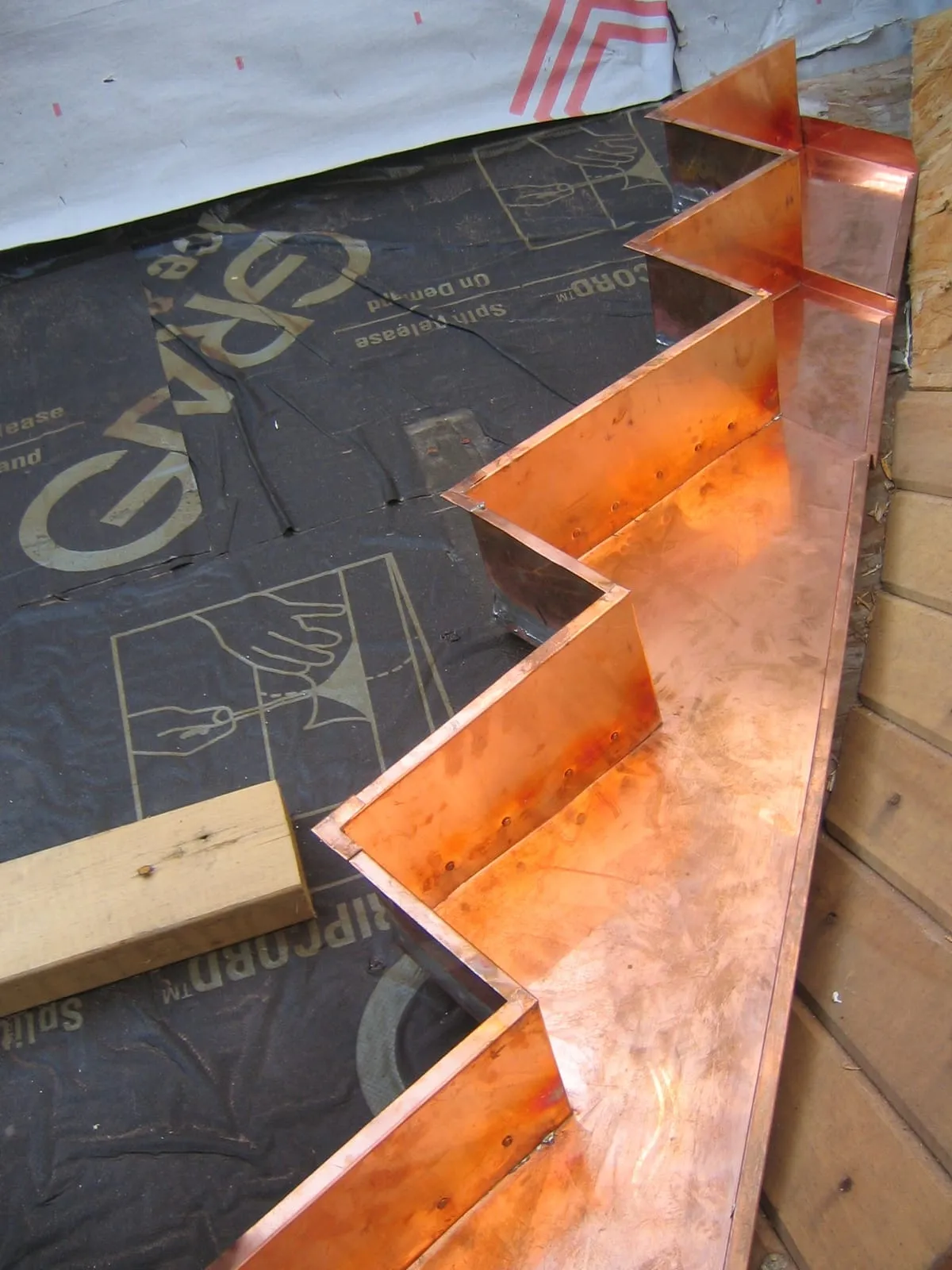 Stepped flashing cut to the brick courses, the same idea as a new roof meeting an existing wall. Photo: Ctd 2005, CC BY 2.0.
How flat can a porch or lanai roof be?
Shingles and tile need pitch to shed water. A porch, carport or lanai roof that’s close to flat needs a low-slope system instead: a membrane such as modified bitumen or TPO. Even those need some fall: Florida’s code sets a minimum design slope of a quarter inch per foot for modified bitumen. Water that sits for days on a membrane points to a slope or framing problem, not bad weather.
The edge is the other weak point. When IBHS surveyed southwest Florida after Hurricane Ian, low-slope roofs had damage rates above 50%, mostly where the edge flashing or coping let go. Those were commercial buildings, but a porch roof has the same detail. Ask what gauge of metal the edge uses and how it’s fastened.
A coating’s warranty depends on how thick it goes on. One silicone coating maker’s coverage guide, for example, calls for 20 dry mils over TPO for a 5-year warranty and 30 dry mils for a 15-year one, so a coating quote should state the thickness going on, not only the brand.
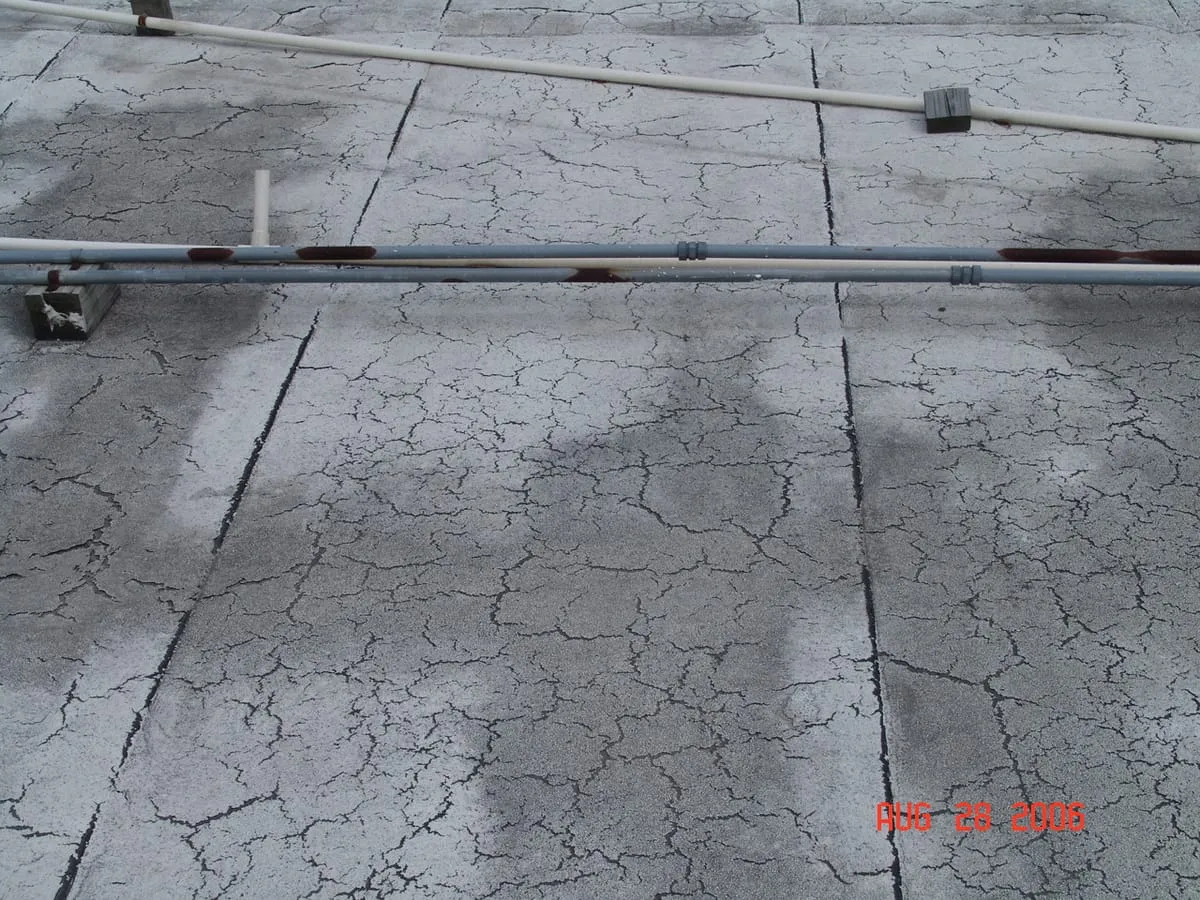 This liquid coating on a Houston flat roof went on too thin and failed quickly, which is why the quote should state the thickness. Photo: GRALISTAIR, CC BY-SA 4.0.
Switching systems: shingles to metal or tile
Metal
Metal goes over a properly underlaid deck like any other roof, but near the water the metal itself matters. One manufacturer’s Galvalume warranty excludes homes inside set distances from a large bay or canal, and other makers set their own limits. Metal vs shingles covers those distances and how the two hold up to Tampa wind and heat. If you have an HOA, get its written approval of the panel and color before anything is ordered.
Tile
Tile is heavy, and framing sized for shingles may need an engineer’s review, and sometimes added framing, before it can carry tile. Why heavy tile can make a roof sag explains what goes wrong when that step gets skipped.
Florida tile goes on following the FRSA-TRI high-wind installation manual that the building code references. Because the manual cautions against combining attachment systems on one roof, get the method the roofer will use written on the quote.
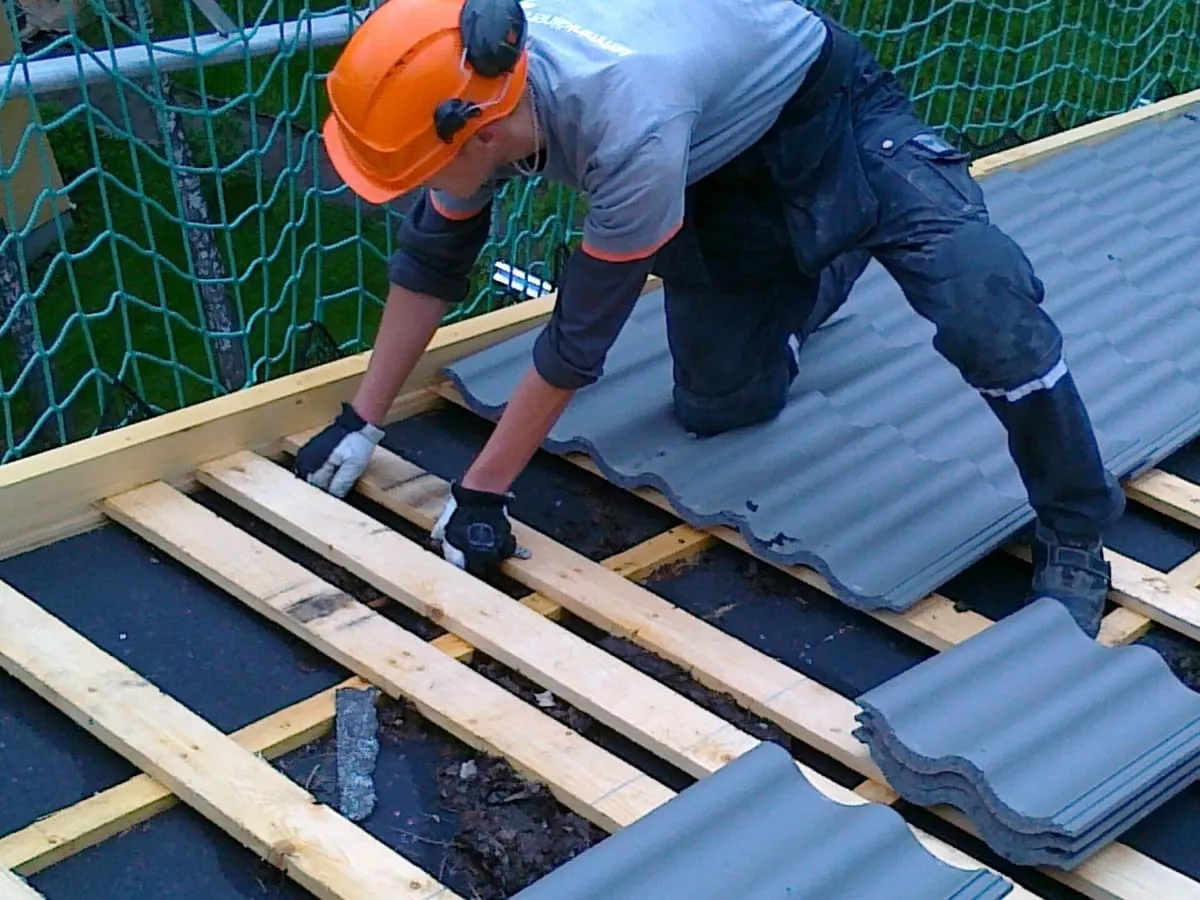 Tile can be attached more than one way, so get the roofer’s method written on the quote. Photo: D100a, CC BY-SA 3.0.
Product approval: check the numbers on the quote
Roofing products used on Florida homes need Florida product approval, or a local approval such as a Miami-Dade Notice of Acceptance, before they go on a permitted roof. The quote should list the approval number for the roof covering and for the underlayment. You can look up any number on the Florida Building Commission’s product approval search and confirm it matches the product named.
Keep those numbers with the permit papers. The wind mitigation form asks for the roof covering’s product approval number or permit date, and the inspector will want it.
Sealed roof deck and FORTIFIED: what to build in
Current Florida code already requires a sealed roof deck under shingles on every new roof here. That’s the minimum. The FORTIFIED Roof standard goes further, and it’s cheapest to meet on a bare new deck:
- A sealed roof deck, as the code requires
- 8d ring-shank deck nails in a tighter pattern, which FORTIFIED says nearly doubles the deck’s hold against wind
- A wider drip edge and a fully adhered starter strip along the edges
- Attic vents rated to resist wind and rain
- An optional hail supplement using shingles rated Good or Excellent in IBHS’s impact-resistant shingle ratings, meant to stand up to hail up to 2 inches
FORTIFIED comes in three levels: Roof, Silver and Gold. The designation requires a certified FORTIFIED evaluator, so line one up before the roof goes on. The wind mitigation form that took effect in April 2026 now accepts a FORTIFIED Roof, Silver or Gold certificate as documentation for several roof items. Insurers set their own credits, so ask what the certificate is worth on your policy before deciding.
Building new: settle the wind speed, the code edition and the permit
The roof’s design wind speed comes from the address. The ASCE Hazard Tool gives the value for a site, and Hillsborough County publishes wind maps showing where the 130, 140 and 150 mph lines fall. The framing plans, the covering’s wind rating and the nailing pattern all follow from that number.
The code edition matters this year. The 8th Edition (2023) Florida Building Code is in force, and the 9th Edition takes effect December 31, 2026; permit applications submitted on or after that date must meet it. If plans for a house or an addition are being drawn this fall, ask the designer which edition they’re drawn to.
A new porch or addition roof means new framing, and Florida’s $7,500 small-job permit exemption excludes structural work, so plan on a permit and inspections. Roof permits shows which office handles your address. If you’re thinking about pulling the permit yourself as an owner-builder, checking a roofer’s license explains what that makes you responsible for. And because installations are priced by area and pitch like any other roof, the roof replacement cost guide shows how to measure yours in squares.