In Florida, the rules can make the decision for you
Most repair-or-replace advice starts with the shingles: how old they are, how many are damaged, whether the deck is soft. In Florida two more things sit on top of that. A building code rule can turn a large repair on an older roof into a required replacement, and your insurer’s view of the roof’s age can make a sound repair pointless. Call Tampa Roofing Guys about a damaged roof in Tampa or around Hillsborough County, and the roofer will need the roof’s age and permit history to tell you which way the rules push.
The 25% rule, as it reads now
Florida’s existing-building code caps how much of an older roof you can patch in a year before the covering has to be redone to today’s standard. A 2022 statute took newer roofs out of the full-replacement part. Which side of that line your roof falls on often decides the question.
Roofs installed before the 2007 code took effect
The base rule, in section 706.1.1 of the existing-building code: no more than 25% of the total roof area or of a roof section can be repaired, replaced or recovered in any 12-month period, unless the roof covering on the entire roof system or roof section is replaced to current code.
The count runs over 12 months, so a repair in March and another in August add together. And because the code says “roof section” as well as the whole roof, on a house with several separate roof areas, the requirement may apply to one section rather than everything.
Roofs built, repaired or replaced to the 2007 code or later
Florida Statute 553.844(5), added in 2022, changes the result for newer roofs. If the existing roof or roof section was built, repaired or replaced in compliance with the 2007 Florida Building Code or later, and 25% or more of it is being repaired, replaced or recovered, only the part being worked on has to meet the current code. Local governments can’t amend that exception by ordinance. Hillsborough County’s re-roof guidance describes the same exception.
So a storm that takes out a third of a roof put on in 2015 is a large repair. The same storm on a roof from 2003 can mean a new roof, or at least a new roof section.
Finding out which one you have
The permit record is the best evidence. It shows when the roof was last fully replaced, and the date tells you which code applied. Go by the permit, not the calendar year: the 2007 Florida Building Code didn’t take effect until March 1, 2009, so a roof permitted in 2007 or 2008 usually went on under the older code. The roof permit guide covers where to look up past permits for a Tampa or Hillsborough County address. If no permit turns up, say so on the call; the roofer will have to judge from the materials and the house’s history.
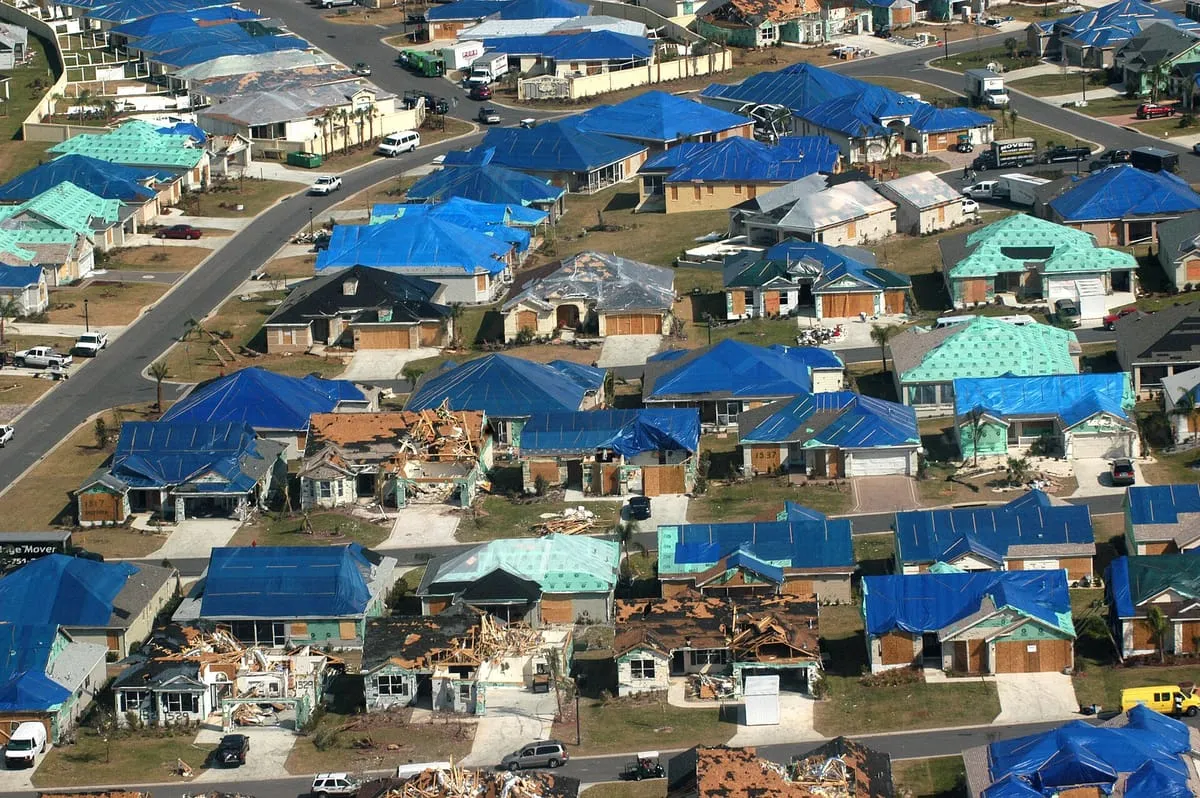 After a storm like the 2007 tornadoes in The Villages, Florida, the permit year decides whether a big repair can stay a repair. Photo: Mark Wolfe, FEMA, public domain.
Roof age and your insurer
Florida insurers can’t refuse to write or renew a policy only because the roof is old if it’s under 15 years. At 15 years and up, they can ask for an inspection showing at least 5 years of useful life left (how roof certification for insurance works). Citizens has its own thresholds: 25 years for shingle roofs and 50 years for tile and metal, past which it needs documentation of at least 5 years of remaining life.
For that 15-year rule, the roof’s age runs from the last date 100% of the roof’s surface was built or replaced. A repair, even a big one, doesn’t reset the clock. Spending heavily to patch a 19-year-old roof can leave you with the same insurance problem next year.
Repair or replace: a decision table
| Your roof | The damage | Usual direction | Get in writing |
|---|---|---|---|
| Under 15 years old, permitted under the 2007 code or later | Storm or leak damage on part of the roof, even past a quarter of it | Repair. Only the repaired part has to meet current code | Repair price and the share of the roof it covers |
| 15 to 25 years old, shingle, insurer not asking yet | A leak or a few damaged areas, a small share of the roof | Usually a repair, with a plan for replacement | Repair price plus the roofer’s estimate of years left |
| 15 to 25 years old, insurer asking for an inspection | Any damage | A repair only makes sense if the roof can still show 5 years of life | A remaining-life estimate before you pay for the repair |
| Installed before the 2007 code took effect (March 2009) | More than a quarter of the roof or section damaged within 12 months | Replace the roof, or the affected roof section, to current code | Both prices, and which section the roofer is counting |
| Shingle over 25 years old | Anything beyond a small fix | Replacement in most cases; InterNACHI’s Florida chart, from a home inspectors’ group, gives architectural shingles 15 to 20 years | Replacement quote, and a small repair price to hold it until then |
| Tile, any age | Cracked or slipped tiles, leaks | Depends on the underlayment under the tile, not the tile itself | Tile repair price and the roofer’s read on the underlayment |
Two roofs the same age can be in very different shape, so the written estimate counts for more than the age alone.
Signs the roof itself is worn out
Some roofs are done regardless of the rules. NRCA’s technical guidance treats curling or splitting shingles as signs of deterioration. IKO, a shingle maker, says losing granules only becomes a problem for the shingle once bare asphalt shows through; a little loss is normal (what granules in the gutters mean). Citizens’ roof form lists cracking, curling, granule loss, soft decking and hail marks among the damage signs an inspector notes.
The pattern that points to replacement is wear spread across the roof: curling on more than one slope, bare spots, soft areas when the roofer walks it, and leaks that move from room to room after each repair. Damage in one place from one storm points to a repair.
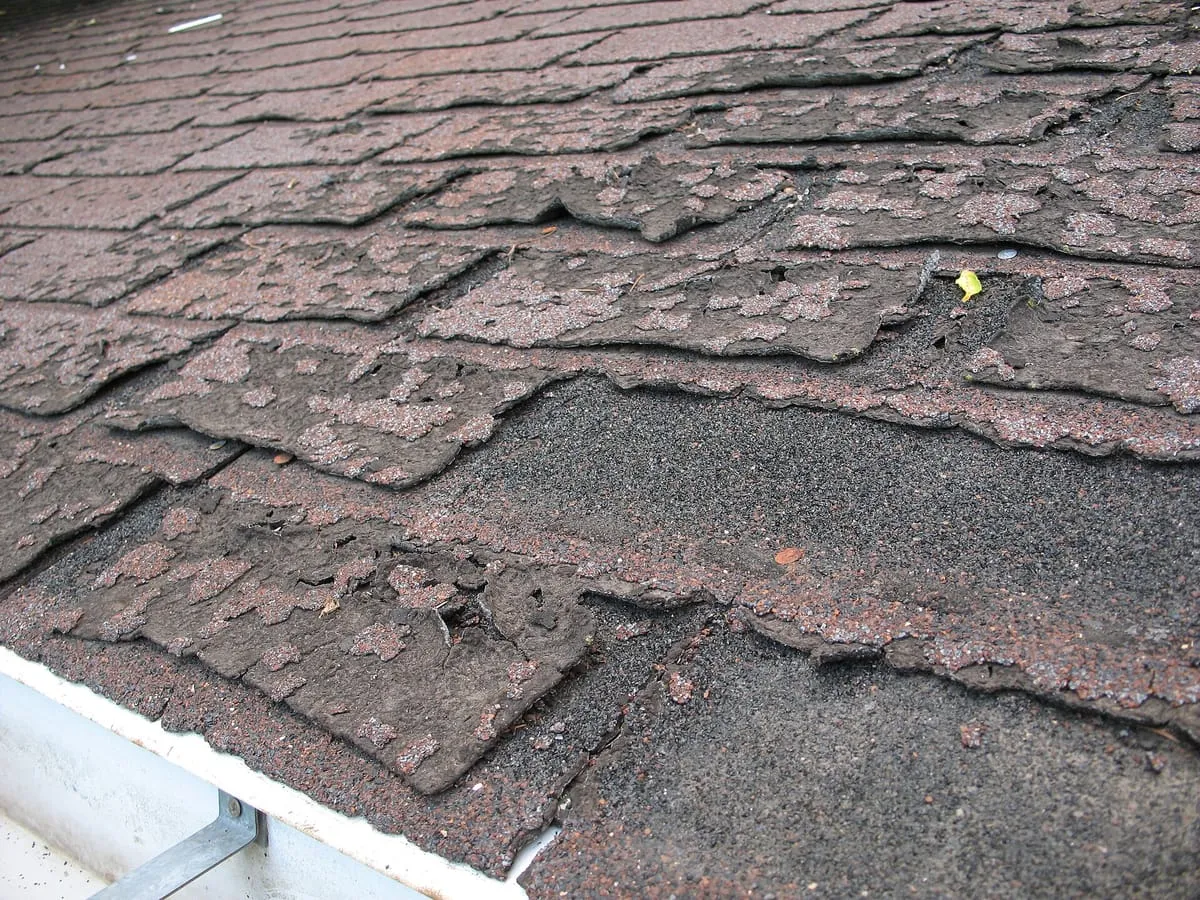 Shrunken, torn tabs with nail heads showing are wear, not storm damage, and a patch won’t fix them. Photo: Dale Mahalko, CC BY-SA 3.0.
Tile roofs: the tile and the underlayment age differently
On a tile roof, the tile sheds most of the water, and the underlayment beneath it does the waterproofing. The Florida tile installation manual describes tile as a water-shedding assembly for that reason. So a leak on a tile roof can be an underlayment problem even when every tile looks whole from the street.
That changes the repair. Swapping a cracked tile is small work. Replacing failed underlayment means lifting the tile over that area, and if the underlayment is gone across the roof, that’s a re-roof even if most of the tiles are sound. The same manual warns that mixing systems can shorten a tile roof’s life, so ask what the repair will use. And tile breaks underfoot, as Eagle Roofing points out, so nobody but the roofer should be walking it.
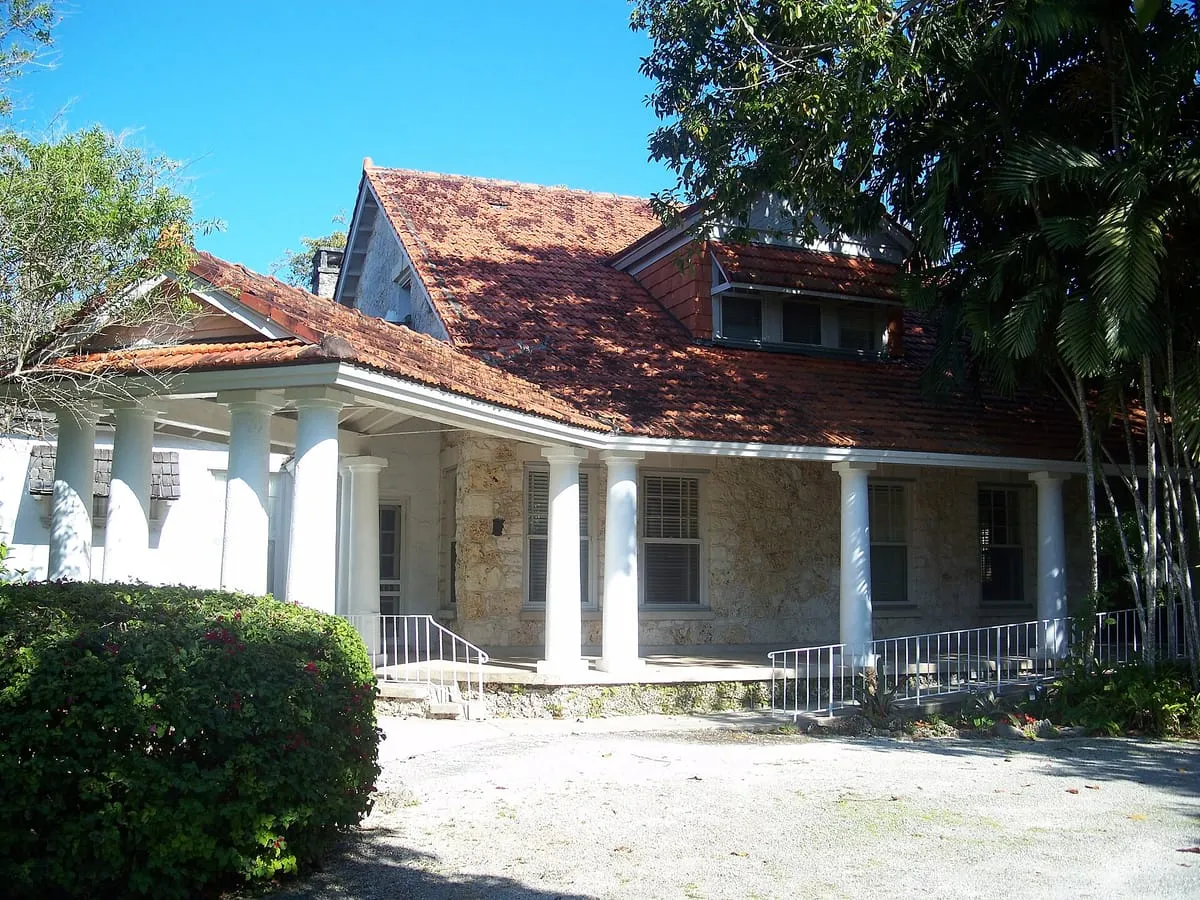 On a clay tile roof like this one in Coral Gables, Florida, the underlayment beneath the tile does the waterproofing. Photo: Ebyabe, CC BY-SA 3.0.
Get both prices on one visit
Ask for the repair and the replacement priced on the same visit, each with its own line items. Both should say:
- how much of the roof the work covers, as a share of the whole roof or the roof section
- the roof’s last permit date and the code it was installed under, if known
- the roofer’s estimate of how many years the roof has left after the repair
- the price per sheet for any rotten decking found once work starts
A replacement on an older house can carry code upgrades a repair doesn’t, such as re-nailing the deck and adding a secondary water barrier; the roof replacement guide covers what a full re-roof involves. For what moves the replacement price, see roof replacement cost in Tampa. Then set the repair price against the years the roofer says the roof has left, and against what your insurer will need to see at renewal.