Helene brought the water, Milton brought the wind
In late September 2024, Hurricane Helene pushed a couple of feet of bay water into homes and businesses along Shell Point Road. On the Little Manatee River, a fishing resort off that road took 4 to 4.5 feet. Less than two weeks later, Milton came through with gusts the National Weather Service put at 80 to 100 mph across Hillsborough County, and a rain gauge about 3 miles west of Ruskin caught 11.22 inches.
Tampa Roofing Guys gets a roofer out to Ruskin houses like these, and on one that went through both storms, the first job is working out which storm did what.
The two hurricanes hit in opposite ways. Helene’s surge in Tampa Bay ran 5 to 7 feet above ground, while its gusts in the county topped out around 68 mph. Milton’s surge in the bay was only 1 to 2 feet, because its winds blew offshore, but the wind and rain were far worse. A house near the water could have taken Helene’s water from below and Milton’s wind from above.
| Surge water | Wind and rain through the roof | |
|---|---|---|
| How it got in | Under doors and through the walls, rising from the floor | Through lifted or missing shingles, torn flashing, vents and pipe boots |
| What it leaves | A waterline on the walls, soaked baseboards and lower drywall, mud | Ceiling stains, wet attic insulation, shingles or ridge cap in the yard |
| What to photograph | The waterline, with a tape measure in the shot, inside and out | Each roof slope from the ground, the attic if you can get up safely, every ceiling stain |
Keep the two losses apart on paper
Which policy answers for water that rose from the bay, and which for rain that came through the roof, is set by your insurance documents, not by the roofer. Pull the declarations page, see whether you carry a separate flood policy, and ask your agent where each piece of damage belongs.
What a roofer can give you is a written report on the roof alone: what’s damaged, where, and dated photos. That keeps roof damage from getting folded into a flood file, and keeps flood damage off a roof claim. If a claim has already come back short, see what to do when a roof claim is denied.
A roof that came through Helene dry doesn’t need replacing because the house flooded. If someone pitches a new roof on the strength of a flood loss, ask them to show you the roof damage.
Older Ruskin homes and the 2007 code line
About 18% of Ruskin’s homes were built before 1980, and roughly 30% before 2000 (American Community Survey, 2020 to 2024). Some of those still carry a roof put on before the 2007 Florida Building Code, and that date decides how a big repair is handled.
Hillsborough County’s rule: if more than 25% of a roof installed before the 2007 code gets replaced inside a 12-month window, the entire roof system or section must be brought to the code in force today. A storm repair that creeps past a quarter of the roof can turn into a full re-roof. When a repair becomes a replacement walks through how roofers and owners make that call.
On a re-roof of an older house, the County’s Progress Check is where the inspector confirms the roof attachments were strengthened to code. Ask the roofer to price that work on the quote rather than finding it mid-job.
About one home in ten here is a manufactured home. Say so when you call, so the roofer knows what kind of roof they’re coming to look at.
If you’re thinking about metal on a house close to the river or the bay, read how salt air affects metal roof warranties before you pick a panel.
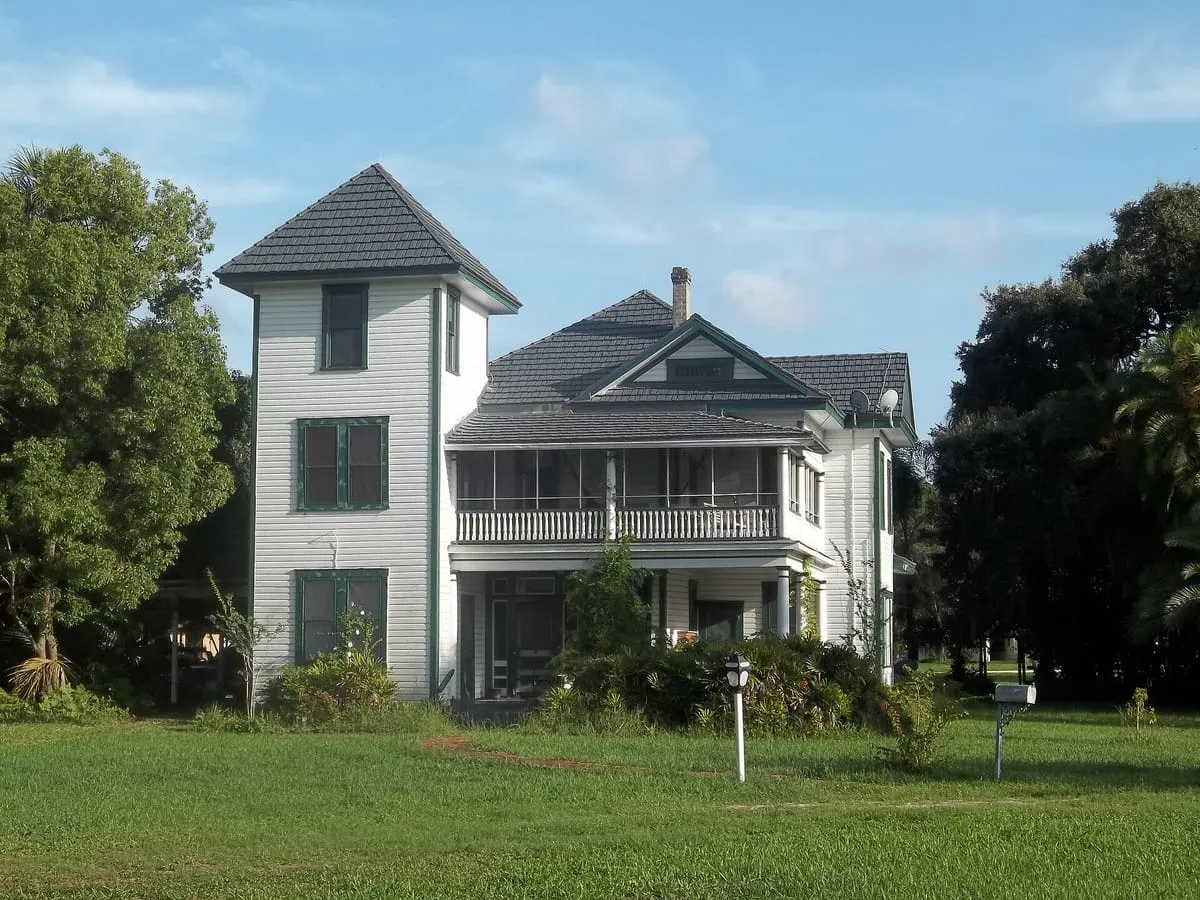 The A. P. Dickman House, listed on the National Register of Historic Places, is among Ruskin’s older homes. Photo: Ebyabe, CC BY-SA 3.0.
The newer subdivisions: first roofs getting older
Ruskin is mostly a young town now. The median home was built in 2007, and 43% went up in 2010 or later: about a third in the 2010s and another tenth since 2020.
On a house still wearing its original roof, the roof is as old as the house. Original roofs from 2010 and 2011 are now past 15 years. Under that age, Florida law bars an insurer from dropping a policy over roof age alone; past it, expect questions. If a renewal letter mentions the roof, roof certification for insurance explains which form the insurer is after and who can sign it.
Don’t guess at the age. The County’s permit records show the last re-roof on the address, and looking up past roof permits explains where to search.