Is the house inside Tampa city limits?
A roof job inside Tampa city limits runs on city rules: a permit from the Construction Services Division, its virtual inspections and, on some streets, a historic review before any shingles come off. City homeowners call Tampa Roofing Guys about leaks, aging roofs and storm damage, and the first thing worth checking is whether the house is in the city at all. Plenty of houses with a Tampa mailing address aren’t.
The ZIP gives a first answer. On a split ZIP, the parcel decides.
| ZIP | Who permits the roof |
|---|---|
| 33602, 33603, 33604, 33605, 33606, 33607, 33609, 33611, 33616, 33629 | City of Tampa |
| 33610, 33612, 33614 | Split between the city and the County |
| 33613, 33619 | Mostly Hillsborough County, with a city share |
| 33617 | Split among the city, Temple Terrace and the County |
| 33615, 33618, 33624, 33625, 33634 | Hillsborough County, nearly all of it |
Fees and inspection steps differ between the city and the County, so pin this down before comparing quotes. The full office-by-office breakdown is under Tampa and Hillsborough roof permits, and the County-side neighborhoods with Tampa addresses are covered on the Hillsborough County page.
Older houses than the county as a whole
City houses run well older than the county’s. In Tampa, 44.5% of homes were built before 1980, against about 30% county-wide, and a quarter went up before 1960. By ZIP, half the homes in 33603 were built by 1956, in 33604 by 1963 and in 33629 by 1973.
An old house doesn’t always mean an old roof. What the house’s age changes is the job itself:
- If the house predates the Florida Building Code, a re-roof means re-nailing the deck wherever it was stapled or nailed too lightly, and adding a secondary water barrier. What a full roof replacement includes goes through both.
- Decking on an older house is a guess until the tear-off. Get the price per sheet of replacement decking written into the contract so a rotten section doesn’t turn into an open-ended bill.
- If the current roof went on before the 2007 code, a repair covering more than a quarter of it can force a full re-roof. The 25% rule spells out the cutoff.
- Insurers start asking harder questions once a roof reaches 15 years. Roof certification for insurance covers what they can and can’t do.
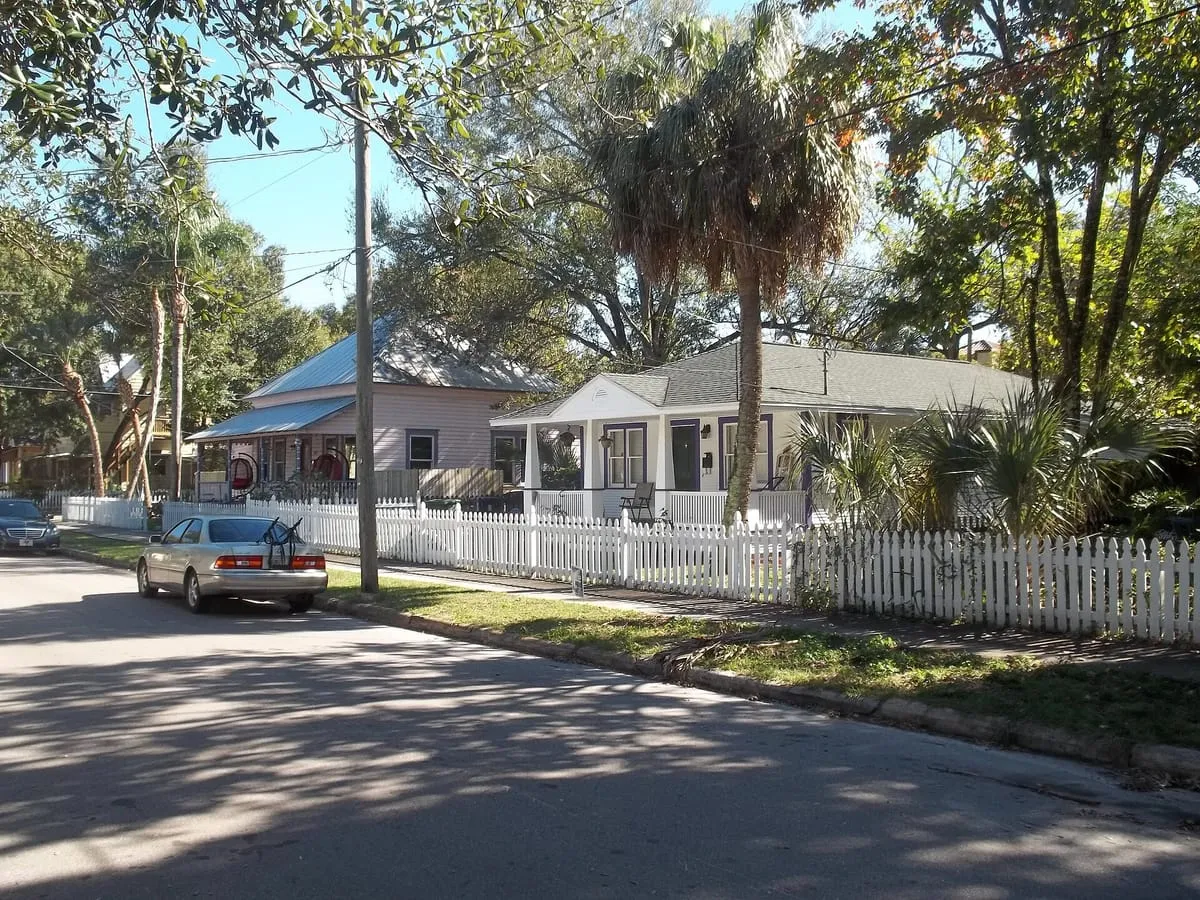 Older frame cottages in Tampa Heights, where the decking under the roof is a guess until the tear-off. Photo: Ebyabe, CC BY-SA 4.0.
Historic districts: get the Certificate of Appropriateness first
Tampa has four local historic districts. Hyde Park, Seminole Heights and Tampa Heights fall under the Architectural Review Commission, and Ybor City falls under the Barrio Latino Commission. A house inside one of them can need the city’s approval for roof work before the roofer starts, not after.
Tampa Heights’ design guidelines say any modification or replacement of a roof needs a Certificate of Appropriateness before work starts. City staff can issue it for minor repairs or for a replacement in appropriate materials. If the job goes beyond the roof surface, or the new material isn’t similar to what’s on the house now, the commission reviews it at a public hearing, which means waiting for a meeting date.
What that means for a homeowner planning a roof:
- Like for like is the faster path. Replacing shingles with similar shingles, or tile with similar tile, is the kind of job staff can approve.
- A material change likely goes to the board. Swapping shingles for metal would probably count as a dissimilar material under the Tampa Heights wording.
- Each district has its own guidelines. The wording above is Tampa Heights’. Ask the historic preservation office what applies in Hyde Park, Seminole Heights or Ybor before choosing a material.
- Applications can go in online. Decide with the roofer who prepares it, and include the product sheet for the material you want.
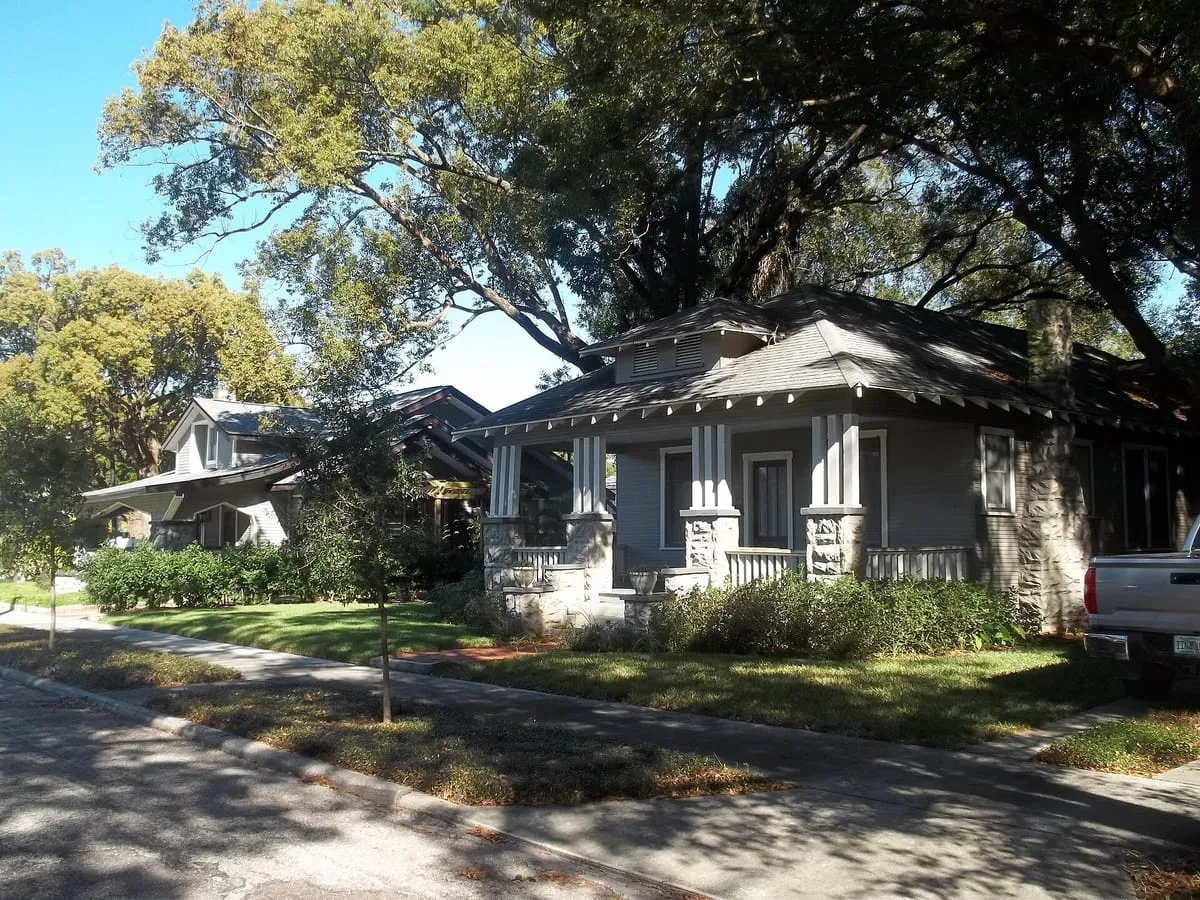 Bungalows in the Seminole Heights historic district, where roof work can need a Certificate of Appropriateness before it starts. Photo: Ebyabe, CC BY-SA 4.0.
Trees over the roof: trim before the tear-off
Hurricanes bring down a lot of trees in Tampa. In fiscal 2025 the city’s urban forestry staff closed 744 hurricane work orders, about $2.9 million of storm tree work.
If limbs hang over your roof, deal with them before a re-roof, not after. Inside the city, pruning a tree 24 inches or more across at chest height needs a permit, while smaller trees don’t, and removing a protected tree more than 5 inches across needs one too. Get the trimming scheduled ahead of the tear-off so nothing hangs over an open deck. If a limb is already on the roof after a storm, stay off it and let the roofer or tree crew handle it; emergency roof repair covers what to do in the meantime.
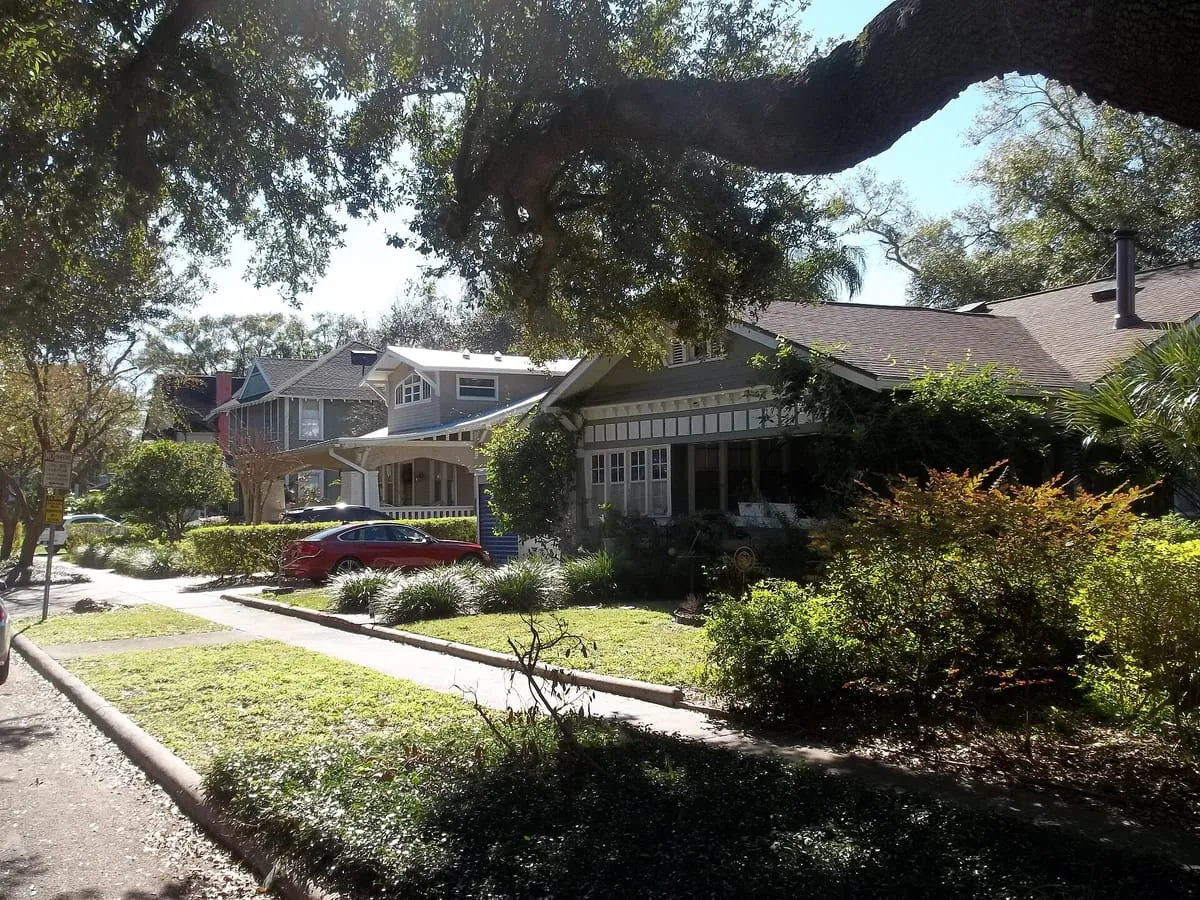 Live oak limbs reach over roofs in Seminole Heights; get them trimmed before the tear-off. Photo: Ebyabe, CC BY-SA 4.0.
South Tampa after Helene
Helene hit South Tampa with water more than wind. Up to 3 feet of water washed into homes from the canals and the bay. If your house took water at floor level, a roof inspection won’t answer that part. Ask the roofer to document the roof on its own, and talk to your agent about the rest. The county-wide storm record for 2024 is on the Hillsborough County page.
What a quote for an older city house should spell out
On an old house, code work missing from the quote usually shows up later as a change order. Before signing, check that the quote lists:
- A City of Tampa permit, not a County one, and the inspections that go with it
- The Certificate of Appropriateness, if the house is in a district, and who is filing it
- Deck re-nailing and the secondary water barrier, where the house predates the Florida Building Code
- The decking price per sheet and how many sheets the price already assumes
- The underlayment, by product name
The questions to ask before you sign go further on deposits, lien releases and contract notices.