One Gibsonton home in four is a manufactured home
About 27% of the homes in Gibsonton are manufactured homes, roughly 1,800 of them (Census Bureau 5-year survey ending 2024). That’s a far bigger share than the 6.5% across Hillsborough County. The rest are mostly site-built houses, with a median build year of 2002 for the community as a whole.
Owners of either kind can reach a roofer through Tampa Roofing Guys. The two jobs differ, so the call starts with which kind it is.
Calling about a manufactured home
Ask the roofer straight out whether they work on manufactured home roofs. Better to find out on the phone than in the driveway. Then give the year the home was set, whether the roof has been redone or covered over, and where the water shows up inside (along the ceiling seams, at a wall, around a vent). The Valrico page lists the rest of what a roofer needs to hear, including porch and carport roofs tied into the home.
Insurance paperwork can bring the roof up too. Citizens requires a 4-point inspection, which covers the roof’s age, condition and remaining life, on mobile home applications once the home is more than 20 years old. The roof inspection guide sorts out which inspection is which. Don’t lean on Florida’s 15-year roof-age rule here: it covers homeowners policies, and mobile home policies are excluded (how the rule works for houses).
Storm prep when you’ll be evacuating anyway
Under the zones Hillsborough set for 2026, every manufactured home evacuates with Zone A, wherever it sits. During Milton, the County ordered every mobile and manufactured home emptied. If you live in one, you probably won’t be home when the wind hits.
That changes the routine. Before the season, get any loose or leaking section fixed. Before you leave, walk around the home and photograph each side of the roof from the ground, plus the ceilings inside, so the pictures carry a date. When you come back, take the same photos again before anything is moved or covered.
If a tarp is needed after a declared disaster, the Army Corps of Engineers’ Blue Roof program reviews mobile homes case by case rather than taking them automatically. Emergency roof repair and tarping covers what to do in the first days.
Oak Street, the Alafia and flood water
Helene flooded Oak Street, the peninsula that runs into the Alafia River, for the first time in 2024. Most homes on the street took water, some of them waist-deep. Water that rose into a home from the river is a flood loss, and it gets documented apart from anything that came through the roof; the Ruskin page shows how to keep the two separate.
Flood zones also change the permit picture. Florida’s new permit exemption for small non-structural jobs under $7,500 isn’t available for property in a flood hazard area. Outside those areas, Hillsborough lists non-structural roof repair as work that may be exempt. Either way, ask the County’s building department before assuming a roof job needs no permit, and let the roofer handle it. Roof permits in Hillsborough has the details.
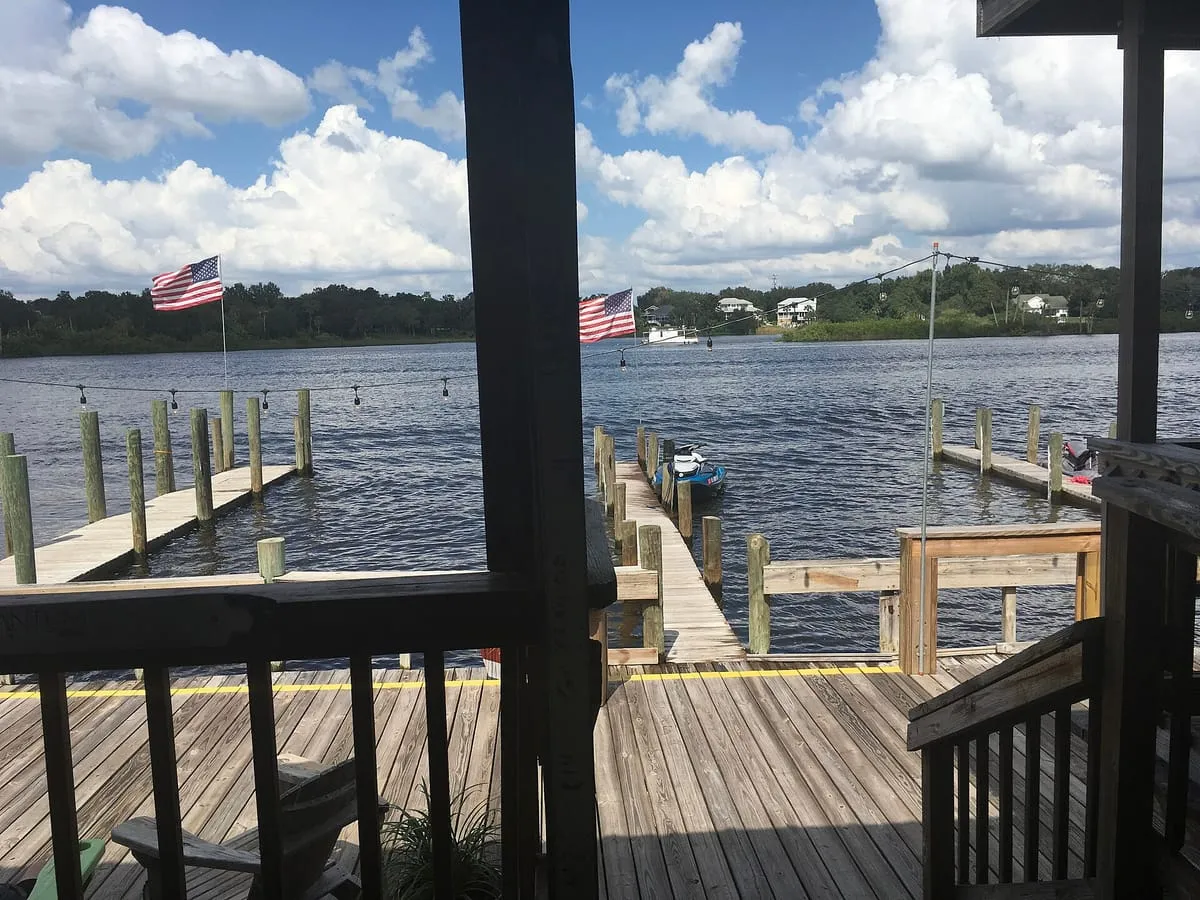 The Alafia River from a dock near Gibsonton; water that rises from the river is a flood loss, documented apart from the roof. Photo: Piperpet, CC BY-SA 4.0.
Site-built houses from the 2000s
The biggest single slice of Gibsonton’s housing, about 29%, went up between 2000 and 2009, and another 18% predates 1980. A house from the early 2000s that still has its first roof is carrying one installed before the 2007 Florida Building Code. Hillsborough treats that kind of roof differently: once more than a quarter of it gets replaced inside 12 months, everything up there must meet today’s code, so a large storm repair can become a full re-roof. Ask the roofer to say on the quote how much of the roof the repair covers.